Leave Your Message
For wholesale buyers, choosing the right 2026 Cantilever Tool Box involves more than comparing prices. It requires practical testing, dependable materials, and a clear understanding of professional users. A strong model should open smoothly, remain stable, and protect tools during repeated transport. Its trays should expose small sockets, screwdrivers, and pliers without forcing workers to empty the entire case.
Tool-storage consultant Jason Pimblett offers a useful purchasing principle: “A good cantilever case should open fully, carry honestly, and survive ordinary neglect.” That idea matters in wholesale markets. Retail customers notice loose hinges quickly. Contractors notice weak handles even faster. Steel construction can improve durability, while reinforced plastic may reduce shipping weight and corrosion concerns. Neither option is perfect.
Details decide value.
Look closely at tray alignment, latch strength, hinge resistance, and handle comfort. A box that looks spacious may waste room through poor tray spacing. A cheaper unit may also create higher return costs when lids warp or fittings loosen. These are not dramatic failures. They are common, expensive annoyances.
This guide examines leading 2026 options for distributors, hardware retailers, and workplace suppliers. It considers load capacity, portability, internal organization, finish quality, packaging, and expected service life. Wholesale buyers should also question whether replacement parts are available. That point is easy to overlook.
Some products will impress in photographs but disappoint on a loading dock. Real evaluation needs weight, movement, and repeated opening. The best Cantilever Tool Box is not automatically the largest or cheapest. It is the model that delivers consistent performance across many customers, applications, and working conditions.
Cantilever Tool Boxes: Definition, Structure, and Main Uses
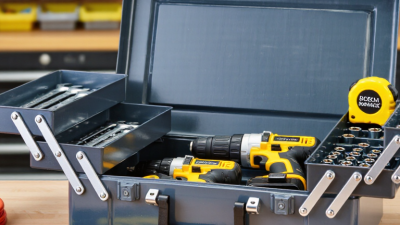
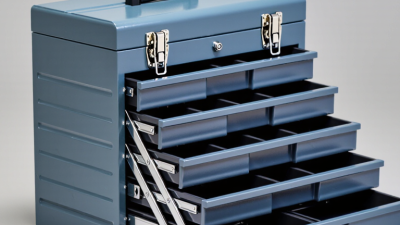
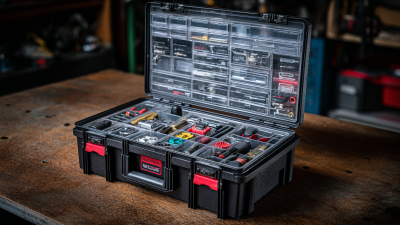
A cantilever tool box is a portable storage case with stepped trays that rise when the lid opens. Its linked arms create a clear, layered workspace. Users can see small fasteners, sockets, and hand tools without emptying the main compartment. The lower section usually stores bulkier items, such as drills, measuring devices, or safety equipment. Common materials include powder-coated steel, impact-resistant plastic, and aluminum. Hinged joints, tray depth, handle strength, and lock alignment deserve close inspection. Small weaknesses become expensive when hundreds of units reach wholesalers.
Its main uses include workshop maintenance, field service, electrical installation, construction repair, and vehicle servicing. The structure supports quick access while keeping tools separated during transport. A 2023 report from Grand View Research valued the global hand tools market at approximately USD 23 billion and forecast continued growth through 2030. That trend supports demand for organized, mobile storage. Another industry analysis by Fortune Business Insights identifies portability and workplace organization as important growth factors in tool storage products. The exact figures vary between reports, so buyers should not treat forecasts as guarantees.
For wholesale purchasing, compare load capacity, tray clearance, corrosion resistance, packaging strength, and replacement-part availability. Test the hinges with repeated opening cycles. I have found that a neat sample can hide loose rivets. A perfect catalog photograph can mislead. Check production consistency, too. Wholesale success depends less on appearance alone and more on durable structure, practical compartments, and reliable batch quality.
| Evaluation Dimension | Typical Specification or Standard | Why It Matters to Wholesale Buyers | Main Use or Practical Benefit |
|---|---|---|---|
| Definition | A portable tool-storage case with hinged trays or tiers that extend outward when the lid is opened. | Clarifies the product category and separates it from standard single-compartment tool cases. | Provides organized access to hand tools, fasteners, fittings, and small accessories. |
| Operating Structure | Commonly consists of a base compartment, stacked trays, pivoting arms, hinges, a lid, and a locking mechanism. | Structural complexity affects assembly quality, durability, packaging, and after-sales requirements. | Trays move upward and outward to make several storage levels visible at the same time. |
| Common Body Materials | Powder-coated steel, stainless steel, aluminum, polypropylene, or ABS plastic. | Material selection influences weight, corrosion resistance, impact performance, and target market. | Metal bodies generally suit demanding workshop use; plastic bodies reduce carrying weight and production cost. |
| Typical Overall Width | Approximately 350–600 mm, depending on the number and size of storage tiers. | Width affects shelf planning, carton dimensions, shipping volume, and retail display efficiency. | Compact widths support mobile maintenance; wider formats provide more working capacity. |
| Typical Overall Depth | Approximately 180–300 mm when closed. | Closed depth helps buyers estimate warehouse locations, vehicle storage, and parcel size. | Allows tools to be stored in a relatively narrow footprint before the trays are opened. |
| Typical Closed Height | Approximately 200–350 mm, depending on the number of tiers and tray spacing. | Determines carton height, pallet utilization, and compatibility with cabinets or shelves. | Supports vertical organization while maintaining a portable closed form. |
| Storage Capacity | Usually divided into several shallow trays plus one deeper bottom compartment; exact capacity varies by design. | Multiple configurations allow wholesalers to serve different trades and price levels. | Shallow trays hold small items and frequently used tools; the base stores larger equipment. |
| Load Consideration | Capacity should be verified through the supplier’s tested static-load rating for the case and each tray. | Load ratings are design-specific and should not be assumed from external appearance alone. | Helps prevent tray deformation, hinge damage, and unsafe carrying when fully loaded. |
| Tray Arrangement | Common layouts include two, three, or four pivoting tiers, with dividers or removable compartments in some designs. | Tray count affects product positioning, manufacturing cost, and the number of use cases. | Creates a visual, tiered layout that reduces time spent searching for tools. |
| Hinge and Arm System | Pivot arms and hinges should open smoothly, remain aligned, and resist repeated cycling. | These are high-use components and strongly influence perceived product quality and service life. | Maintains tray stability and allows access to lower compartments without removing upper tools. |
| Closure and Security | Typical options include draw latches, toggle latches, hasps, or lockable closures. | Closure type affects transport safety, theft deterrence, and compatibility with user requirements. | Keeps trays and contents secured during carrying, storage, and vehicle movement. |
| Handle Design | Usually a centered top handle, often with a molded or padded grip. | Handle strength and comfort influence user acceptance and return rates. | Enables one-person transport between workstations, vehicles, job sites, and storage areas. |
| Corrosion Protection | Steel products may use powder coating, plating, or another specified surface treatment. | Surface treatment affects appearance retention and suitability for humid or workshop environments. | Helps protect metal surfaces from scratches, oxidation, and routine workshop exposure. |
| Portability | Portable by hand; wheeled versions are less typical and should be evaluated as a separate product configuration. | Portability determines the most suitable sales channels and customer segments. | Useful for technicians, installers, maintenance staff, electricians, mechanics, and field-service workers. |
| Organization Features | Possible features include removable dividers, dedicated tool slots, small-parts bins, and label areas. | Organization features can differentiate otherwise similar products in wholesale catalogs. | Improves inventory visibility and reduces mixing of tools, screws, connectors, and fittings. |
| Ergonomic Clearance | Opened trays should provide sufficient clearance for hand access and should not obstruct one another. | Opening geometry affects usability and customer satisfaction more than closed dimensions alone. | Allows users to identify and retrieve contents without repeatedly closing or removing trays. |
| Packaging Requirements | Protective wrapping, corner protection, and a carton sized for the closed case are commonly used. | Good packaging reduces cosmetic damage and improves shipping efficiency. | Protects hinges, latches, coated surfaces, and plastic components during distribution. |
| Quality Checks Before Bulk Purchase | Inspect tray alignment, hinge movement, latch engagement, handle attachment, surface finish, and carton protection. | A repeatable inspection checklist reduces quality variation across a wholesale shipment. | Confirms that the case operates safely and consistently before resale. |
| Best-Fit Wholesale Channels | Hardware distributors, industrial-supply catalogs, maintenance suppliers, automotive-tool dealers, and e-commerce sellers. | Channel fit helps buyers choose appropriate sizes, packaging, documentation, and price tiers. | Serves customers who need portable organization rather than fixed workshop storage. |
| Selection Priority for 2026 | Balance structural durability, usable capacity, closed dimensions, weight, organization, and landed cost. | Balanced specifications support broader market coverage and more predictable wholesale margins. | Creates a practical product offering for both professional users and serious home workshops. |
Note: Dimensions, materials, tray counts, and load ratings vary by product design. Wholesale buyers should confirm final specifications, test results, packaging details, and applicable safety requirements with the supplier before placing a bulk order.