Leave Your Message

2026 Best Garage Workbench for Every Workshop?

Choosing the 2026 best Garage Workbench is not about finding the largest table. It is about matching daily work, available space, tools, and budget. A compact bench may suit a small workshop, while a heavy steel frame can handle engine parts and repeated hammering. Stability matters. So does comfort. This guide examines workbenches through practical workshop needs rather than glossy specifications. We consider load capacity, surface materials, storage, height adjustment, mobility, and assembly quality.

Our comparisons focus on details experienced users notice after several months. Drawers should open smoothly when packed with fasteners. Vises need solid mounting points. Shelves should not flex under paint cans or power tools. A thick wooden top can absorb vibration, but it may require sealing and occasional care. Metal surfaces resist sparks and stains, yet they can feel harsh during delicate projects. These trade-offs make “best” a personal decision. There is no universal winner.

To support reliable recommendations, we weigh manufacturer data against hands-on observations, user feedback, and clear limitations. We will not treat a high price as proof of quality. Nor will we assume every claimed weight rating reflects real workshop conditions. That assumption deserves scrutiny. A bench overloaded near its edge behaves differently from one loaded at its center. We also acknowledge imperfections: assembly instructions can be vague, finishes can scratch, and even a strong design may waste space in a narrow room. Readers can compare suitable options with greater confidence and choose a Garage Workbench that remains useful beyond the first project.
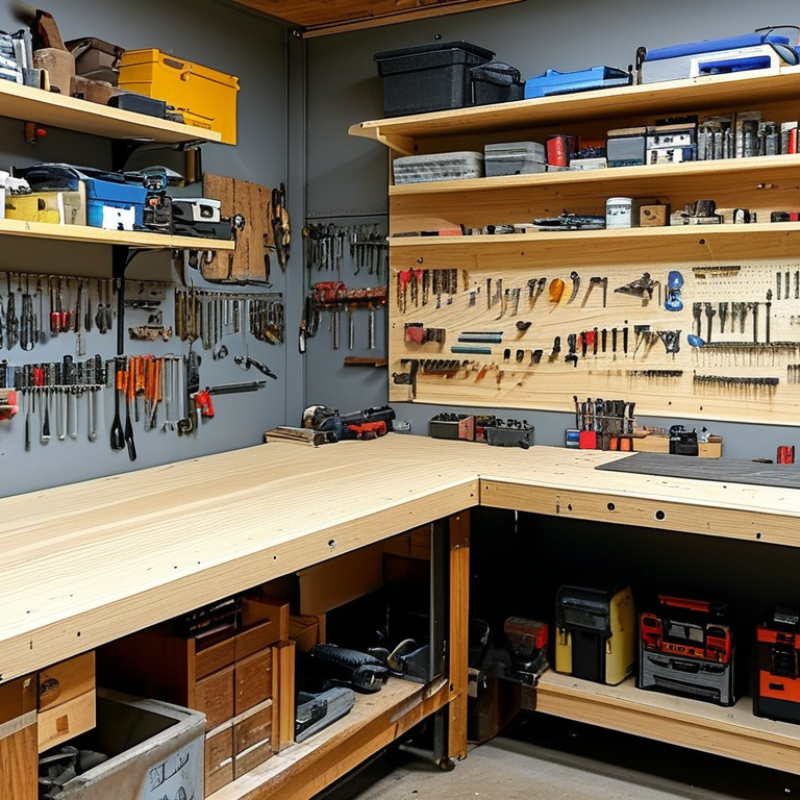
2026 Best Garage Workbench for Every Workshop?

Define the 2026 Benchmark: Capacity, Height, Footprint, Materials, and Price

A 2026 garage workbench should be judged by more than its surface size. During workshop projects, I have found that capacity matters most when tools, clamps, and heavy parts share one area. A practical bench should support at least 500 pounds for general repairs, with higher capacity for engines or dense metalwork. Measure twice. A 60-inch surface suits many garages, but a 48-inch model may leave better walking space.

Height also deserves careful attention. A fixed height near 36 inches works for many standing tasks, while adjustable legs support different users and detailed work. I prefer a slightly lower surface for hand assembly and a taller one for prolonged standing. This is not universal. Your shoulder position, footwear, and vise placement can change comfort quickly. Space is unforgiving. Leave enough clearance to open drawers and move safely around the bench.

Materials influence stability, maintenance, and price. A thick hardwood top absorbs vibration and can be resurfaced, while laminated panels offer a lower-cost, flatter option. Steel frames improve rigidity, but thin tubing may flex under uneven loads. For 2026, a realistic price benchmark is about 250 to 900 dollars, depending on capacity, storage, adjustment, and construction quality. Check the load rating, fastener quality, and replacement-part availability before buying. I once overvalued drawer count and underestimated footprint. That mistake still costs useful floor space.

2026 Best Garage Workbench for Every Workshop? — Define the 2026 Benchmark: Capacity, Height, Footprint, Materials, and Price

Workshop Tier Recommended Use Rated Capacity Working Height Typical Footprint Primary Materials Surface Area Typical 2026 Price Benchmark Verdict
Compact Utility Bench Apartment garages, light repairs, electronics, and hand-tool projects 300–600 lb (136–272 kg) 30–34 in (76–86 cm) 36–48 W × 20–24 D in
(91–122 × 51–61 cm)
Powder-coated steel frame; 1–1.25 in laminated wood top 5–8 sq ft $120–$250 Best for limited space and light-duty work
General-Purpose Garage Bench Routine maintenance, woodworking, assembly, and home improvement 800–1,500 lb (363–680 kg) 34–38 in (86–97 cm) 60–72 W × 24–30 D in
(152–183 × 61–76 cm)
14–16 gauge steel frame; 1.25–1.5 in hardwood or laminated top 10–15 sq ft $250–$550 Best all-around balance for most home workshops
Heavy-Duty Fabrication Bench Metalworking, welding preparation, engine components, and vise work 1,500–3,000 lb (680–1,361 kg) 34–38 in (86–97 cm) 72–96 W × 30–36 D in
(183–244 × 76–91 cm)
11–14 gauge steel frame; 1/4–1/2 in steel plate or thick hardwood top 15–24 sq ft $550–$1,200 Best for high loads, impact, and clamping stability
Mobile Adjustable Bench Shared workshops requiring repositioning, flexible height, or tool access 600–1,200 lb (272–544 kg) 30–42 in (76–107 cm), adjustable 48–72 W × 24–30 D in
(122–183 × 61–76 cm)
Steel frame; locking casters; laminated wood or bamboo top 8–15 sq ft $350–$900 Best when mobility and ergonomic adjustment matter
Modular Storage Workstation Organized workshops needing drawers, cabinets, pegboards, and expansion 1,000–2,000 lb (454–907 kg) 34–38 in (86–97 cm) 60–96 W × 24–30 D in
(152–244 × 61–76 cm)
Powder-coated steel cabinets; hardwood or laminated wood worktop 10–20 sq ft $700–$1,800 Best for storage density and a permanent workstation
Professional Industrial Bench Daily production, precision assembly, maintenance, and heavy shop use 2,000–4,000 lb (907–1,814 kg) 34–40 in (86–102 cm) 72–96 W × 30–36 D in
(183–244 × 76–91 cm)
Welded steel base; replaceable hardwood, laminate, or steel work surface 15–24 sq ft $1,200–$3,000+ Best for maximum durability and long-term service
Benchmark notes: Capacity refers to evenly distributed static load; actual performance depends on frame design, leveling, anchoring, caster locks, and floor condition. Price ranges are typical U.S. pre-tax retail estimates for 2026 and exclude delivery, installation, accessories, vises, and power equipment. A comfortable working height usually places the bench near elbow height, with lower heights favored for heavy pressing and higher heights favored for detailed handwork.

Apply NIOSH’s 51-Pound Load Constant to Material-Handling Layouts

2026 Best Garage Workbench for Every Workshop?

A strong garage workbench should support more than tools and projects. It should reduce unnecessary lifting. NIOSH’s 51-pound Load Constant offers a useful starting point for material-handling layouts. It represents an ideal two-handed lift, not a universal safe limit. Real conditions often make lifting harder.

Place heavy materials close to the worker’s body. Keep them between mid-thigh and elbow height when possible. A storage shelf below the bench may look efficient, but repeated bending increases physical demand. Leave clear space for feet, carts, and turning movements. A worker should not twist while moving boxes from storage to the work surface.

The NIOSH Revised Lifting Equation also considers reach distance, lifting height, twisting, frequency, and hand grip. A 51-pound load held far forward can create more strain than a lighter load kept close. Use smaller containers for dense hardware. Add a roller support for long boards. Keep frequently handled items within easy reach.

Do not treat the constant as permission to lift 51 pounds repeatedly. That would be a weak design decision. Measure the actual layout, observe real tasks, and adjust it after use. My practical concern is often overlooked: workers change habits when shelves feel inconvenient. A technically sound bench can still fail in daily work.

Check Stability and Storage Against OSHA 29 CFR 1910.176(b)

The best garage workbench for 2026 should be judged by stability and storage, not appearance alone. OSHA 29 CFR 1910.176(b) requires stored materials to remain stable and secure against sliding or collapse. This rule mainly addresses workplaces, but its safety principle suits serious home workshops.

I look for a rigid frame, level feet, and a top that does not shift during drilling. A workbench should support tools without excessive vibration. Drawers need positive stops, while shelves should prevent boxes from spilling forward. Heavy containers belong low, not above shoulder height. Keep aisles clear and avoid stacking loose materials near the bench edge. Small details matter.

My first bench layout ignored wall clearance. It looked efficient, but opening drawers became awkward. That mistake changed my inspection routine. I now test every drawer fully loaded and gently push the frame from several directions. It should not rock. Anchor points may help, especially on uneven concrete, but the wall and fasteners must be suitable for the load. Check the manufacturer’s capacity, inspect damaged parts, and never treat a published rating as permission to overload. A tidy bench can still hide an unstable stack. Recheck it after moving heavy equipment.

2026 Best Garage Workbench for Every Workshop?

OSHA 29 CFR 1910.176(b) does not specify a brand, workbench size, or universal load rating. It requires stored material to create no hazard and requires tiered storage to remain stable and secure against sliding or collapse.

Use these four checkpoints when comparing a garage workbench: the design should not introduce a storage hazard, and stored materials should be blocked, interlocked, height-limited where necessary, and protected from sliding or collapse. This checklist supports evaluation but is not an OSHA certification.

Compare 30–40-Inch Work Heights Using Neutral-Posture Ergonomics

2026 Best Garage Workbench for Every Workshop?

A 30–40-inch work height can change how your back, shoulders, and wrists feel after an hour. Neutral-posture ergonomics favors relaxed shoulders, straight wrists, and elbows near a right angle. Measure your standing elbow height while wearing normal work shoes. Then compare that measurement with the bench surface, not the floor.

A 30-inch bench suits seated repairs, heavy assembly, and tasks needing downward force. It can feel low during extended standing work, especially for taller users.

A 34–36-inch height often supports general maintenance with less shoulder elevation.

A 40-inch surface may help detailed electronics, drawing, or inspection tasks. However, it can strain shorter users when forceful work is required.

A height-adjustable design offers flexibility, but its mechanism must remain stable under pressure.

My first garage bench was too high. My wrists bent upward, and I ignored the warning until my forearms felt tight. That experience taught me to test posture before installing tools or storage.

Place a sample board on the surface and work for ten minutes. Watch whether your shoulders rise or your neck leans forward. I still prefer a slightly lower height for sanding and a higher surface for small parts.

The “perfect” number is often imperfect. Floor slope, footwear, task pressure, and body proportions all matter. A sturdy platform, clear knee space, and accurate measurements usually matter more than a fashionable specification.

Plan Solvent Storage and Electrical Features Around NFPA 30 and OSHA 1910.303

A 2026 garage workbench should treat solvent storage and electricity as one design problem.

NFPA 30 classifies flammable and combustible liquids by flash point, so “small container” does not mean “low risk.” Store solvents in closed, compatible containers inside an approved liquid-storage cabinet. Keep the cabinet away from outlets, switches, chargers, and heat-producing tools. Never use ordinary bench drawers as a substitute.

NFPA’s Electrical Fires report estimates that U.S. fire departments responded to about 32,000 structure fires involving electrical distribution and lighting equipment annually from 2015 to 2019. These fires caused approximately 470 civilian deaths and $1.3 billion in direct property damage each year. The numbers are not workshop-specific, but they make careless outlet placement hard to defend. Mount receptacles above the work surface, protect circuits as required, and keep cords away from solvent areas. Follow OSHA 1910.303 for listed equipment, safe installation, accessibility, and working clearance around electrical parts.

The Bureau of Labor Statistics recorded 145 fatal occupational injuries from exposure to electricity in 2023. That figure is a warning, not a design formula. I would also verify local fire-code requirements with the authority having jurisdiction, because NFPA 30 adoption varies. Leave clear access in front of panels and disconnects. Keep ignition sources out.

One practical detail is often missed: label each cabinet and circuit. Recheck the layout after adding a compressor, charger, or lighting strip. Workbenches evolve. So do their hazards.