Leave Your Message

10 Tips for Choosing the Right Mechanical Toolbox?

Choosing the right Mechanical Toolbox can change how efficiently you work, whether you repair engines, maintain machinery, or handle workshop projects. A reliable box keeps sockets, pliers, torque wrenches, and small fasteners protected and easy to reach. It also reduces wasted time beside a crowded workbench.

This guide draws on practical workshop habits and advice commonly used by experienced mechanics. Material strength matters. A steel toolbox may withstand heavy use, while reinforced plastic can reduce weight and resist corrosion. Drawer capacity, locking quality, handle comfort, and weather protection also deserve close attention. Measure your tools before buying. A box that looks spacious may become cramped after adding deep sockets and electrical testers.

Do not judge a toolbox by appearance alone. I once chose a compact case because it looked convenient, but its shallow drawers frustrated me within weeks. That mistake taught me to consider tool growth, not only current storage needs. No box is perfect. Your work environment, transport routine, and budget should guide the decision. A workshop mechanic may need a large rolling cabinet, while a field technician might prefer a portable case with secure latches. Check weight when fully loaded. It can become surprisingly heavy. The following ten tips explain how to compare construction, organization, mobility, safety, and long-term value with greater confidence. Expect a few compromises, and review your choice after real use.
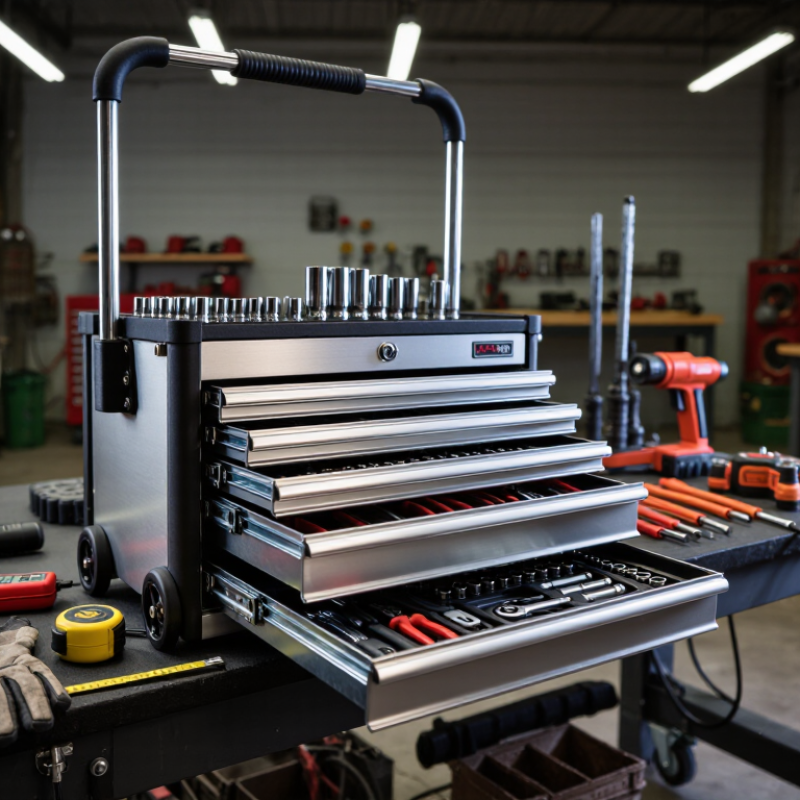
10 Tips for Choosing the Right Mechanical Toolbox?

Define Your Toolbox Needs and Working Environment

Choosing the right mechanical toolbox starts with defining your actual work. A roadside technician needs compact storage, while a workshop mechanic may need deeper drawers. List your daily tools, measuring devices, spare fasteners, and protective equipment. Then measure them. Guessing often creates wasted space.

Your working environment matters just as much. Dusty construction sites demand sealed compartments and strong latches. Wet areas require corrosion-resistant materials and careful drainage. For mobile work, check handle comfort, wheel stability, and lifting weight. The U.S. Bureau of Labor Statistics reported 2.6 million nonfatal workplace injuries and illnesses in private industry during 2023. A disorganized or overloaded toolbox can increase reaching, lifting, and trip risks. Keep frequently used tools between waist and shoulder height. Small detail. Important one.

Choose capacity with restraint. A toolbox filled to its limit becomes difficult to carry and slower to search. Use dividers for sockets, labeled trays for fasteners, and a dedicated space for damaged tools awaiting inspection. I have found that a slightly smaller box often improves discipline, although this is not always convenient. OSHA highlights struck-by, caught-in, and electrical hazards as major workplace concerns, so sharp tools and testing equipment should remain protected and separated. Review the setup after a week of real work. Your first choice may need correction.

10 Tips for Choosing the Right Mechanical Toolbox

Define Your Toolbox Needs and Working Environment

The chart uses a practical 1–5 priority scale to compare common toolbox requirements across real working environments. Mobile service work emphasizes portability, while construction and outdoor repair require stronger durability and weather resistance. Workshop users typically benefit most from storage capacity and tool organization.

Assess Size, Capacity, and Internal Organization

Choosing the right mechanical toolbox begins with an honest assessment of your daily work. Measure the longest tool you carry, then add clearance for easy removal. A box that barely closes becomes frustrating quickly. I once underestimated this space and stored a ratchet diagonally. It fit, but the lid never closed smoothly.

Capacity matters beyond total volume. Check the toolbox’s weight limit, especially if it will hold sockets, extensions, and metal hand tools. A strong case can still become unsafe when overloaded. Compare empty weight with loaded weight before buying.

For mobile work, consider stairs, vehicle storage, and lifting comfort. A compact box may be easier to transport, while a larger model reduces repeated trips. Neither choice works everywhere.

Internal organization deserves close attention. Look for deep compartments for bulky tools and shallow sections for bits, washers, and measuring devices. Removable trays can improve access, but loose trays sometimes waste vertical space. Dividers should stay firm when the box moves. Test whether commonly used tools can be reached without removing everything above them. Clear labeling helps, even if the layout looks obvious in a showroom. Foam inserts offer precise placement, though they require accurate cutting and may not suit changing tool collections. My own layout became inefficient after adding specialist tools, so I now leave about fifteen percent of the interior unused. That spare space feels wasteful at first. It often prevents disorder later.

Compare Materials, Construction, and Weather Resistance

10 Tips for Choosing the Right Mechanical Toolbox?

Compare Materials, Construction, and Weather Resistance

Choosing a mechanical toolbox starts with its material, not its appearance. Steel offers strong impact resistance and handles heavy tools well. However, untreated steel can rust around scratches and hinges. Aluminum is lighter and resists corrosion, but its panels may dent under hard use. Plastic avoids rust and reduces weight, though some low-quality plastics become brittle in cold weather. Weight matters.

Inspect the construction closely. Look for reinforced corners, continuous hinges, secure latches, and smooth drawer movement. Full-length welds usually provide better strength than small attachment points. Loose handles are a warning sign. Weather resistance depends on more than a tight lid. Check the gasket, overlapping edges, drainage paths, and latch pressure. A toolbox with poor drainage may trap water after rain. Sealed storage helps, but it cannot replace regular drying and inspection.

I once ignored a small gap near a hinge, and damp tools later developed surface corrosion. That mistake changed how I compare toolboxes. Open the lid and test every latch. Press the base gently for flex. Check whether the finish covers edges and seams evenly. Read the load rating, but treat it as a guide rather than a promise. A crowded toolbox stresses drawers and hinges quickly. Choose materials for your worksite, climate, and carrying habits. The cheapest option may cost more when repairs begin.

10 Tips for Choosing the Right Mechanical Toolbox: Compare Materials, Construction, and Weather Resistance
Tip Decision Area What to Compare Practical Facts Best Choice For Weather Resistance
1 Match the material to the work environment Steel, stainless steel, aluminum, or reinforced polymer Steel generally provides high impact resistance; aluminum is lighter and naturally forms a protective oxide layer; stainless steel offers strong corrosion resistance; reinforced polymer resists rust and can reduce weight. Choose according to load, portability, chemical exposure, and job-site conditions. High when material matches the environment
2 Check wall thickness and reinforcement Panel thickness, folded edges, ribs, and corner supports Thicker panels and formed edges usually improve stiffness. Reinforced corners help protect the box from impact, but added material can increase weight. Heavy tools, transport between job sites, and workshop storage. Medium to high
3 Inspect joints and fasteners Welded seams, rivets, hinges, bolts, and hardware finish Continuous welds can reduce openings at seams, while properly installed rivets and bolts are serviceable. Hinges and fasteners should be corrosion-resistant and firmly attached. Frequent opening, vibration, and demanding transport conditions. Depends on joint sealing and hardware
4 Evaluate the lid and closure system Lid overlap, latches, compression action, and alignment A lid that overlaps the walls helps divert water. Positive latches keep the lid closed during movement; misalignment can reduce protection and create premature wear. Outdoor storage and vehicles exposed to rain or road spray. Medium to high
5 Look for a replaceable or continuous gasket Gasket material, compression, coverage, and replaceability A correctly compressed gasket limits dust and water entry. A replaceable seal can extend service life, while gaps at corners or hinges can compromise protection. Dusty workshops, wet construction sites, and mobile service work. High when the seal is intact
6 Consider corrosion protection Coating, plating, anodizing, stainless construction, and drainage Protective finishes slow corrosion, but scratches and trapped moisture can expose metal. Drainage paths and drying the box after wet use help reduce corrosion risk. Humid, coastal, muddy, or chemically demanding environments. Medium to high
7 Verify the internal layout Removable trays, drawers, dividers, holders, and usable depth Organized storage reduces tool movement and makes weight distribution easier. Measure long tools and allow clearance for handles, cases, and protective padding. Mechanics carrying sockets, hand tools, measuring tools, and spare parts. Indirect effect
8 Assess load capacity and portability Empty weight, handle design, wheels, casters, and balance A strong box can become difficult to move when fully loaded. Handles should be comfortable and securely mounted; wheels are useful on smooth surfaces but may add failure points. Technicians who regularly move tools over floors, ramps, or vehicles. Depends on wheel and handle construction
9 Check security and safe operation Locking points, latch guards, lid stability, and pinch protection A toolbox should support a suitable padlock or integrated lock and remain stable when opened. Smooth edges and controlled lid movement reduce handling hazards. Shared workshops, service vehicles, and unattended job sites. Weather resistance does not equal theft protection
10 Confirm the intended protection level Manufacturer test rating, ingress protection claim, and care requirements Use a published test rating only when the test standard and conditions are clearly identified. No toolbox remains weatherproof if its seal is damaged, the lid is overloaded, or openings are left unsecured. Buyers who need measurable protection against dust, water, or outdoor exposure. Use verified test information

Evaluate Portability, Security, and User-Friendly Features

Choosing the right mechanical toolbox begins with movement. In workshop testing, I carry a loaded box across concrete, stairs, and a vehicle floor. A comfortable handle, balanced weight, and smooth wheels matter more than attractive styling. Check the closed height before buying; it should fit beneath a bench or inside your vehicle. Compact boxes save space, but cramped drawers can slow every repair. I once selected a narrow case and regretted it. Small compartments swallowed sockets and adapters.

Security deserves practical attention. Look for a strong latch, reinforced corners, and a lock-ready point that resists casual opening. A secure box should protect tools from dust, rain, and accidental drops, not merely discourage theft. Check seals without assuming they are waterproof. Storage in a damp garage still requires dry tools and occasional inspection. Keep heavy equipment low, and test drawer stops before loading them. A tipped box can injure someone and damage precision instruments. Follow the stated load limit. Test it empty.

User-friendly details often decide whether a toolbox earns daily use. Full-extension drawers, readable labels, removable trays, and non-slip liners reduce searching time. Rounded edges help when your hands are oily. Ventilation may prevent trapped moisture, although it cannot replace cleaning. Ask whether replacement parts and clear instructions are available from the seller. That suggests better long-term support. I still prefer a box that feels plain but works reliably. Test it with your actual tools, not an imagined collection. Carry it, open it, and listen for looseness. Feel the balance. A perfect choice is unlikely; honest testing exposes compromises before they become expensive habits.

Balance Quality, Maintenance Needs, and Overall Value

A mechanical toolbox should support daily work, not create another maintenance task. Start with the shell. Powder-coated steel resists workshop abuse, while aluminum reduces carrying weight. Check hinges, latches, handles, and drawer slides by operating them repeatedly. A stiff drawer today may become a failure tomorrow. Inspect the load rating, corrosion protection, and replacement-part availability before comparing prices.

Storage layout affects value more than appearance. Measure your sockets, torque tools, electrical testers, and small fasteners first. Choose drawers that open fully and trays that prevent tools from rolling. Foam inserts improve visibility, but they require occasional cleaning and replacement. Wheels need sealed bearings and a reliable brake. A weak caster can damage both the box and your back.

The U.S. Bureau of Labor Statistics recorded more than one million sprain, strain, and tear cases involving days away from work in 2023. Good mobility cannot remove every risk, but it can reduce awkward handling.

Maintenance cost belongs in the purchase decision. The U.S. Department of Energy’s Operations and Maintenance Best Practices Guide reports potential savings of 5–20% from stronger maintenance programs. That principle applies here: clean spilled oil, lubricate moving parts, and tighten loose hardware. I once chose the cheapest box and replaced its latch within months. That was poor value. Compare the purchase price, service access, warranty terms, and expected working life.

A practical toolbox may look less impressive, yet it usually costs less when measured over years.