China’s Garage Storage Systems sector is becoming more sophisticated, not merely larger. Suppliers now compete through modular design, load capacity, surface durability, and installation support. Freedonia’s Storage & Organization Products research identifies continued demand for products that improve space efficiency and household organization. Grand View Research also highlights customization and premium materials as important market directions. These findings matter in garages, where steel cabinets face dust, humidity, tools, bicycles, and changing temperatures.
Practical details reveal supplier quality. A strong factory should explain steel thickness, powder-coating performance, drawer load ratings, packaging protection, and replacement-part policies. It should also provide consistent samples before large orders. Cas Aarssen, a professional organizing expert, offers a useful principle: “The best organizing system is the one you can maintain.” That idea applies directly to Garage Storage Systems. A beautiful cabinet is not enough if its drawers jam or its layout wastes wall space.
This ranking should remain careful. No single supplier is best for every buyer. Some Chinese manufacturers excel at OEM flexibility, while others provide stronger engineering documentation or faster export support. Product pages can look impressive. Factory evidence matters more. The following guide compares leading Chinese suppliers through product range, manufacturing capability, quality controls, customization, and buyer experience. It considers both visible strengths and uncomfortable gaps. Certifications may vary by model. Delivery claims may also change. Readers should verify current specifications, factory audits, test reports, and warranty terms before purchasing. Small details often decide long-term value.
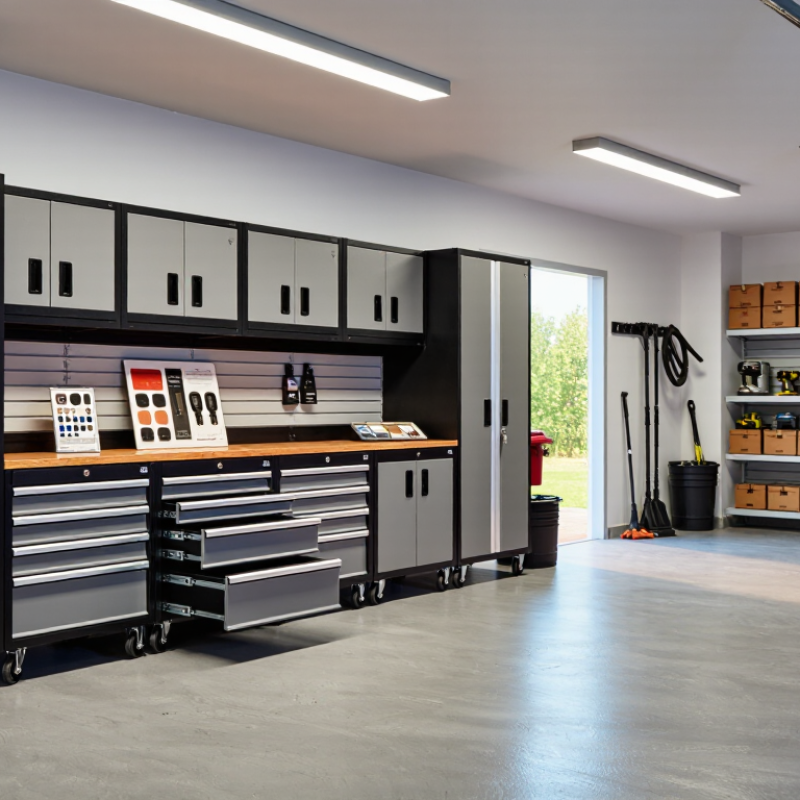
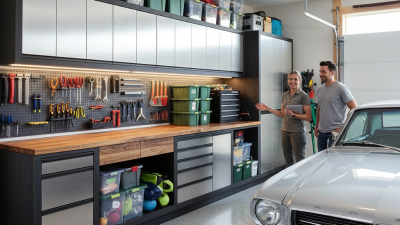
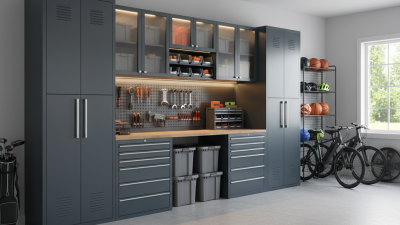
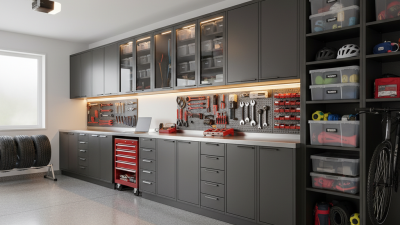
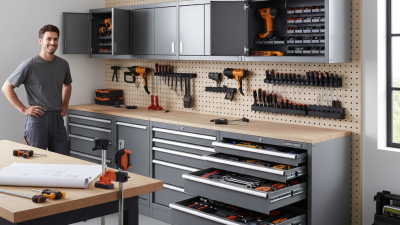
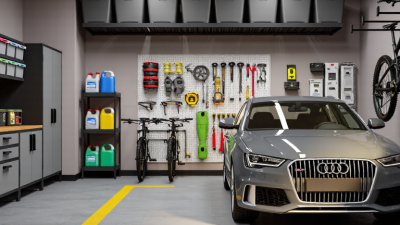
Garage storage systems are structured solutions for turning unused wall and floor space into practical storage. They may include cabinets, adjustable shelving, pegboards, overhead racks, and workbenches. Unlike loose containers, these systems create defined places for tools, bicycles, seasonal items, and cleaning equipment.
In a working garage, a strong cabinet beside the door can hold heavy power tools safely. A slatwall can keep hoses and hand tools visible. Overhead racks can store boxes, but they need secure ceiling connections and clear load limits. Good suppliers should explain these details before selling anything. They should provide accurate measurements, material specifications, installation guidance, and realistic weight ratings. Steel thickness, coating quality, hardware strength, and moisture resistance also deserve attention.
Supplier choice matters because a storage system must fit the garage, not just the product brochure. Experienced suppliers often assess wall types, ceiling height, vehicle clearance, and local humidity. Reliable suppliers also offer clear warranties and responsive after-sales support. I once focused too much on appearance and overlooked drawer capacity. That mistake made daily access less convenient. A cheaper system may seem attractive, yet weak hinges or poor alignment can create repeated frustration. Still, no supplier is perfect. Buyers should verify dimensions, inspect samples when possible, and ask what happens if parts arrive damaged or installation becomes difficult.
China’s garage storage systems market is fragmented, not a single product category.
Grand View Research and Mordor Intelligence place garage storage across broader furniture, shelving, and home organization segments. Their classifications differ. That boundary is imperfect. A steel cabinet sold for a garage may be recorded as furniture, warehouse equipment, or home improvement hardware.
The supply structure has three visible layers. Metal fabrication factories produce cabinets, pegboards, racks, and drawer units. Modular system manufacturers combine steel parts, panels, wheels, and fasteners. Project integrators then design complete storage walls for residential garages, workshops, and small commercial sites. Many suppliers operate as OEM or ODM partners, with capabilities ranging from laser cutting to powder coating and load testing. Factory audits should check material thickness, coating adhesion, welding quality, and published load limits.
Domestic demand increasingly moves through digital channels.
China’s National Bureau of Statistics reported online retail sales of physical goods at about RMB 13.02 trillion in 2023. This figure covers all merchandise, not garage systems, but it shows the scale of China’s platform-led distribution. Suppliers therefore often combine factory sales, contract manufacturing, dealer networks, and online storefronts. Export demand adds another layer. Industry trade reports commonly identify North America and Europe as important destinations for Chinese storage products, yet compliance, packaging, and installation standards vary by market. Price remains influential, perhaps too influential. Buyers should compare usable capacity, corrosion resistance, warranty terms, and replacement-part support rather than cabinet price alone.
China’s garage storage market includes several leading supplier types. Custom manufacturers build cabinets, wall panels, shelving, and workbenches to specific measurements. They suit projects with unusual walls or limited floor space. Modular system suppliers offer standardized units that can be expanded later. Their products usually support faster planning and simpler replacement.
OEM and ODM suppliers are useful for distributors needing private designs or packaging. They can adjust colors, materials, hardware, and installation methods. Wholesale suppliers focus on ready-made products and competitive order volumes. Component specialists provide hooks, rails, brackets, locks, and adjustable frames. In practical sourcing, checking only the catalog is not enough. Ask for load testing records, steel thickness, coating details, and installation drawings. A low quotation may hide weaker hinges or poor corrosion resistance. I have learned that attractive samples can still reveal problems during repeated use.
Tips: Request a complete sample before placing a large order. Measure your garage’s walls, ceiling height, and door clearance carefully. Confirm carton protection and replacement-part support. Ask how the supplier handles damaged deliveries. Do not assume every modular system fits every vehicle bay. Small gaps matter. An independent inspection can expose defects that photographs miss. Suppliers should explain tolerances clearly, though some may provide incomplete answers. That is a warning sign.
Who Are China Top Garage Storage Systems Suppliers?
Buyers should compare products beyond photos and low prices. A capable supplier should offer cabinets, slatwall panels, overhead racks, workbenches, and modular drawers. Ask for steel thickness, shelf load ratings, coating type, and drawer cycle tests. According to the World Steel Association, global crude steel production reached about 1.88 billion tonnes in 2023. This scale supports competitive sourcing, but material quality still differs between factories. Request mill certificates, coating test results, and samples from actual production.
Manufacturing capability matters just as much. Check CNC cutting, robotic welding, powder coating, assembly control, and packaging tests. Suppliers should explain their defect rate and corrective-action process. The ISO Survey 2023 recorded more than 1.26 million ISO 9001 certificates worldwide. ISO 9001 is useful, but it does not guarantee strong cabinets. Verify the certificate scope, issuing body, and factory address. For exports, compare ISO 14001, ISO 45001, CE, RoHS, or destination-specific requirements only when relevant. A certificate can be real yet poorly applied. That part deserves scrutiny.
Tips: Request a pre-shipment inspection and a video of load testing. Compare identical specifications across three suppliers. Check corrosion results, carton drop tests, spare-part support, and installation instructions. Ask whether the quoted price includes hinges, rails, anchors, and replacement panels. Small omissions often become expensive. My own purchasing mistake was trusting a polished sample without testing its wall anchors. Do not repeat it.
Choosing a reliable Chinese garage storage systems supplier requires more than comparing catalog prices. Buyers should verify factory experience, engineering capacity, and production consistency. Request drawings, steel thickness, load ratings, and recent test records. A useful benchmark is ISO 9001 certification. The ISO Survey 2022 recorded more than 794,000 ISO 9001 certificates in China, but certification alone does not guarantee stable quality. It is only a starting point.
Visit the factory, or arrange a live video audit. Check welding lines, powder-coating areas, packaging stations, and finished inventory. Ask how workers control dimensional tolerance and corrosion resistance. For export orders, review carton drop-test results and pallet designs. The World Bank’s 2023 Logistics Performance Index placed China 19th globally, showing strong logistics capability, yet port delays and inland transport still require planning. Confirm production lead time with written milestones. A low quote can hide weak packaging or expensive replacement claims.
Tips: Compare at least three suppliers. Ask for two unedited production videos. Test one sample under realistic weight. Check whether the supplier owns its workshop or outsources key processes. Review references from similar markets, not only testimonials. Payment terms deserve attention. Avoid paying for unverified tooling. Keep specifications measurable, including cabinet height, shelf load, coating thickness, and acceptable defects. One honest warning: buyers often overvalue polished websites. Factory evidence matters more. Mistakes still happen. A clear inspection plan reduces surprises.
| Evaluation Dimension | What Reliable Chinese Suppliers Usually Offer | Evidence Buyers Should Request | Practical Buyer Check |
|---|---|---|---|
| Product Scope | A coordinated range of garage cabinets, wall panels, shelves, workbenches, tool storage and accessory hooks. | Current catalogue, technical drawings, product dimensions and available accessories. | Confirm that the supplier can provide a complete system rather than only one individual product. |
| Manufacturing Location | Garage-storage manufacturing is commonly found in China’s metal-furniture and hardware clusters, including areas of Zhejiang, Jiangsu, Guangdong and nearby industrial regions. | Registered business address, factory address, production photographs and a live video or third-party audit. | Check that the legal entity, invoicing entity and physical factory information are consistent. |
| Material Specification | Cold-rolled steel or galvanized steel options with clearly stated thickness, grade and surface treatment. | Material declaration, thickness records, incoming-material inspection reports and random sample measurements. | Do not accept descriptions such as “heavy duty” without a measurable steel thickness and load rating. |
| Load Capacity | Load ratings stated separately for shelves, drawers, cabinets, wall panels and work surfaces. | Load-test method, test photographs or videos, product drawings and written safety factors where applicable. | Compare the rated load with the intended use and verify whether the rating applies per shelf, per drawer or to the whole unit. |
| Welding and Assembly | Consistent spot welding, accurate hole patterns, reinforced joints and assembly instructions suitable for export customers. | In-process inspection records, assembly videos, dimensional samples and spare-hardware policy. | Inspect door alignment, drawer movement, frame squareness, fastener quality and the availability of replacement parts. |
| Surface Protection | Powder-coated or other specified finishes with controlled pretreatment, coating thickness and color consistency. | Coating specification, pretreatment process, adhesion test results and corrosion-test documentation when required. | Request finish samples and define acceptable limits for scratches, pinholes, orange peel and color variation. |
| Customization Capability | OEM and private-label support for dimensions, colors, handles, layouts, packaging and accessory combinations. | Approved drawings, sample-development procedure, tooling quotation and change-control process. | Use a signed specification sheet so later production cannot be changed based only on informal messages. |
| Quality Management | Documented incoming, in-process and final inspections, with traceability for major materials and production batches. | Quality manual, inspection checklist, nonconformity records and valid management-system certificates if claimed. | Verify certificates directly with the issuing body and confirm that the certificate scope covers the relevant factory. |
| Packaging and Export Readiness | Knock-down packaging, edge protection, moisture control, carton labeling and export documentation. | Packaging drawings, carton test details, packing list, commercial invoice and product labeling samples. | Conduct a packaging drop or vibration evaluation for fragile panels, glass, painted parts and hardware kits. |
| Compliance Documentation | Product documents matched to the destination market, including safety, chemical and packaging requirements where applicable. | Declaration of conformity when required, material declarations, test reports and destination-market labeling information. | Identify the importing country’s requirements before ordering; do not assume that a general factory certificate covers the finished product. |
| MOQ and Sampling | Lower minimum quantities for standard items and higher minimum quantities for custom colors, tooling or special dimensions. | Written quotation showing sample fees, tooling charges, minimum order quantity and refund conditions. | Buy a pre-production sample before mass production and approve it using signed photos or a physical sample report. |
| Lead-Time Control | A defined schedule covering drawing approval, sample production, material purchasing, manufacturing, inspection and packing. | Production schedule, capacity statement, holiday calendar and written delay-notification procedure. | Make delivery dates conditional on approved drawings, deposit receipt and final packaging requirements. |
| Price Transparency | A quotation that separates product cost, tooling, packaging, inland transport, inspection and trade terms. | Formal quotation with currency, validity period, payment terms, Incoterm and exclusions. | Compare suppliers using the same specification and Incoterm; the lowest unit price may exclude important costs. |
| Payment and Contract Risk | A verifiable company bank account, signed sales contract and clearly defined inspection and claims process. | Business license, bank-account verification, contract, pro forma invoice and authorized company seal or signature. | Avoid payments to unrelated personal accounts and define remedies for shortages, defects and late delivery. |
| Pre-Shipment Inspection | Willingness to accept buyer inspection or an independent third-party inspection before balance payment. | Inspection plan covering quantity, dimensions, appearance, function, load performance and packaging. | Use approved samples and an agreed acceptance standard; retain inspection photographs and batch records. |
| After-Sales Support | Clear warranty terms, spare hardware, replacement-part availability and responsive technical support. | Warranty policy, spare-parts list, claim-response timeline and procedure for handling transit damage. | Evaluate the total cost of ownership, not only the initial purchase price. |