For global fleet operators, a truck tool box is more than a storage container. It protects drills, fasteners, electrical testers, and emergency equipment from rain, road spray, dust, and theft risks. The global automotive aftermarket continues to expand as vehicle owners extend service life, according to Grand View Research’s Automotive Aftermarket Size, Share & Trends Analysis, 2024–2030. That trend creates practical demand for durable cargo accessories, including the Waterproof Truck Tool Box.
This guide examines ten common types, from crossover and side-mount boxes to chest, trailer, underbody, sliding, and wheel-well designs. Each option serves a different truck bed, payload pattern, and installation preference. The U.S. Bureau of Transportation Statistics’ Freight Facts and Figures highlights the continuing importance of trucks in domestic freight movement. However, freight data does not automatically prove that every box suits commercial work. Buyers must still check dimensions, lid clearance, mounting strength, drainage, and lock performance.
Water resistance also needs careful interpretation. “Waterproof” is not a universal quality grade. Buyers should request test evidence, gasket specifications, corrosion-resistant materials, and, where applicable, protection ratings aligned with IEC 60529. A box that survives a light shower may fail under pressure washing or standing water. Small details matter. Hinges corrode first. Poor seals invite dust. This is not a perfect checklist, because climates and work habits vary widely. Still, comparing construction, capacity, access, security, and maintenance requirements can reduce costly mistakes. The following overview offers a practical framework for global buyers, with evidence-based guidance and room for honest reassessment.
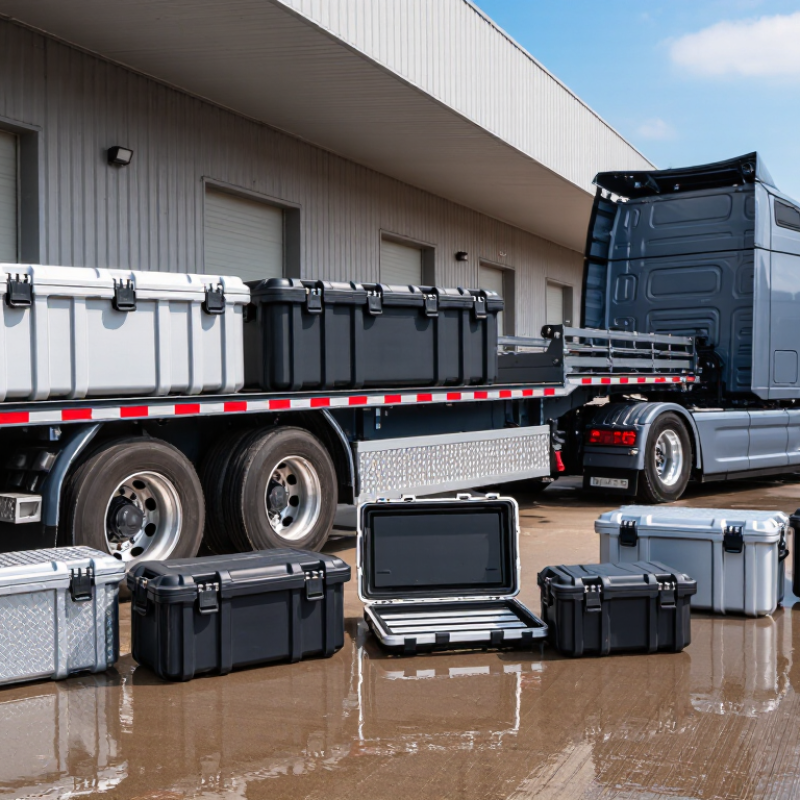
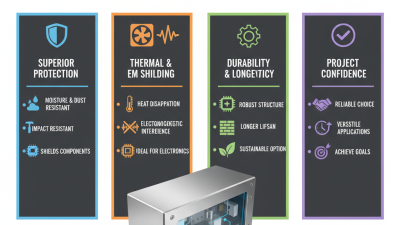
A waterproof truck tool box should resist water entry during real working conditions, not merely during a showroom demonstration. Its protection depends on several details: a continuous rubber gasket, an overlapping lid, secure compression latches, sealed welds, and correctly fitted hinges. Even a small gap can admit rain, dust, and road spray. Waterproof is not always absolute. Many boxes perform well in heavy rain but struggle under pressurized washing or prolonged flooding.
Material choice also affects reliability. Aluminum resists corrosion and keeps weight manageable, while coated steel can provide stronger impact protection. The design should prevent water from resting around the lid or drain toward the opening. Buyers should check the stated ingress rating when available, but ratings do not replace practical inspection. Temperature changes may harden seals, and repeated vibration can loosen fasteners. These details are easy to overlook.
Tips: Test the gasket with a thin strip of paper. Close the lid and pull gently. If the paper slides freely, compression may be inadequate. Inspect corners, latch alignment, and mounting points before purchase. Ask for water-test information, not only the word “waterproof.” A box may look rugged and still leak through its hinge area. That is an imperfect detail, but it matters. Also consider local rainfall, dust levels, winter temperatures, and cleaning methods before selecting one for global use.
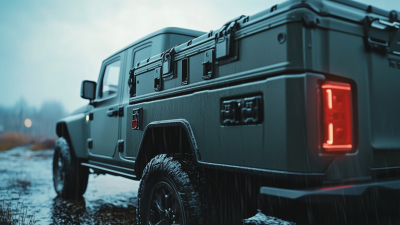
Waterproof truck tool boxes are designed to reduce water intrusion through sealed lids, continuous gaskets, overlapping covers, protected hinges, and compression latches. The chart compares representative storage capacities for common truck tool box configurations; actual capacity varies by vehicle, dimensions, and installation.
Capacity figures are representative market-size estimates in liters rather than brand-specific specifications. Buyers should verify lid sealing, gasket quality, drainage design, corrosion resistance, and any applicable IP or water-ingress test rating before purchase.
Top 10 Types of Waterproof Truck Tool Boxes
Waterproof truck tool boxes protect tools from rain, dust, road spray, and sudden temperature changes. S&P Global Mobility’s 2024 vehicle-age study reports that the average U.S. vehicle is about 12.6 years old. Older trucks often need practical storage upgrades. The right box can reduce tool damage and daily loading time.
The ten common types include crossover, saddle, chest, side-mount, underbody, gullwing, sliding, drawer, trailer-tongue, and wheel-well boxes. Crossover and saddle boxes span the bed, while side-mount models preserve floor space. Underbody boxes suit service trucks. Gullwing doors open quickly beside the cargo bed. Sliding and drawer designs improve access in narrow spaces. Wheel-well boxes fit unused corners. Trailer-tongue boxes serve towing equipment. Compact chest boxes work well for occasional users.
Choose aluminum for lower weight, steel for impact resistance, and reinforced polymer for corrosion control. Look for continuous seals, stainless hinges, drainage control, and lockable compression latches. IEC 60529 defines IP67 protection as dust-tight and suitable for temporary immersion up to one meter. However, an IP rating does not guarantee strong hinges or long-term seal quality. That distinction matters. A 2023 automotive aftermarket analysis by Grand View Research identified replacement and maintenance demand as major market drivers. Field experience suggests waterproof performance can decline after repeated lid bending, careless loading, or frozen seals. Buyers should check internal dimensions, mounting strength, and seal compression before choosing a box.
Top 10 Types of Waterproof Truck Tool Boxes for Global Buyers
Waterproof truck tool boxes differ mainly in shape, access, and mounting position. Crossover boxes sit behind the cab and span the bed. They offer broad storage without blocking most cargo space. Side-mount boxes keep the center open for timber, pipes, or machinery. Underbody boxes save bed space, but need strong brackets and careful ground clearance.
Chest boxes provide large vertical capacity for bulky equipment. Drawer boxes improve organization, especially for small hand tools. Wheel-well boxes fit unused corners and suit lighter loads. Trailer-tongue boxes serve trailers rather than truck beds. Saddle boxes sit above the bed rails and usually hold more volume. Sliding boxes move toward the tailgate, reducing climbing and reaching.
Design details affect real protection. A continuous gasket, overlapping lid, and compression latch help resist rain and road spray. Drainage paths matter when condensation forms inside. Aluminum can reduce weight, while steel may tolerate harsher impacts. However, heavier construction can overload mounting points. No design is perfect. In field inspections, poorly aligned lids often leak despite good materials. Regularly check seals, hinges, fasteners, and mounting brackets. A drawer may be convenient, but packed tools can shift during sudden braking. Underbody models also face mud, stones, and winter salt. Buyers should match box depth, payload, bed length, and local weather conditions to daily work.
| No. | Tool Box Type | Typical Design | Common Materials | Typical Size Range | Water-Protection Features | Best-Suited Use | Main Advantages | Important Considerations |
|---|---|---|---|---|---|---|---|---|
| 1 | Crossover Truck Tool Box | Mounted across the front section of the truck bed, usually behind the cab, with a top-opening lid. | Aluminum, galvanized steel, or heavy-duty molded plastic. | Approximately 1,500–2,100 mm wide × 300–500 mm deep × 300–500 mm high. | Perimeter gasket, overlapping lid, protected hinges, and compression latches. | General construction, service, maintenance, and roadside tools. | Uses little bed length and offers convenient access from either side of the truck. | May reduce rear-window visibility and can limit the usable height of bed cargo. |
| 2 | Side-Mount Tool Box | Long, narrow box mounted along one or both bed sides, commonly opened from the top or side. | Powder-coated steel, aluminum, or impact-resistant polymer. | Approximately 1,200–2,000 mm long × 250–400 mm wide × 250–450 mm high. | Continuous seal, rain channel, drain provisions, and lockable cover. | Frequently used hand tools, tie-downs, electrical supplies, and small equipment. | Keeps the central bed area open and allows fast access while standing beside the truck. | Internal width is limited, so it is less suitable for bulky tools. |
| 3 | Truck Bed Chest Box | Freestanding rectangular chest positioned at the front, center, or rear of the bed. | Aluminum, steel, or UV-stabilized plastic. | Approximately 900–1,800 mm wide × 450–800 mm deep × 350–600 mm high. | Raised lid lip, full-length gasket, sealed lock area, and corrosion-resistant hardware. | Large tool collections, power tools, recovery equipment, and agricultural supplies. | Provides more usable volume than narrow side boxes and can store larger items. | Occupies bed space and may need tie-downs to prevent movement during transport. |
| 4 | Gull-Wing Tool Box | A long box with separate lids opening upward from one or both sides. | Aluminum, coated steel, or reinforced polymer panels. | Approximately 1,200–2,000 mm long × 300–500 mm wide × 350–550 mm high. | Dual compression seals, overlapping lid edges, and protected locking mechanisms. | Work vehicles requiring access from both sides, including utility and fleet trucks. | Improves accessibility and reduces the need to climb into the truck bed. | Requires clearance beside the vehicle for the lids to open fully. |
| 5 | Swing-Out Side Tool Box | A narrow compartment hinged to the bed side or mounted on a pivoting frame. | Powder-coated steel, aluminum, or molded composite material. | Approximately 700–1,500 mm long × 200–350 mm wide × 500–900 mm high. | Door gasket, overlapping door frame, sealed latch, and sheltered hinge line. | Quick access to hand tools, inspection equipment, and service consumables. | Makes tools accessible without unloading cargo from the truck bed. | Needs a strong mounting structure and adequate side clearance when opened. |
| 6 | Underbody Tool Box | Mounted beneath the truck bed, chassis, or flatbed with a front-opening or bottom-hinged door. | Stainless steel, aluminum, or corrosion-protected steel. | Approximately 600–1,500 mm long × 250–500 mm deep × 250–600 mm high. | Door seal, sloped top, drainage design, corrosion-resistant fasteners, and protected seams. | Fleet trucks, flatbeds, emergency vehicles, and equipment-service vehicles. | Preserves bed capacity and keeps tools outside the main cargo area. | Ground clearance, chassis space, load limits, and road debris exposure must be checked. |
| 7 | Wheel-Well Tool Box | Shaped to fit over or around a wheel well, usually with a side-opening door or lift-up lid. | Molded polyethylene, aluminum, or coated steel. | Approximately 700–1,200 mm long × 250–500 mm deep × 300–700 mm high. | Formed cover, perimeter seal, lockable latch, and splash-resistant construction. | Compact storage in pickups where bed space is limited. | Uses otherwise wasted space and leaves the central bed floor available. | Capacity and shape depend heavily on the truck bed and wheel-well dimensions. |
| 8 | Trailer Tongue Tool Box | Mounted on the front A-frame or tongue of a trailer with a top-opening lid. | Diamond-plate aluminum, steel, or heavy-duty plastic. | Approximately 600–1,500 mm wide × 300–700 mm deep × 300–600 mm high. | Rubber gasket, overlapping lid, sealed latch, and corrosion-resistant construction. | Trailer jacks, straps, coupler accessories, electrical items, and recovery tools. | Provides dedicated storage without reducing truck-bed capacity. | Weight and mounting position must remain compatible with trailer tongue-load limits. |
| 9 | Sliding Drawer Tool Box | Low-profile box with horizontal drawers installed in the bed, on a platform, or under a deck. | Powder-coated steel, aluminum, or reinforced composite panels. | Approximately 900–1,800 mm wide × 500–1,200 mm deep × 150–400 mm high. | Drawer seals, enclosed slides, front weather flaps, and recessed locking systems. | Organized storage for mechanics, technicians, and users who need frequent tool access. | Provides excellent organization and allows access from the rear or side of the vehicle. | Drawer systems are heavier and require accurate installation and regular slide maintenance. |
| 10 | Portable Waterproof Tool Case | Removable case with a hinged lid, carrying handles, and optional stacking or tie-down points. | Impact-resistant polypropylene, ABS, or fiber-reinforced plastic. | Approximately 300–900 mm long × 200–600 mm wide × 100–350 mm high. | Replaceable O-ring or compression gasket, sealed hinges, and dust- or water-resistant latches. | Portable electronics, precision tools, inspection devices, and frequently transported equipment. | Easy to remove, transfer between vehicles, and protect from dust, rain, and splashes. | Capacity is smaller than fixed truck boxes; buyers should verify the stated IP or water-resistance rating. |
Buyer Note: “Waterproof” performance depends on the complete assembly, including seals, hinges, latches, mounting points, and installation. For international purchasing, confirm the applicable IP rating or test method, material thickness, corrosion protection, load capacity, dimensions, and vehicle compatibility before ordering.
Choosing a waterproof truck tool box starts with the vehicle, not the appearance. Common options include crossover, saddle, side-mount, chest, underbody, wheel-well, drawer, sliding-bed, trailer-tongue, and modular boxes. A full-size pickup usually accepts a wide crossover box, while compact trucks need a narrower chest or wheel-well model. Flatbed trucks benefit from underbody storage. Service trucks often need lockable drawers for fast access. Measure bed width, rail height, wheel clearance, and tailgate movement before ordering. I once focused on capacity first; that was a mistake. An oversized box reduced rear visibility and blocked tie-down points.
Weather protection needs evidence. IEC 60529 defines IP67 as dust-tight protection and temporary immersion up to one metre for 30 minutes. However, that rating applies to tested conditions, not every hinge or seal. The 2024 S&P Global Mobility vehicle-parc analysis shows pickup trucks remain a major global commercial-vehicle segment, but bed dimensions vary widely by market. Buyers should also check wall thickness, drainage design, gasket compression, corrosion testing, and load limits. A box for coastal work needs stronger corrosion resistance than one used in a dry warehouse.
Tips: Use cardboard to mock the box footprint. Open the tailgate fully. Test glove clearance. Ask for test reports, not vague “waterproof” claims. Recheck measurements after adding bed liners. Small details matter. A perfect seal can still fail when dust collects around the latch.
Global buyers should assess service conditions before choosing among chest, side-mount, underbody, drawer, or crossover boxes. The right type depends on bed rails, payload, climate, and access frequency. IP65 or higher is useful, but an IP code does not prove impact strength. Check hinge compression, drain design, gasket recovery, and mounting hardware. Small details matter. Under IEC 60529, IP ratings measure protection from solids and water, not corrosion resistance.
S&P Global Mobility’s 2023 analysis placed the average U.S. light-duty vehicle age at about 12.5 years. This supports replacement-storage demand, yet older truck dimensions create fitment risks. Buyers should request drawings, internal dimensions, maximum distributed load, and tested mounting points. In humid ports, powder coating alone deserves scrutiny. Sealed aluminum and treated steel may perform differently. Experience suggests that mounting quality often matters more than advertised capacity.
Climate and transport routes also shape procurement. The World Bank’s Logistics Performance Index 2023 ranged from 1.9 to 4.3 across economies, showing uneven logistics reliability. Spare-part availability and packaging therefore deserve attention. Ask for gasket lead times, pallet dimensions, salt-spray evidence, and warranty exclusions. Do not confuse a heavy lid with security. Lock design, pry resistance, and drainage need separate checks. A larger box adds capacity but may reduce rear visibility. Measure twice. Some load claims lack clear test conditions, so buyers should challenge them.