Leave Your Message
For global buyers, Garages Tool Cabinets are no longer simple metal boxes. They are practical systems for safety, productivity, and space control. A cabinet must protect tools from dust, humidity, impact, and unauthorized access. It must also fit different garage sizes, work habits, and regional installation standards.
Market evidence supports this demand. Grand View Research reports continued growth in the global garage storage market, driven by home improvement, professional workshops, and better space utilization. The Freedonia Group also identifies storage organization as an important category within the broader home improvement market. These reports show opportunity, but they do not answer every purchasing question. Product quality can vary sharply between suppliers.
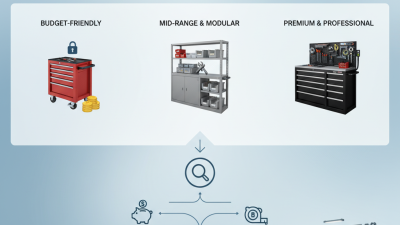
The details matter. A buyer should inspect steel thickness, drawer load ratings, powder-coating quality, lock design, caster strength, and replacement-part availability. A cabinet that looks impressive may still bend under a heavy socket set. Small failures become expensive overseas. Shipping damage, unclear assembly instructions, and inconsistent dimensions can quickly reduce value.
Professional contractor and television host Mike Holmes expresses the basic principle clearly: “A place for everything, and everything in its place.” His statement reflects a real workshop experience. Organized tools reduce searching, protect equipment, and improve daily workflow. Still, appearance should not replace testing. Buyers need verifiable specifications, factory quality records, and responsive after-sales support. Some market data remains broad, and supplier claims require careful checking. That uncertainty deserves attention.
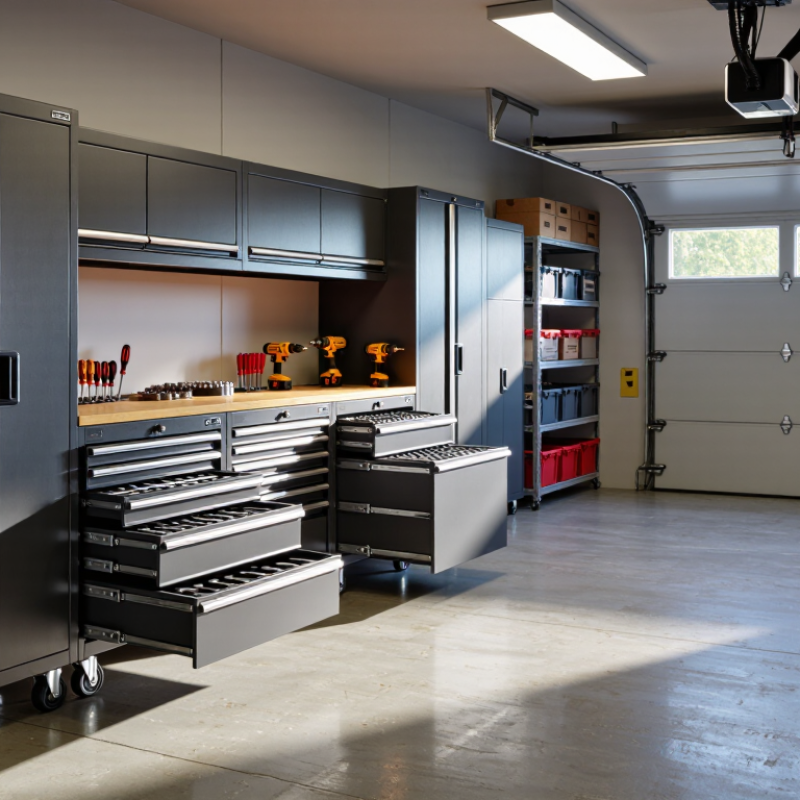
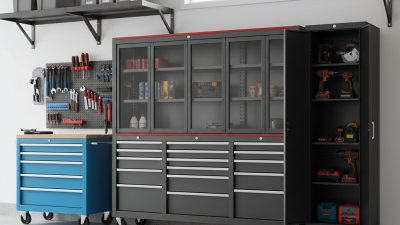
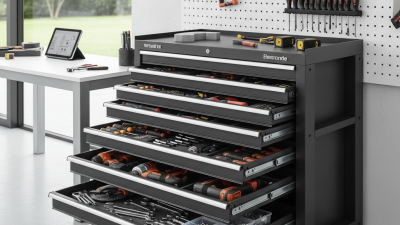
Garage tool cabinets are freestanding or modular steel units designed to organize hand tools, power-tool accessories, and maintenance supplies. They usually combine drawers, a lockable compartment, casters, and a durable work surface. A typical drawer uses ball-bearing slides, which support repeated opening while reducing friction. Internal liners prevent sockets from rolling across the metal floor.
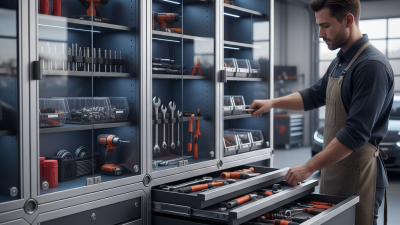
The system is simple. Tools stay visible, grouped, and reachable. Heavy items belong in lower drawers, while frequently used screwdrivers and wrenches sit near waist height. This arrangement can reduce bending and searching during repairs. Grand View Research’s 2024 Hand Tools Market analysis estimates the global market at about US$24 billion in 2023, showing why organized storage matters to workshops worldwide. The cabinet supports that expanding tool ecosystem.
Global buyers should check drawer load ratings, wheel quality, corrosion resistance, and packaging protection. Cabinet dimensions must also match local workshop space and shipping limits. A lock helps control access, but it does not replace sensible inventory management. One overlooked issue is uneven flooring; weak casters can make a full cabinet difficult to move. Advertised capacity is not always practical capacity. Test the balance, drawer clearance, and handle strength before large-volume purchasing.
| Data Dimension | Typical Specification or Range | How It Works | Practical Value for Global Buyers |
|---|---|---|---|
| Product Definition | Freestanding or modular storage furniture designed for hand tools, power tools, fasteners, and workshop supplies. | Drawers, cabinets, shelves, and pegboard sections divide tools into designated storage zones. | Creates a centralized and organized workspace for home garages, repair shops, and maintenance areas. |
| Common Cabinet Types | Rolling tool chest, top chest, side cabinet, tall cabinet, wall cabinet, and modular workstation. | Each format uses a different combination of drawers, doors, shelves, and work surfaces. | Buyers can select a configuration according to available floor space and tool volume. |
| Main Construction Material | Cold-rolled steel is widely used; common sheet thicknesses are approximately 0.6–1.2 mm for general-purpose units. | Formed steel panels create a rigid enclosure and protect contents from impact and everyday workshop conditions. | Steel construction supports durability, consistent production, and easier international specification comparison. |
| Surface Protection | Powder coating is commonly used on steel surfaces; textured finishes are often selected for scratch resistance. | Electrostatically applied powder is cured with heat to form a durable protective coating. | Helps resist chipping, corrosion, and routine cleaning wear during long-term use. |
| Typical Width | Approximately 600–1,800 mm, depending on whether the unit is compact, single-bay, or modular. | Wider frames provide more storage volume but require greater installation and transport space. | Supports planning for different garage layouts and international shipping dimensions. |
| Typical Height | Approximately 700–2,000 mm; low rolling chests and tall storage cabinets occupy different height ranges. | Low units provide accessible work surfaces, while tall units use vertical space for shelves and drawers. | Allows buyers to match storage height with ceiling clearance, user height, and available wall area. |
| Typical Depth | Approximately 400–700 mm for most workshop cabinets. | Greater depth increases internal capacity but also increases the required aisle and maneuvering space. | Useful for evaluating compatibility with standard garage walkways and vehicle parking areas. |
| Drawer Configuration | Common layouts include 5–12 drawers, with shallow drawers for small parts and deeper drawers for equipment. | Ball-bearing or roller slides guide drawers and distribute the load during opening and closing. | Improves tool visibility, access speed, and storage efficiency compared with loose containers. |
| Drawer Load Capacity | Approximately 25–45 kg per drawer for many general-purpose cabinets; actual capacity varies by slide design. | Reinforced drawer bottoms and heavy-duty slides support concentrated loads such as sockets and wrenches. | Helps buyers match cabinet performance with the weight of their tool collection. |
| Overall Load Capacity | Approximately 250–900 kg for rolling and modular units, depending on structure, wheel system, and load distribution. | The cabinet frame, casters, base, and drawer system work together to carry the total stored weight. | Provides a key comparison point for professional workshops and high-volume tool storage. |
| Mobility System | Usually four casters, often including two swivel casters and two locking casters. | Swivel casters support directional movement, while locking casters stabilize the cabinet during use. | Enables flexible workspace reconfiguration without permanently installing the cabinet. |
| Caster Size | Approximately 75–125 mm in diameter for common mobile cabinets. | Larger casters generally roll more easily over minor floor joints and workshop debris. | Helps buyers assess mobility on concrete floors, tiled surfaces, or uneven workshop areas. |
| Security Features | Central key lock, tubular lock, electronic lock, or individual drawer locking system. | A locking mechanism secures drawers and doors to limit unauthorized access to tools and equipment. | Important for shared workshops, commercial facilities, educational spaces, and transport environments. |
| Worktop Options | Steel, stainless steel, rubber, wood, or composite work surfaces are commonly available. | The worktop provides a stable area for assembly, inspection, measuring, and light maintenance tasks. | Allows buyers to select a surface based on heat exposure, noise reduction, cleanliness, and maintenance needs. |
| Internal Organization | Foam tool inserts, adjustable dividers, removable trays, shelf pins, and side hooks. | Accessories keep tools separated and reduce movement inside drawers during cabinet relocation. | Improves inventory control and reduces time spent searching for frequently used tools. |
| Ventilation and Cable Management | Optional vents, rear openings, cable ports, and power-strip compartments. | Ventilation reduces heat accumulation, while cable passages support organized charging and electrical connections. | Useful for storing battery chargers, small electrical equipment, and workshop accessories. |
| Modularity | Single cabinets can often be combined with top chests, side units, wall storage, and workbenches. | Matching modules connect or align to expand storage without replacing the original unit. | Supports phased purchasing, different room layouts, and changing tool collections. |
| Corrosion Considerations | Protection depends on coating quality, steel treatment, ventilation, humidity, and maintenance. | Dry storage, prompt cleaning, and repair of coating damage help reduce surface rust. | Global buyers should consider climate, warehouse conditions, and intended installation environment. |
| Packaging and Shipping Factors | Flat-packed or partially assembled packaging can reduce shipping volume; assembled units require stronger protection. | Corner guards, foam, cartons, and reinforced pallets help protect panels, casters, and drawer fronts during transit. | Packaging dimensions and gross weight directly affect freight planning, handling, and import costs. |
| Maintenance Requirements | Periodic cleaning, slide lubrication, caster inspection, fastener checks, and load balancing. | Routine maintenance keeps drawers moving smoothly and prevents uneven loading or premature wear. | Promotes longer service life and more predictable ownership costs across different markets. |
| Best-Fit Applications | Automotive repair, manufacturing maintenance, home improvement, laboratories, schools, and service workshops. | Tool cabinets combine secure storage, work access, and workspace organization in one system. | Provides a versatile storage solution for both professional and personal users worldwide. |