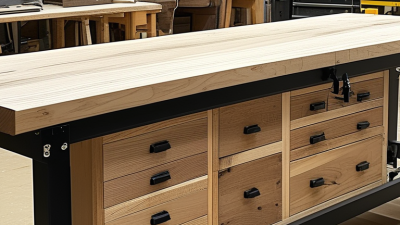
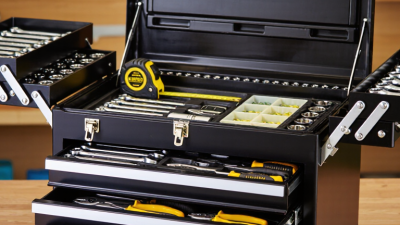
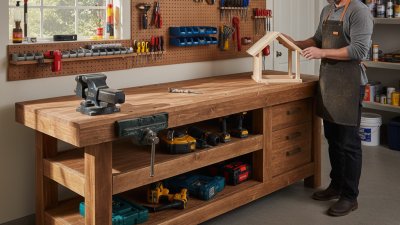
What Is the Best China Workbench With Drawers for Buyers?
Choosing the best Workbench With Drawers requires more than comparing prices or polished product photos. Buyers need a stable surface, useful storage, reliable drawer slides, and enough weight for demanding tasks. A bench that looks impressive may still wobble when a vise grips hardwood. That detail matters.
Woodworking author Christopher Schwarz offers a practical principle: “A workbench is a tool, not furniture.” His words guide this comparison. The best Workbench With Drawers should support real work, not merely decorate a garage or workshop. Solid steel frames, thick laminated tops, full-extension drawers, and secure locking systems deserve close attention. Buyers should also check drawer capacity, assembly quality, working height, and replacement-part availability. Small differences become obvious when storing hand planes, drill bits, clamps, and heavy fasteners.
My experience with workshop furniture suggests that convenience often hides compromises. More drawers can mean less legroom. A thicker top can increase stability but reduce portability. Some affordable benches perform well, while expensive models disappoint after repeated use. No choice is perfect. I still question whether every buyer needs maximum storage, especially in a compact workspace. This guide compares practical features, construction quality, user feedback, and long-term value. It aims to help buyers choose confidently, while recognizing that personal projects, available space, and working habits should shape the final decision.
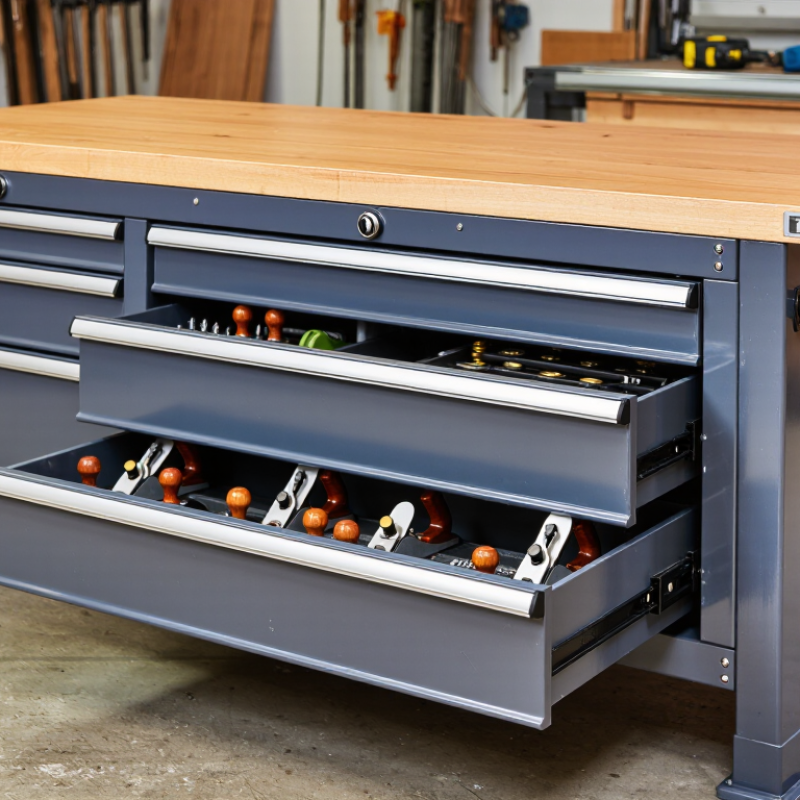
Define Buyer Needs: Bench Height, 500–1,500 kg Load, and Drawer Count
Choosing the best China workbench with drawers starts with the buyer’s actual workflow. A bench for electronics needs a different height than one for engine repair. Most users work comfortably around 850–950 mm, but taller workers may prefer an adjustable frame. Measure your elbow position while standing. Small height errors become tiring after several hours.
Load capacity also needs careful interpretation. A 500 kg bench may suit tools and small assemblies. Heavy mechanical work may require 1,000–1,500 kg. Ask whether the rating applies to evenly distributed static weight or daily impact loads. Check the steel thickness, leg design, leveling feet, and tabletop support. A stated capacity without test details is only a promise. That deserves skepticism.
Drawer count should match the tools you use, not your wish list. Four to six drawers often provide a practical balance. Shallow drawers can hold sockets, files, and measuring tools. Deeper drawers fit clamps, drills, and spare parts. Full-extension slides improve access, but they may reduce usable capacity. Lockable drawers help control tools in shared spaces. Inspect drawer alignment, handle strength, coating quality, and packaging protection before purchase. Some buyers focus on appearance and overlook assembly tolerance. That mistake is common. Request dimensional drawings, load data, and inspection photographs before placing an order.
Verify Quality Through ISO 9001, Load Testing, and Weld Inspection
What Is the Best China Workbench With Drawers for Buyers?
A reliable workbench begins with verified manufacturing control, not attractive photos. ISO’s 2022 Survey recorded more than 1.2 million ISO 9001 certificates worldwide. However, certification covers management systems, not every drawer or weld. Ask for the current certificate, issuing body, scope, and production-site address. Check whether the certificate includes workbench manufacturing.
Load testing should reflect real workshop use. Request test records for both distributed and concentrated loads. The report should show the rated capacity, test duration, deflection, and any permanent distortion. A steel bench holding 300 kilograms may still fail if weight sits on one corner. Inspectors should also open loaded drawers and check rail movement. Small details matter.
Look closely at weld inspection records. Visual inspection should identify undercut, porosity, incomplete fusion, and uneven bead profiles. For critical joints, dye penetrant or another suitable method can reveal surface cracks. OSHA reported 2.6 million nonfatal private-industry workplace injuries in 2023. A workbench cannot prevent every incident, but unstable frames and sharp weld defects deserve attention. Ask for inspection dates, inspector qualifications, and corrective-action records.
A certificate is not perfection.
I would also request photos of the tested sample, not only a polished catalog unit. Factory documentation can be incomplete or overly optimistic. That is uncomfortable, but useful. A careful buyer compares drawings, test records, weld quality, drawer performance, and packaging evidence before approving a China-made workbench.
Rank Total Cost Using FOB Price, Warranty, Spares, and After-Sales Support
What Is the Best China Workbench With Drawers for Buyers?
A low FOB price can make a China workbench look attractive, but it is only the starting point. Add ocean freight, insurance, customs charges, inland delivery, and local handling fees. A 120-kilogram workbench may also require two-person unloading or a liftgate truck. Measure this before ordering. My first calculation was too optimistic because I ignored port storage and final-mile delivery.
Warranty terms deserve equal attention. Ask whether coverage includes drawer slides, locks, casters, and welded joints. A one-year warranty sounds useful, yet the claim process may become difficult without photos, serial numbers, or clear response times. Confirm who pays for replacement shipping. Check whether spare parts are packed with the order. A few extra handles and slide sets can prevent weeks of downtime.
After-sales support affects the real ownership cost. Reliable suppliers should provide assembly drawings, packing lists, installation videos, and responsive technical contacts. Request a written spare-parts price list, not only a general promise. Compare the expected replacement cost over three years, then add labor for repairs. This is where buyers often make mistakes. A cheaper FOB offer may become expensive after one damaged drawer or missing fastener. Also verify carton protection, pallet strength, and pre-shipment inspection records. Small details matter.
What Is the Best China Workbench With Drawers for Buyers? — Rank Total Cost Using FOB Price, Warranty, Spares, and After-Sales Support
Cost basis: The estimated five-year total cost equals FOB price plus the recommended spare-parts budget and the estimated uncovered service reserve. Figures are indicative procurement benchmarks for standard steel workbenches with drawers and should be confirmed against the final specification, order quantity, packaging, destination port, import duties, inland delivery, installation, and payment terms. Freight, customs duties, taxes, and installation are excluded because they vary by destination and shipment conditions.