Who Are the Best Garage Tool Suppliers in China?
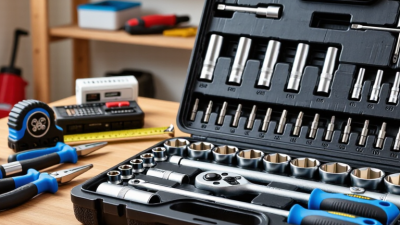
Choosing a garage tool supplier in China involves more than comparing prices or browsing a polished catalog. Buyers need to know what the supplier actually makes, how quality is checked, and whether product details match real workshop needs. A socket set may look complete in a photograph, yet its size range, steel grade, finish, and case durability matter during daily use. Small details count.
This guide explores how to assess suppliers of hand tools, tool cabinets, storage systems, and workshop equipment. It considers manufacturing experience, product range, sample quality, communication, and practical support. Ask for clear specifications and close-up product images; where possible, inspect a sample before placing a larger order. Reliable answers are useful evidence, though they cannot guarantee every future shipment will be identical. No supplier is perfect. A polished catalog can still leave unanswered questions, and that is worth remembering.
For retailers, distributors, and workshop owners, the best choice depends on the job, budget, and expected order volume. Tools Garage buyers should compare suppliers against consistent criteria rather than relying on broad claims or the lowest quotation alone. Look for traceable product information, realistic lead times, and a willingness to clarify requirements. This overview offers a practical starting point—not a substitute for independent checks—so readers can make better-informed decisions and spot details that are easy to overlook.
What Garage Tool Suppliers in China Manufacture and Supply
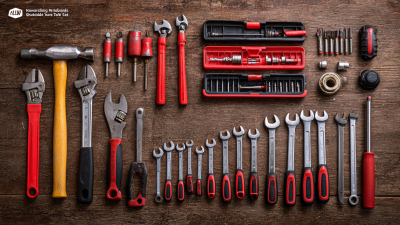
China-based garage tool suppliers manufacture and supply equipment for repair bays, tire shops, and vehicle maintenance centers. Common products include socket sets, torque wrenches, hydraulic jacks, vehicle lifts, air compressors, tire changers, wheel balancers, diagnostic scanners, and steel tool cabinets. Some suppliers make parts in-house; others assemble products from components. Buyers should check which applies.
On a busy workshop floor, a lift’s rated capacity matters as much as its finish. So do clear torque markings, accessible replacement parts, and usable manuals. Small details matter. The International Organization of Motor Vehicle Manufacturers reported about 93.5 million vehicles produced worldwide in 2023. The International Energy Agency reported nearly 14 million electric cars sold that year, around 18% of global car sales. These figures do not measure tool demand directly, but they show the range of vehicles workshops may need to service. Suppliers therefore offer both general-purpose equipment and tools for newer vehicle systems. A broad catalog can look reassuring, yet product descriptions alone are not proof of quality. Request load-test documentation, calibration information, and sample parts where practical. Even then, comparing suppliers takes time.
How China’s Garage Tool Supply Market Is Organized
China’s garage-tool supply market is not one uniform group of factories. It includes specialized manufacturers, export traders, wholesalers, and sourcing firms. Some factories focus on hand tools, such as socket sets and torque wrenches. Others assemble tool cabinets or package mixed workshop kits. A trading company may offer several product categories without making them itself. That can simplify communication, but it may add another step when specifications need clarification. The market map is useful, though not perfectly neat; some suppliers combine roles.
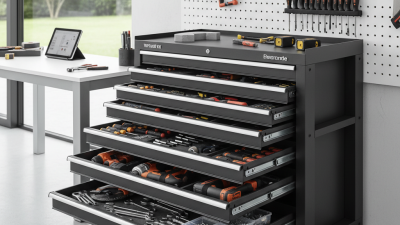
For buyers, the practical question is who controls each part of an order. Ask who selects materials, checks dimensions, approves surface finishes, and handles replacement parts. Request clear drawings or product specifications, then compare a sample with the agreed details. A cabinet drawer that feels smooth when empty may behave differently under load. Small tests reveal useful information. Also confirm packaging, production timing, and how defects are recorded. Supplier profiles and certificates can support a decision, but they cannot replace direct checks. I would not assume that a large catalog means consistent quality; verify the items that matter most to your workshop.
Which Standards and Certifications Matter When Evaluating Suppliers
When evaluating garage tool suppliers in China, start with the quality system, then verify the product itself. ISO 9001 can indicate documented controls for purchasing, inspection, and corrective action. It does not prove that every wrench or jack meets its claimed performance. The ISO Survey 2022 recorded 1,265,216 valid ISO 9001 certificates worldwide. That scale makes certification common, not decisive.
Check whether a certificate is current and covers the actual manufacturing site and product scope. Ask for test reports tied to the exact model, material, and rated load. For hand tools, relevant ISO standards may address dimensions, performance, or test methods; for powered tools, applicable electrical-safety standards matter. The right standard depends on the tool. A generic “CE certificate” deserves careful checking: CE is a conformity marking, not a universal quality approval.
For test results, ask which laboratory performed the work and whether its competence is accredited to ISO/IEC 17025 for the relevant tests. Compare the report’s model number with the quotation and product label; small mismatches matter. I would also request a sample and inspect jaw alignment, coating, and packaging before a large order. Paperwork can look tidy. Real production is less tidy, and one audit cannot reveal every weak batch.
Which Standards and Certifications Matter When Evaluating Garage Tool Suppliers?
These standards address different areas: quality management (ISO 9001), environmental management (ISO 14001), occupational health and safety (ISO 45001), laboratory competence (ISO/IEC 17025), and automotive quality management (IATF 16949). IATF 16949 is relevant mainly to suppliers in the automotive supply chain, while ISO/IEC 17025 applies to testing and calibration laboratories. Edition years are shown for reference, not as supplier scores. Check the current edition, certificate validity, issuing body, and scope; certification alone does not prove a tool meets every product or market requirement.
How to Compare Supplier Quality, Product Range, and Pricing
When comparing garage tool suppliers in China, judge evidence before catalog size.
Grand View Research valued the global automotive aftermarket at USD 427.51 billion in 2023 and projected 3.8% annual growth from 2024 to 2030. This broad market figure is not a tool-sales forecast, but it shows why dependable replacement and repair equipment matters. Ask suppliers for material specifications, inspection records, and sample units. For torque wrenches, check calibration documentation and repeatability; for jacks and stands, inspect rated capacity, welds, and safety labels. A polished product photo proves little.
Product range should match the jobs your workshop actually handles.
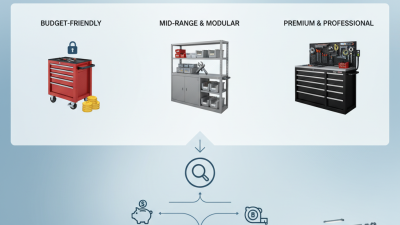
Compare socket sizes, drive types, voltage options, spare-part availability, and whether accessories fit across a supplier’s product families. Request a dated stock list; a large catalog may include items made only to order. Price comparisons need the same detail. Calculate unit cost alongside minimum order quantity, packaging, freight, lead time, warranty terms, and replacement-part charges. A cheaper tool can become expensive after delays or inconsistent batches. I would test a small mixed order before committing, though one sample cannot reveal every production variation. Ask how the supplier handles failed inspections, and keep the answer in writing.
How Buyers Can Verify and Select a Chinese Garage Tool Supplier
When comparing Chinese garage tool suppliers, treat the first call as a screening step, not proof of capability. Ask for the factory’s registered business details, production address, and a live video walk-through of the work area. Check that the company name on its quotation, invoice, and sample packaging is consistent. Small mismatch? Ask why.
Then verify the tools themselves. Request a sample from the same production line and inspect welds, handle fit, coating, moving parts, and packaging. For torque tools or lifting equipment, ask for documented test methods, calibration records where relevant, and clear load or performance limits. A polished catalog proves little. Compare results with the agreed specification, and record defects with dated photos.
Before placing a larger order, discuss materials, tolerances, inspection frequency, lead time, and how rejected units will be handled. Ask for recent inspection reports and confirm who performs the checks. If possible, arrange an independent inspection before shipment; remote calls cannot reveal every process problem. Price matters, but an unusually low quote may exclude testing or protective packaging. One successful sample is not a guarantee. Production can vary, and that is easy to underestimate.