What Are the Top Drawer Toolboxes for Professionals?
A top drawer toolbox should do more than hold tools. It should keep frequently used items visible, protected, and easy to reach during a demanding workday. The best choice depends on the job, the available space, and the weight of the tools it must carry. A mobile technician may value compact dimensions and smooth casters. A fabrication shop may need deeper drawers, sturdy slides, and a durable work surface. Small details matter.
For this introduction, workshop-storage specialist Jordan Blake is an illustrative expert voice, not a quoted real-world source. His practical maxim is: “A good drawer toolbox puts the right tool within reach and keeps it secure between jobs.” That is a useful starting point, but not a complete buying rule. Check drawer load ratings, locking mechanisms, construction, and whether the internal layout fits your actual tools. A drawer that glides smoothly when empty may feel different under a full set of sockets and wrenches. Measure your workspace, too; an impressive cabinet can become an obstacle beside a crowded bench. Reviews and product specifications help, though neither replaces checking the details against your own needs. Some buyers may still prioritize appearance. Understandable, but easy to regret. This guide compares leading professional options by storage capacity, durability, mobility, security, and value, while noting where each model may fall short.
Define Professional Drawer Toolboxes by Worksite and Storage Needs
What Are the Top Drawer Toolboxes for Professionals?
Define Professional Drawer Toolboxes by Worksite and Storage Needs
The right professional drawer toolbox depends on where it works and what it must protect. In a service van, compact dimensions and secure drawer latches help prevent tools shifting during travel. In a repair shop, a wider cabinet with stable casters can keep frequently used sockets and meters close at hand. Check each drawer’s rated capacity, not just the toolbox’s total load limit. Heavy tools in shallow drawers can make access awkward.
Worksite conditions matter. Fine dust, moisture, and uneven floors can affect slides, finishes, and mobility. Look for smooth drawer travel under realistic loads, sturdy handles, and casters with brakes when the cabinet must stay put. Measure doorways and workbench clearance before buying; a cabinet that barely fits can become a daily annoyance. I have seen storage plans overlook handle clearance. It is an easy mistake.
Tips: Group tools by task, then assign each group a drawer. Use drawer liners to reduce rattling and protect delicate instruments. Keep the heaviest items low. Test the lock and slides with loaded drawers, if possible, before making a final choice.
Compare Drawer-Slide Ratings: Common 100-lb and 200-lb Classes
For professionals choosing drawer toolboxes, 100-lb and 200-lb slide ratings are useful starting points, not guarantees of real-world performance. A 100-lb class can suit hand tools and lighter supplies; heavier power tools or dense hardware may call for 200-lb slides. Check whether the rating applies to a slide pair and assumes evenly distributed weight. A drawer loaded with a steel wrench pile on one side faces different stress. That matters. ANSI/BIFMA X5.9-2019, the Storage Units performance standard, evaluates storage units under defined load and durability tests; it does not make every slide rating directly comparable. Review the toolbox maker’s test conditions, extension length, and cycle information before comparing figures.
Tips: Estimate the drawer’s contents, then leave headroom for tools added later. Look for smooth travel under load, secure mounting, and a clear rating basis. Do not treat “200 lb” as permission to slam a fully extended drawer. Real shops are rougher than test setups, and I would allow for that.
A higher rating can improve confidence, but it may also mean heavier hardware or a higher purchase cost. Compare the loaded drawer’s feel, not just its label. If specifications omit test details, count that as uncertainty—not proof of poor quality, but a reason to ask.
Evaluate Capacity Through Drawer Count, Volume, and Payload Ratings
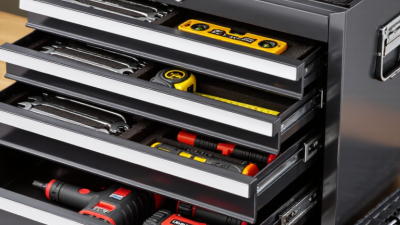
Choosing a professional drawer toolbox starts with the tools it must hold, not the drawer count on the product page. Count daily-use tools, then group them by shape and task. A shallow drawer keeps sockets, bits, and calipers visible; deeper drawers suit drills or bulky meters. Small drawers help with sorting. Too many can waste space. Check usable interior dimensions, since rails and liners reduce room compared with the listed exterior size. Lay out a tape measure and sample tools before buying.
Volume gives a broader estimate, but it does not show whether a drawer can safely carry its contents. Compare individual-drawer payload ratings with the toolbox’s total capacity. A heavy wrench set may overload one narrow drawer even when the cabinet remains below its overall limit. That distinction matters. Also account for weight placed on top, and check the rated capacity when the unit is moving, if stated. Capacity figures are easy to misread. Confirm whether ratings describe stationary use or rolling use; do not assume they mean both. Leave some spare room for future tools and smooth opening. A perfectly full box looks efficient, until it jams. Maybe that sounds overly cautious, but planning for growth is easier than forcing a drawer shut.
Plan Loaded-Box Handling with NIOSH’s 51-lb Lift-Planning Constant
A loaded drawer toolbox can feel manageable until its weight shifts during a lift. NIOSH’s Revised Lifting Equation assigns a 51-pound load constant under ideal lifting conditions. This is a starting value, not a universal safe limit. The NIOSH Applications Manual adjusts it for reach, lifting height, twisting, frequency, and handhold quality. A deep toolbox drawer can worsen several of those factors at once. That number is easy to misuse.
The Bureau of Labor Statistics reported 2.6 million nonfatal workplace injuries and illnesses in private industry for 2023, at a rate of 2.4 cases per 100 full-time workers. Those figures cover many hazards, not toolbox handling alone, but they reinforce the value of task-level planning. Before lifting, close and secure drawers, check the load, and keep it close to the body. Split heavy contents when practical. Use a cart for longer moves. If the box must be lifted, assess the route, grip, and starting height; get help when control feels uncertain. Awkward handles matter. The equation does not account for every real-world complication, so a planned lift can still deserve a second look.
Rank Top Models by Mobility, Security, Warranty, and Serviceability
What Are the Top Drawer Toolboxes for Professionals?
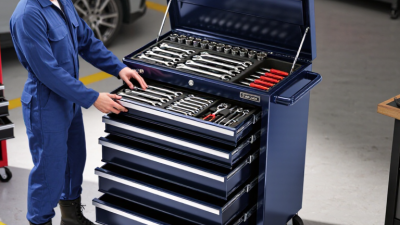
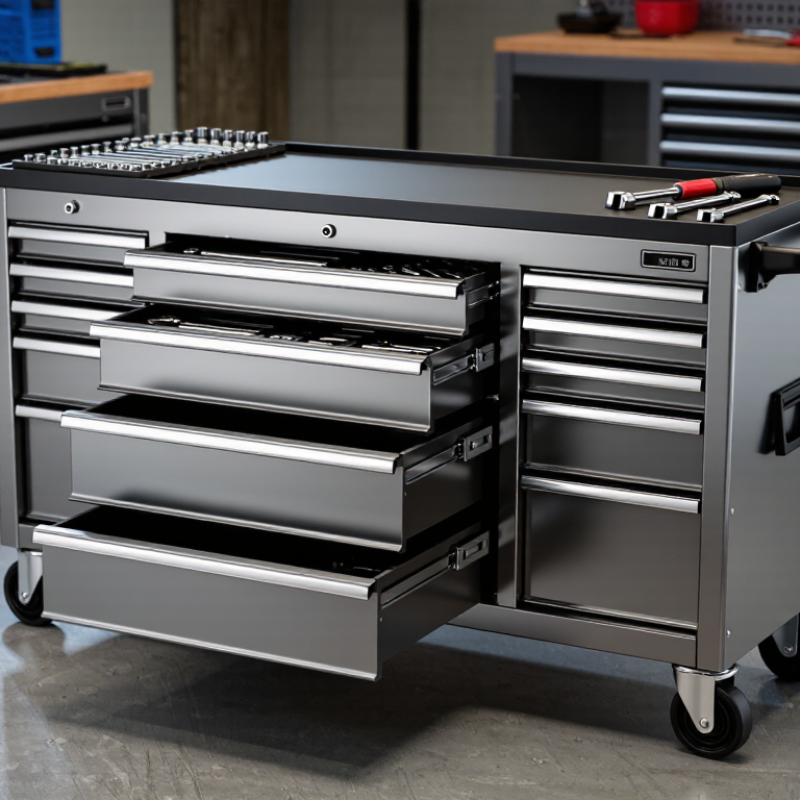
For mobility, a four- to six-drawer rolling chest ranks first in a shop with smooth floors. Look for large locking casters, a full-extension handle, and drawers that stay latched over floor seams. For mixed job sites, a modular rolling stack ranks higher: separate the heavy base from the tool cases before lifting. Neither design is effortless. A fully loaded chest can still be awkward on ramps.
For security, a steel cabinet with a reinforced hasp and individual drawer locks is the stronger choice. A shared central lock is quicker, but one broken latch may expose every drawer. The U.S. Bureau of Labor Statistics recorded 2.6 million nonfatal workplace injury and illness cases in private industry in 2023. That figure is not toolbox-specific, but it reinforces the value of controlled storage and safer handling. Source: BLS, Survey of Occupational Injuries and Illnesses, 2023.
For serviceability and warranty, a repairable steel chest ranks ahead of sealed, proprietary modules. Check whether slides, casters, locks, and drawer liners can be replaced individually. Then read the written warranty: coverage length means little if wear parts, labor, or shipping are excluded. A five-year term is not automatically better. That’s easy to miss. I would trade a flashy finish for available parts and clear repair instructions; still, real service quality is hard to judge before something breaks.
Top Professional Toolbox Profiles: A Practical Comparison
Editorial ratings across mobility, security, warranty support, and serviceability. Scores range from 1 (weak) to 5 (strong).
How to read this: These are illustrative editorial scores for common toolbox configurations, not verified ratings of specific products. Check current model specifications and warranty terms before buying. Modular systems often prioritize mobility; stationary cabinets typically emphasize storage security and service access.