Leave Your Message




0102030405
Ball-Bearing vs Standard Slides: Key Differences Explained
2026-08-10
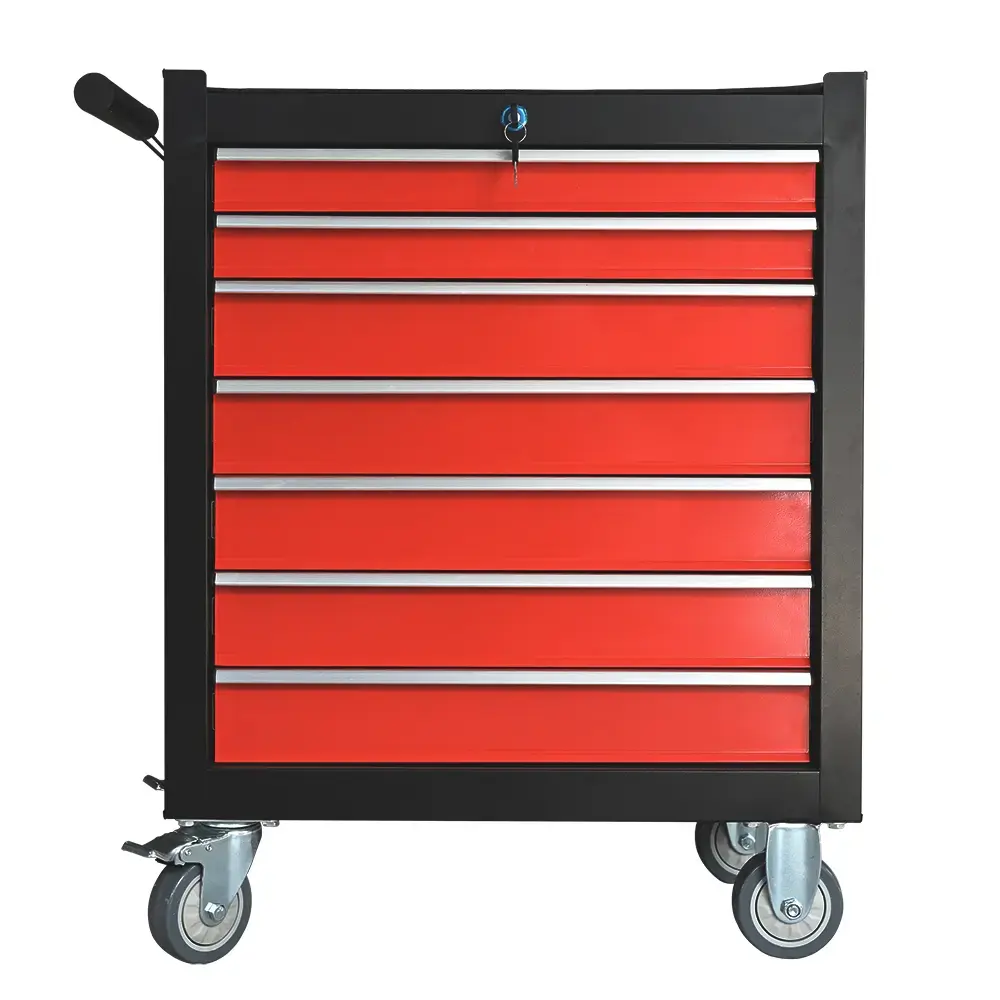
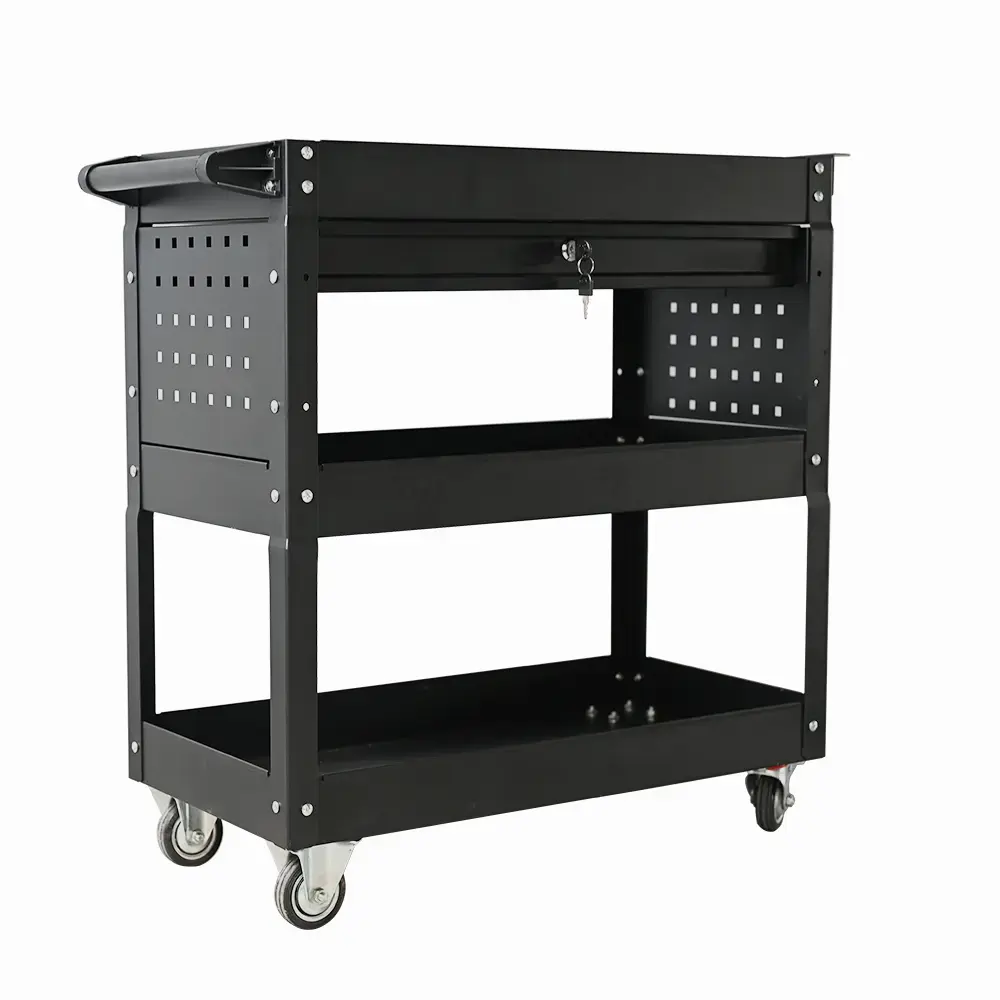
The global market for tool boxes, tool carts and Tool Cabinets continues its rapid expansion, driven by growing demand from distributors, wholesalers and end-users worldwide. For procurement professionals and business owners, understanding the nuances of sourcing, quality assessment and supply chain optimization is essential to maintaining a competitive edge. This comprehensive guide examines the key factors buyers should prioritize when evaluating tool boxes, tool carts and tool cabinets — from material selection and manufacturing processes to logistics and long-term supplier partnerships.
Whether you are a first-time importer or an experienced sourcing manager looking to refine your supply chain, the insights in this article will help you make more informed purchasing decisions while avoiding costly mistakes.
Table of Contents
- Understanding the Tool Boxes、Tool Carts and Tool Cabinets Market Landscape
- Key Quality Factors When Evaluating Tool Boxes、Tool Carts and Tool Cabinets
- Manufacturing Standards & Certification Requirements
- Logistics, Shipping & Supply Chain Strategies
- Cost Optimization & Negotiation Best Practices
- Building Long-Term Strategic Supplier Partnerships
- Frequently Asked Questions
Understanding the Tool Boxes, Tool Carts & Tool Cabinets Market Landscape
The global market for tool boxes, tool carts and tool cabinets has grown remarkably over the past decade. Industry analysts project the sector will expand at a compound annual growth rate (CAGR) of 6–8% through 2030, fueled by strong demand across North America, Europe and the Asia-Pacific. For procurement professionals and business owners, mastering sourcing best practices, quality evaluation and supply chain efficiency is critical to staying competitive.
Key Insight: Sourcing directly from specialized manufacturers in China can reduce procurement costs by 25–40% compared to working through intermediaries — while maintaining premium quality — as long as you know how to properly evaluate and select suppliers. This section breaks down the current competitive landscape and highlights the most valuable opportunities for international buyers.
At DingtuoToolbox, we have seen firsthand how importers who build direct relationships with specialized factories benefit from faster lead times, stricter quality control and more favorable pricing. Our product lineup — including tool boxes, tool carts and tool cabinets — is trusted by distributors across 3 continents.
Key Quality Factors When Evaluating Tool Boxes, Tool Carts & Tool Cabinets
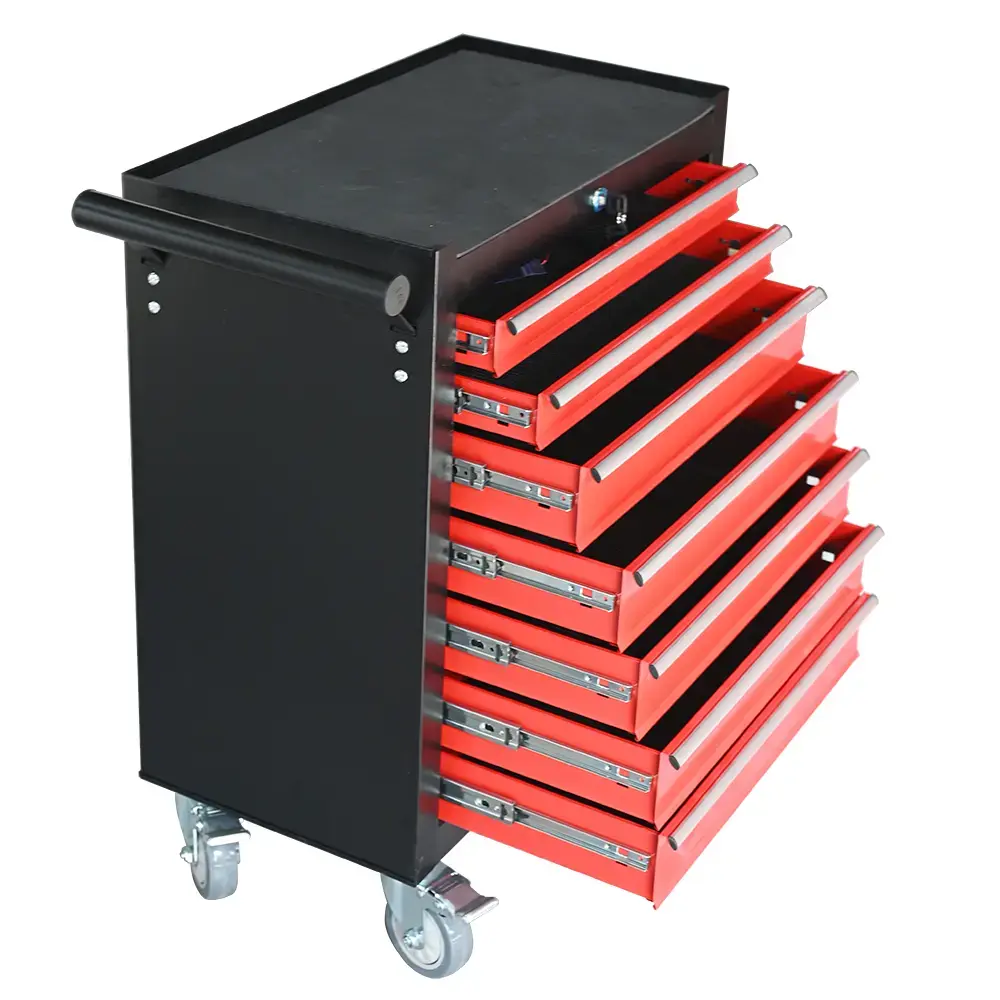
Quality assessment is the single most important step in your sourcing process. When evaluating tool boxes, tool carts and tool cabinets from overseas manufacturers, buyers should focus on critical factors that directly affect performance, durability and end-customer satisfaction.
Material Composition
The grade and origin of raw materials define core product quality. Reputable manufacturers maintain full material traceability and provide certification documents upon request. Always request Material Test Reports (MTRs) and verify compliance with international standards such as ISO, ASTM or EN specifications relevant to your market.
Manufacturing Precision
Tolerances, surface finish and assembly consistency distinguish premium products from low-quality alternatives. Visit the factory or request a production line video tour to confirm the manufacturer uses modern CNC equipment, automated quality inspection systems and standardized operating procedures. Our facility at Dingtuotoolbox enforces strict quality control checkpoints at every production stage.
Testing & Certification
Never accept products without third-party test reports. Depending on your target market, ensure compliance with CE (Europe), UL/ETL (North America), SAA (Australia) and other regional certifications. Require batch-specific test results, not just prototype approvals — this confirms consistent production quality over time.
Manufacturing Standards & Certification Requirements
Navigating global certification rules can be complex, but it is essential to reduce liability risks and ensure smooth customs clearance. Incorrect or missing certifications can lead to rejected shipments, fines or legal penalties.
Quality Management Systems
ISO 9001 certification is the minimum standard for reliable manufacturers. However, certification alone is not enough — verify the quality management system is actively implemented across production. Ask about internal audit frequency, non-conformity handling and continuous improvement processes.
Product-Specific Certifications
Beyond general quality systems, confirm the supplier holds certifications tailored to your product category and target market. These may include CE marking, RoHS compliance, REACH regulations, FDA approval (for food-contact applications) or industry-specific standards. Dingtuotoolbox maintains complete certification dossiers for all product lines, with full documentation available on request.
Factory Audits
Third-party factory audits are a worthwhile investment. Organizations including SGS, Bureau Veritas and TÜV Rheinland provide comprehensive audits covering production capacity, quality systems, social compliance and environmental practices. This independent verification offers strong assurance before placing large orders.
Logistics, Shipping & Supply Chain Strategies
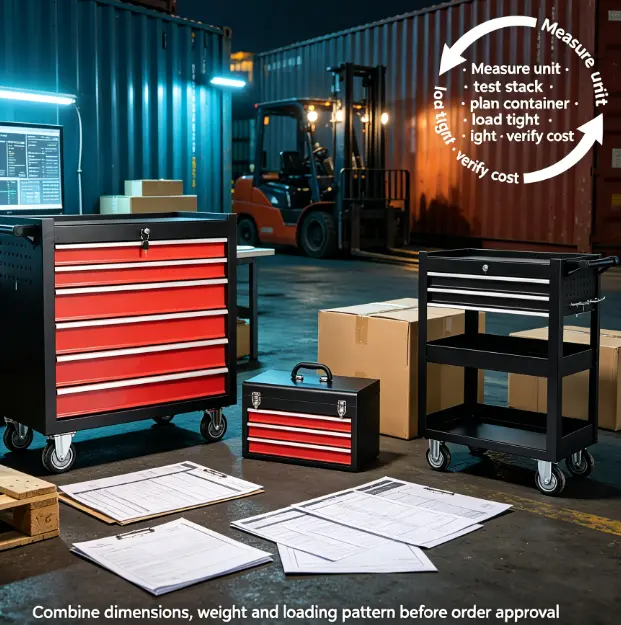
Even the highest-quality tool boxes, tool carts and tool cabinets become useless if they arrive damaged, delayed or detained by customs. A well-designed logistics strategy is just as important as product quality in international sourcing.
Shipping Methods Comparison
- Sea freight: Lowest per-unit cost, ideal for large-volume orders with flexible schedules (25–40 days to major ports).
- Air freight: 5–10 day delivery, but 4–6 times more expensive — best for urgent restocks or initial samples.
- Rail freight to Europe: A balanced middle option combining reasonable speed and cost efficiency.
Packaging Optimization
Professional packaging can reduce shipping damage rates from 3–5% to below 0.5%. Work with your supplier to design packaging that protects products during international transit while minimizing dimensional weight. Use moisture-resistant packaging for ocean shipments and reinforced corner protection for heavy items.
Customs & Duties Planning
Partner with a licensed customs broker before your first shipment. Ensure your supplier provides accurate HS codes, certificates of origin and all required import permits. Misclassification can result in penalties equal to 5–20% of shipment value. For US imports, understand Section 301 tariffs and explore duty drawback or foreign trade zone options.

Cost Optimization & Negotiation Best Practices
Effective negotiation with tool box, tool cart and tool cabinet manufacturers involves far more than price reduction. The most successful buyers focus on total landed cost, including unit price, shipping, duties, warehousing and quality-related expenses.
Volume-Based Pricing Tiers
Most manufacturers offer substantial discounts at higher order volumes. The optimal import pricing sweet spot is typically 500–2000 units per SKU, where unit costs drop 15–30% compared to MOQ-level orders. Consider consolidating multiple SKUs to reach this tier while preserving product variety.
Payment Terms
Standard terms (30% deposit, 70% before shipment) balance risk for both sides. As trust develops, negotiate extended terms such as T/T 30 days after B/L date or L/C 60 days to improve cash flow. Avoid 100% upfront payments unless you have a long-term, proven relationship with the supplier.
Hidden Cost Awareness
The three most overlooked costs in global sourcing are:
- Mold & tooling fees
- Sample and prototyping costs
- Quality inspection charges
Address these explicitly in your initial RFQ to avoid unexpected expenses. The team at Dingtuotoolbox provides fully transparent pricing with all costs itemized upfront — no hidden fees.
Building Long-Term Strategic Supplier Partnerships
The most successful importers treat their tool box, tool cart and tool cabinet suppliers as strategic partners rather than transactional vendors. Companies with long-term supplier relationships report 30% fewer quality issues and 20% faster time-to-market for new products.
Communication Protocols
Establish clear communication channels and response time expectations. Weekly video calls for active projects and monthly business reviews prevent small misunderstandings from becoming costly problems. Use shared project management tools to track orders, QC reports and development milestones in real time.
Joint Product Development
The strongest partnerships involve collaborative innovation. Share market feedback and customer insights with your manufacturing partner — allowing them to propose product improvements, cost-saving design changes and new concepts that strengthen your market position.
Visit Frequency
In-person factory visits at least twice per year are essential for serious buyers. Face-to-face meetings build trust, enable hands-on quality checks and demonstrate your commitment to the partnership. During visits, review production capabilities, discuss upcoming projects and resolve concerns directly with factory management.

Frequently Asked Questions
What is the typical MOQ for tool boxes, tool carts and tool cabinets?
Most manufacturers require an MOQ of 50–500 units per SKU, depending on product complexity and customization. New buyers are advised to start with trial orders of 50–100 units to verify quality before scaling up.
How long does production and shipping take?
Production usually takes 15–45 days after order confirmation and deposit. Sea freight adds an additional 25–40 days to major North American and European ports. Plan for a total lead time of 8–12 weeks from order to warehouse receipt.
Can I request custom branding or OEM manufacturing?
Yes. Most established manufacturers offer full OEM/ODM services, including custom logo printing, packaging design, color customization and specification adjustments. Engineering modifications typically extend lead time by 2–4 weeks.
What quality guarantees are provided?
Reputable manufacturers offer a minimum 12-month warranty against manufacturing defects. Additional protections include pre-shipment inspections, sample approval before mass production and detailed QC reports with every shipment.
How do I handle defective products or claims?
Document all defects with photos and videos within 7 days of receipt. Most suppliers include 2–5% free spare parts with initial orders. For major quality issues, negotiate a credit against your next order rather than demanding cash refunds, which can harm long-term relationships.
Conclusion
Successfully sourcing tool boxes, tool carts and tool cabinets internationally requires a structured approach that balances quality, cost and logistics. By thoroughly evaluating suppliers, understanding certification requirements, optimizing your supply chain and building strategic partnerships, you can secure high-quality products at competitive prices while minimizing risk.
The most successful importers view suppliers as long-term partners rather than one-off vendors. This approach unlocks preferential pricing, priority production, collaborative development and faster issue resolution — all of which directly improve profitability and customer satisfaction.
To explore our full catalog of tool boxes, tool carts and tool cabinets or discuss custom manufacturing solutions, contact the Dingtuotoolbox team for a personalized consultation and quote.