Leave Your Message




Fitting Out a Workshop From Scratch: How Buyers Sequence Tool Storage Across a New Facility
Twelve Bays, One Purchase Order and Cupboards Nobody Could Reach
A fit-out buyer furnished a new twelve bay service workshop by ordering forty identical cabinets, because forty was the number that fitted the wall. Six weeks after opening, the technicians had pushed the mobile units into the middle of the floor, the shared specialty tools were living in a cardboard box, and the van crews were buying their own boxes and invoicing them back. The storage had been bought to a floor plan rather than to the work. A workshop fit-out bought by square metre produces a room full of cupboards that nobody uses, and the correction is always bought later at retail prices out of a different budget.
Storage in a working shop is not one product, it is four, each with a different job: fixed storage at the bay, mobile storage that follows the technician, shared carts for the tools nobody owns individually, and portable boxes for work that happens off site. Buyers who specify those four separately, in that order, end up with a shop where tools are found in seconds instead of minutes, and they stop the slow bleed of duplicate purchases.
Map the Work Before You Measure the Wall
Walk a full shift before ordering anything. Note where the technician stands, how far he walks for a socket, which tools are used every job and which are used once a week, and which jobs happen away from the bay. The output of that walk is a simple frequency map: daily tools within arm's reach of the lift, weekly tools within ten steps, and specialty tools in shared storage that everyone can find. Only after that map exists should the floor plan be drawn, because the plan follows the work and not the reverse.
Count the people, not just the bays. A shop running two shifts with twelve technicians needs storage for twenty-four sets of daily tools, and a specification written per bay rather than per technician comes up short on the first week of the second shift. Under-specifying by a shift is the most common fit-out error, and it is discovered on day one, when there is no budget left to fix it.

Fixed Storage: The Bay Cabinet
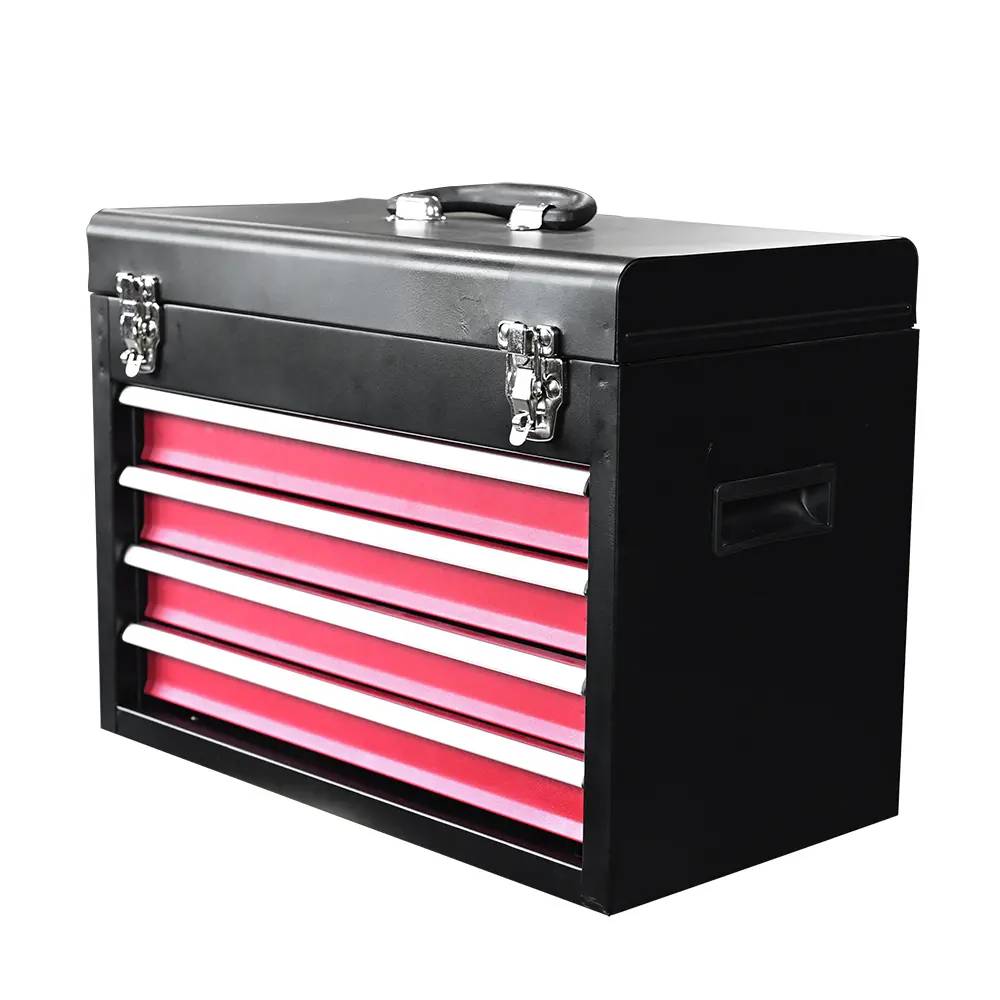
The bay cabinet holds the daily set. It needs drawer capacity sized to the actual tool list, a work surface at a height that suits the task, and a locking system that lets a technician secure his own set at the end of a shift. Depth matters as much as width, because a deep cabinet against a wall wastes the back half of every drawer. A combined unit such as a comprehensive tool storage cabinet with matching upper and lower toolboxes gives one bay both bulk storage and a partitioned set of drawers without stealing floor space.
Mobile Storage: What Follows the Technician
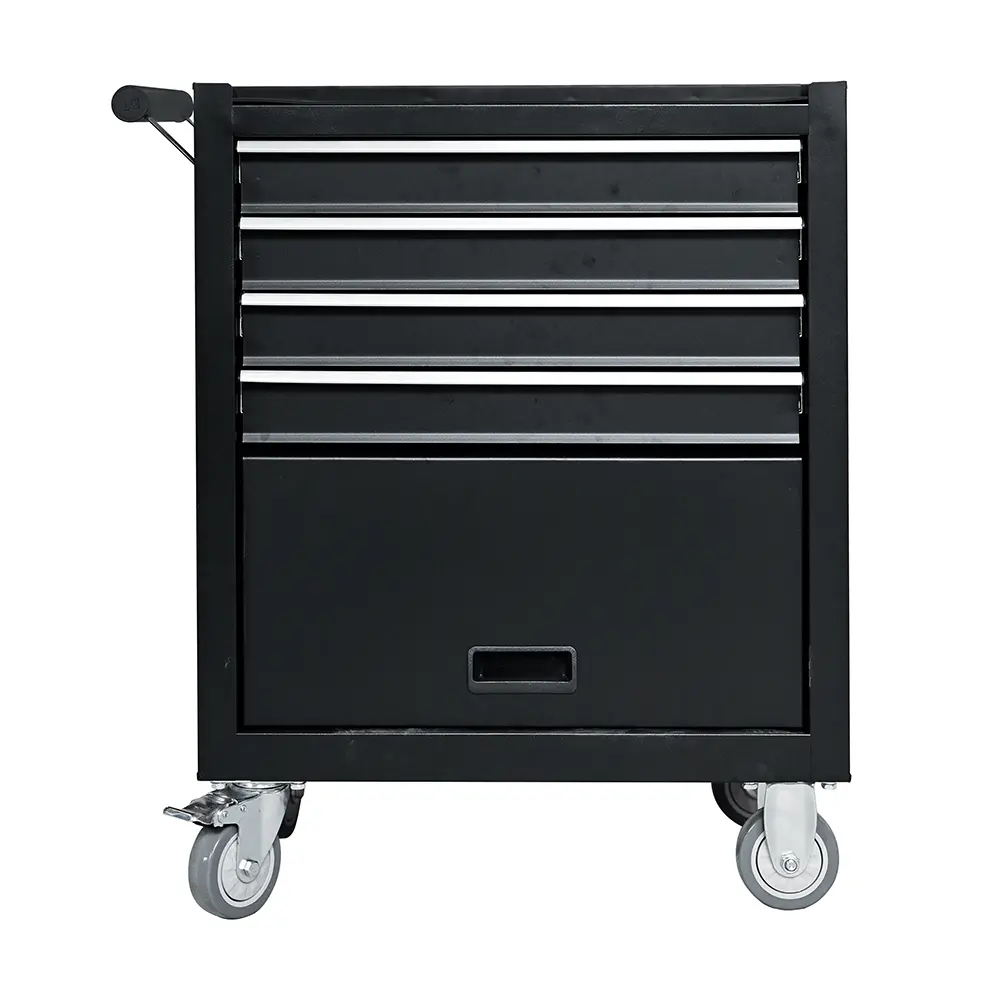
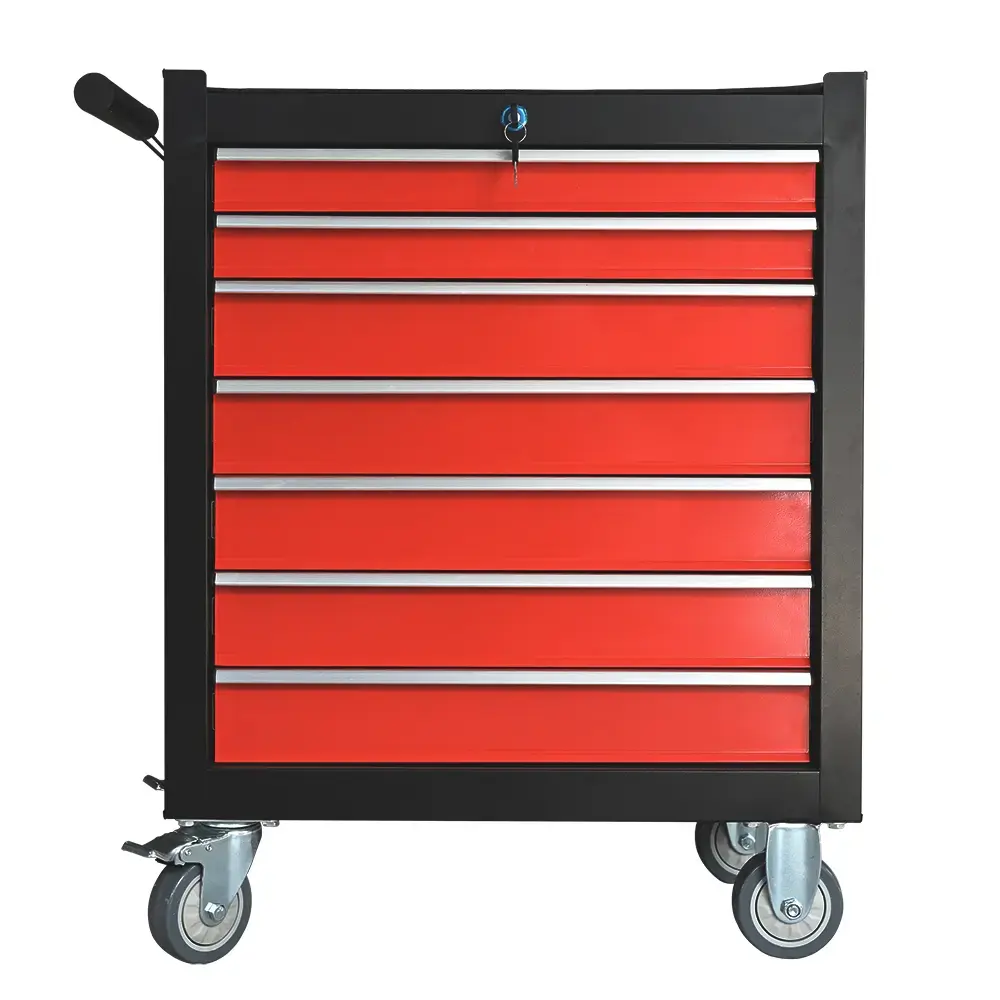
Not every job happens at the bay. Rolling Cabinets carry the working set to the vehicle, and they are the difference between four trips per job and none. Specify them on three things: drawer load rating, castor diameter and brake quality, and tip-over stability when the top drawer is fully loaded and extended. A tall cabinet on small castors with every drawer open is an instability problem, and tip-over is the failure mode that turns a storage purchase into a safety incident.
Colour and finish are not only cosmetic in a fit-out, they are the way the shop marks ownership and separates trades. A rolling unit such as a multi-function rolling tool cabinet with five drawers in a consistent shop colour reads as facility equipment rather than as personal kit, which is what stops tools leaving the building.
Shared Carts for the Tools Nobody Owns
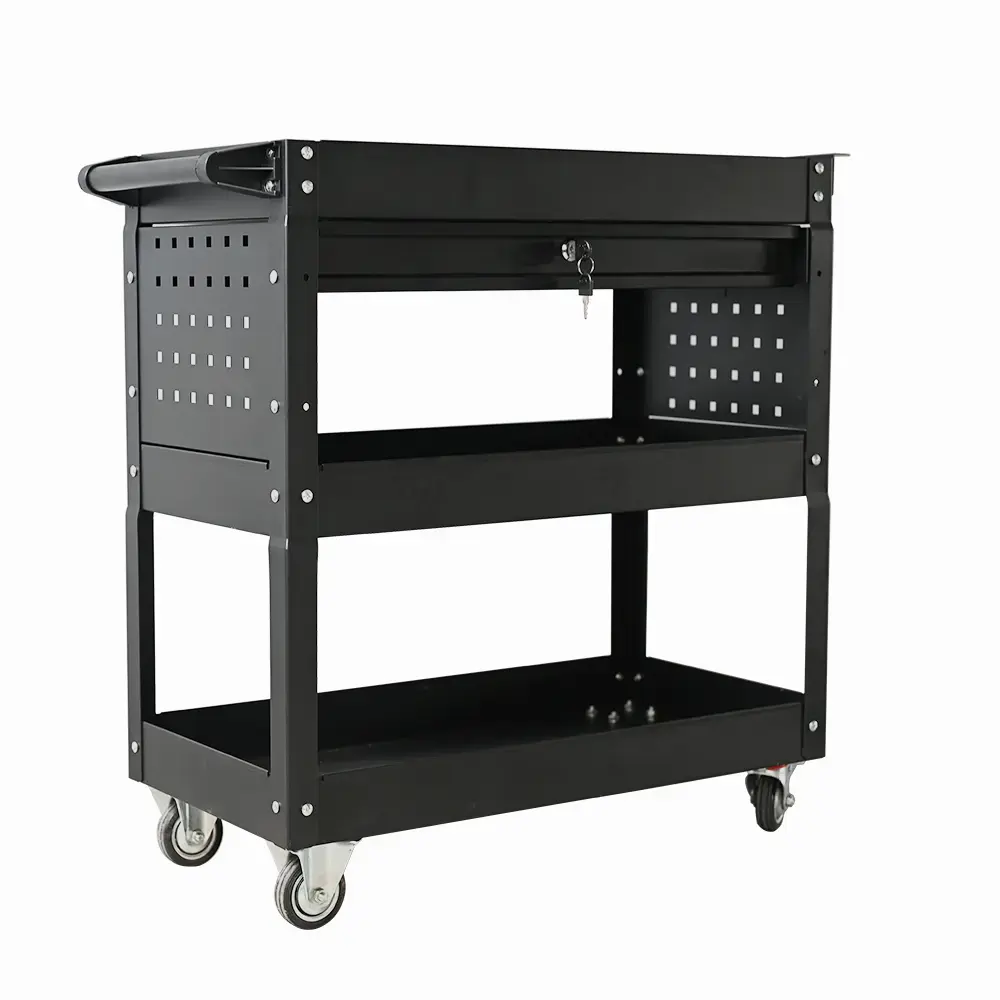
Every shop has a second category: the pullers, the specialty sockets, the diagnostic kit, the torque wrenches. These are used by everyone and owned by no one, and they are the items that disappear. A mobile cart with a defined home, a labelled layout and a single custodian solves it. One cart with a shadowed layout, checked at shift handover, recovers more lost tools than any inventory system, because the missing item is visible immediately. Interlocking construction also lets the cart grow with the shop instead of being replaced.
Buy the cart to be moved by one person with one hand while loaded, because a cart that needs two hands never goes back to its home. An interlocking unit such as a four drawer interlocking utility rolling trolley with universal wheels is specified for exactly that duty.
Portable Boxes for Work That Happens Off Site
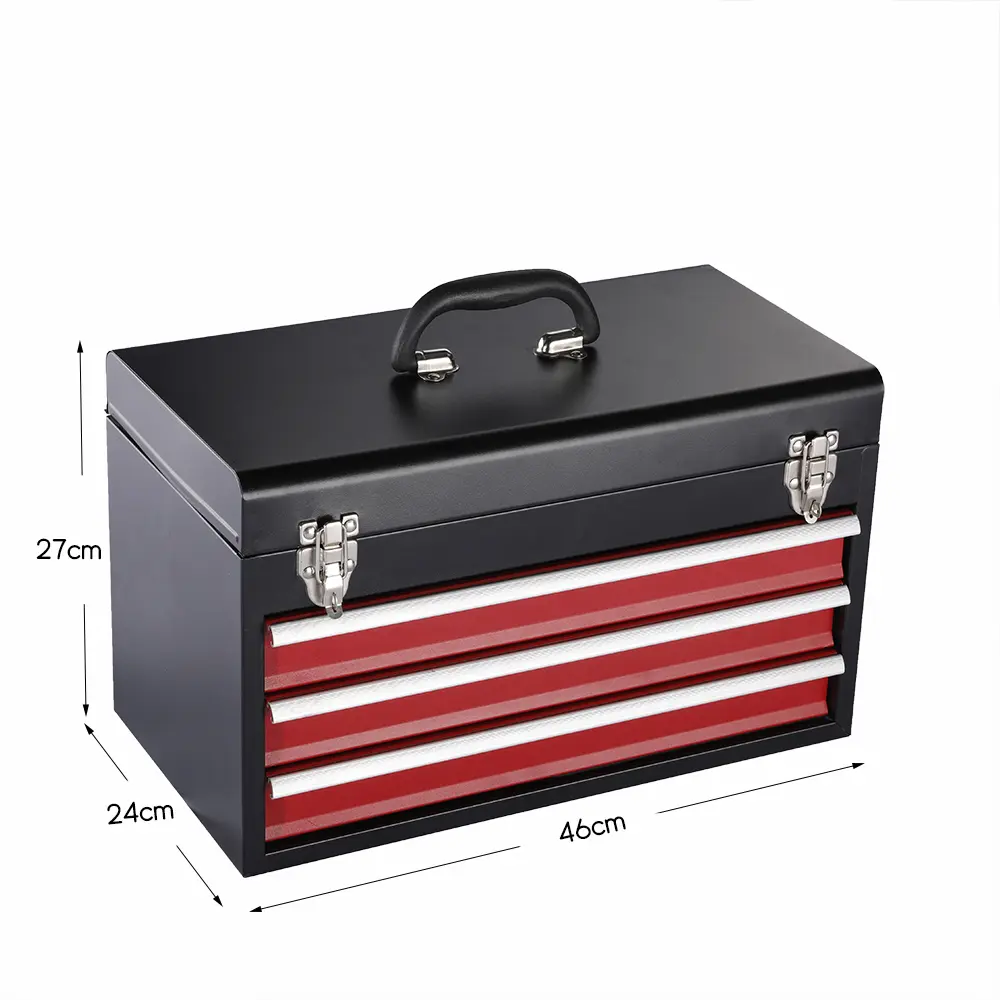
Van crews, call-out work and site service need storage that leaves the building. This is a separate purchase with separate criteria: closed dimensions, carrying comfort, and whether the box can be lifted into a vehicle by one person when loaded. A portable box specified only on capacity ends up too heavy to carry, and it is then dragged, which is how handles and latches fail in the first month.
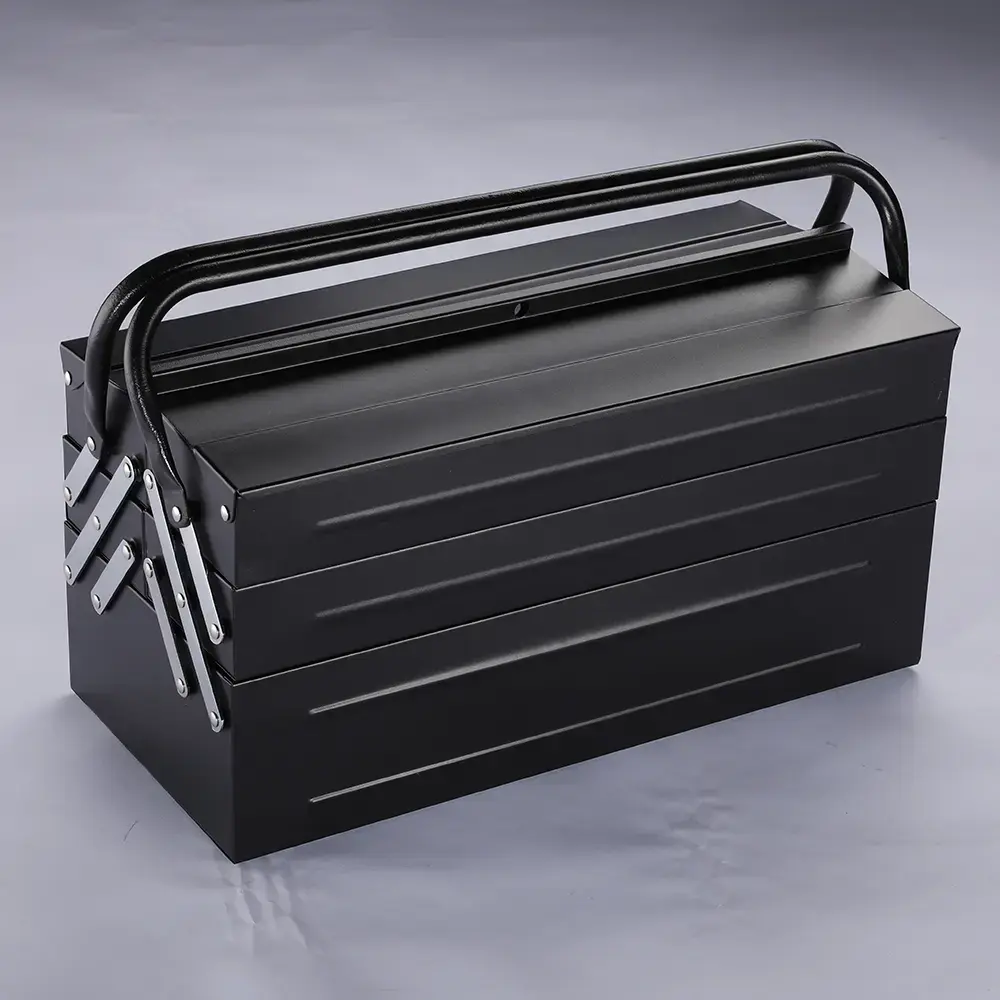
Cantilever boxes are the right answer where a technician needs to see everything at once on a floor or a site, because the trays open out rather than stack. A tiered unit such as a three tier five tray lockable cantilever metal toolbox presents the whole set in one motion, which is why site crews prefer it to a deep box.
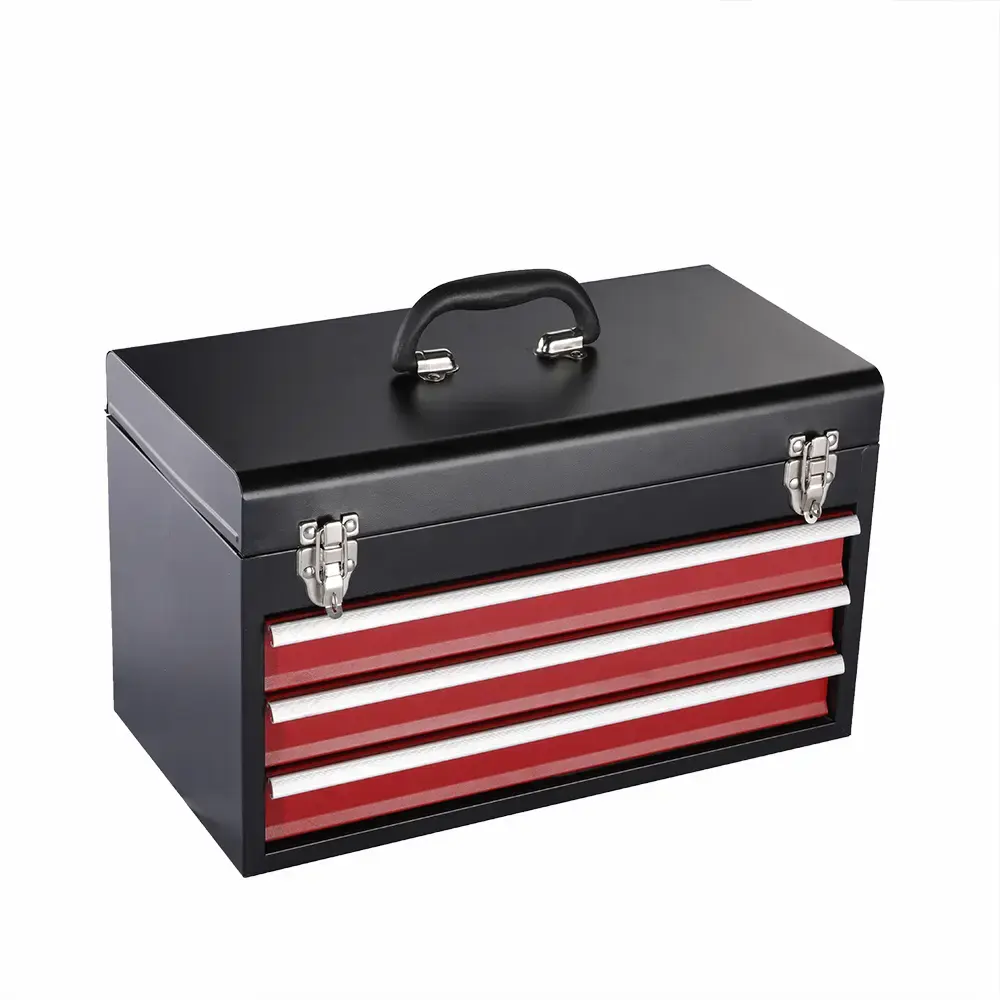
Smaller single-purpose boxes still earn their place for the calibrated or fragile kit that should travel alone. A compact lockable unit such as a single drawer lockable metal tool box keeps a torque wrench or a measuring set separate from the general kit that gets thrown around in a van.
Locking, Keying and the Handover Pack
A multi-bay shop with four product families generates a key problem, and it should be solved at the order stage. Decide three levels: individual lock per technician, a keyed-alike group per shift or per trade, and a master for the supervisor. Keys specified after delivery means re-keying on site, mismatched cylinders and a locksmith bill that exceeds the cost of getting it right in the order. Confirm the keying schedule, the number of keys per lock and the spare cylinder quantity before production.
Phase It, Then Audit It
Fit out in two phases: fixed and mobile storage for the opening shift, then carts and portable boxes once the frequency map has been validated by real work. A short second phase buys accuracy, and it is far cheaper than discovering after handover that half the shop bought its own storage. Audit at week six, walk the same shift again, and adjust before the warranty window closes.