
Leave Your Message



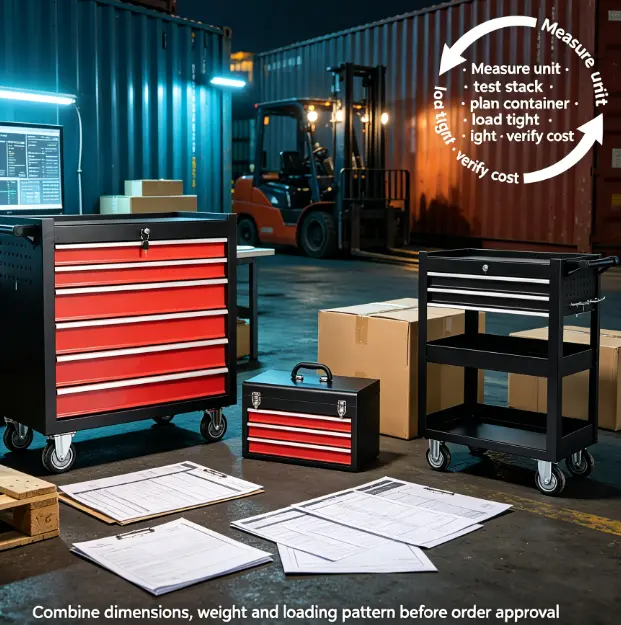

Load Rating, Tip-Over Stability and Caster Choice: The Safety Spec for Roller Tool Cabinets
Three Drawers Open, One Cabinet Down, One Chain Account Gone
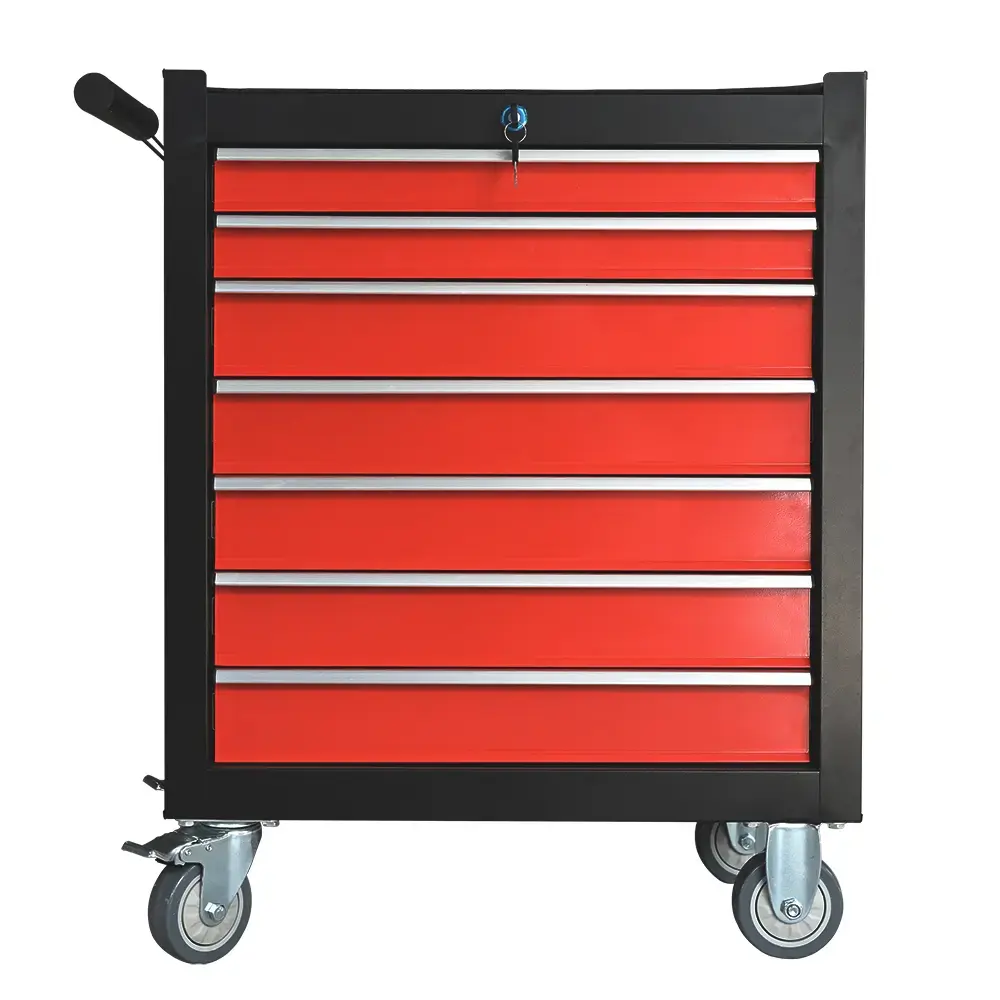
A workshop fit-out buyer in Birmingham delivered 62 Roller Cabinets to a fleet maintenance chain. A technician opened three loaded drawers at once on a unit standing on smooth epoxy, and the cabinet came over on him. One fractured foot, one claim, and 140 units cancelled.
The cabinet was not defective; it had no stability requirement in the specification. Write the stability requirement before you write the purchase order.
Per-Drawer Load and Total Load Are Different Numbers
Read the two figures separately. A ball-bearing drawer is rated 25 to 45 kg, heavy units reach 70 kg, and total cabinet rating runs 250 to 500 kg. The total is not the sum of the drawers, because the frame and the casters limit it first.
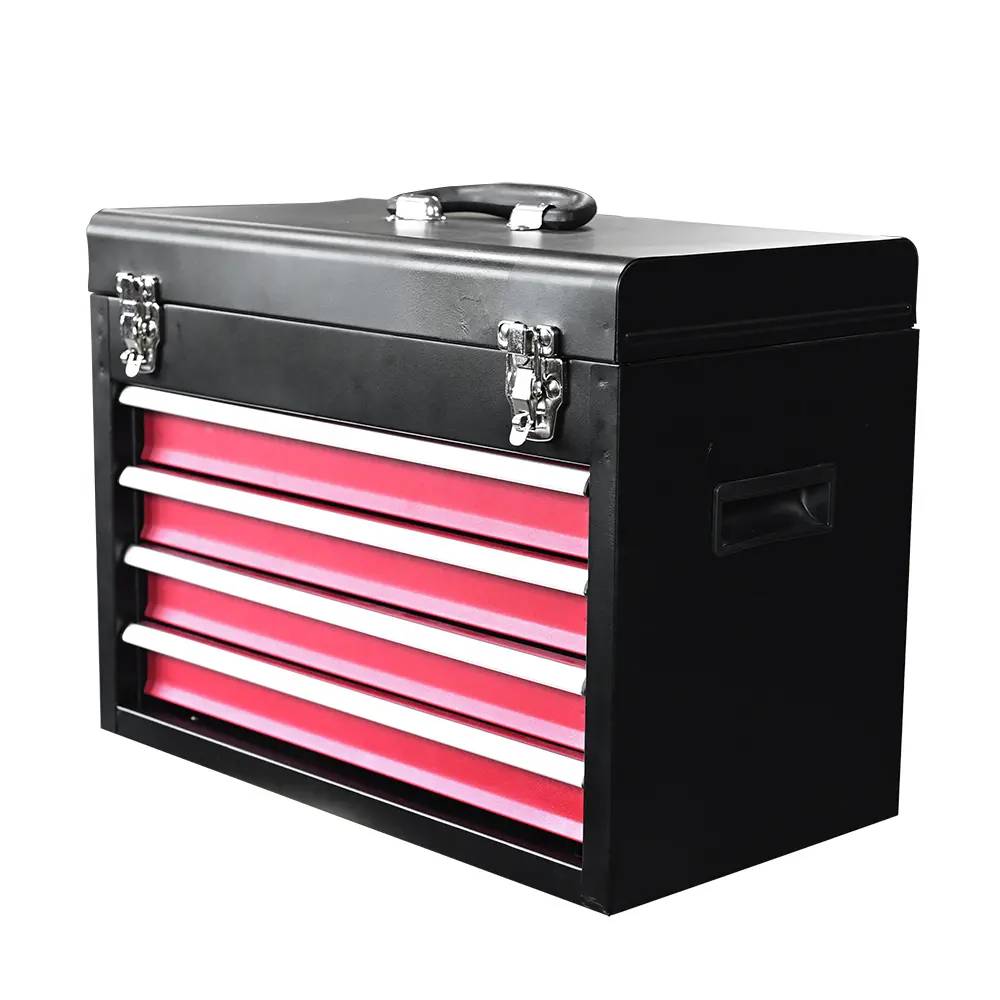
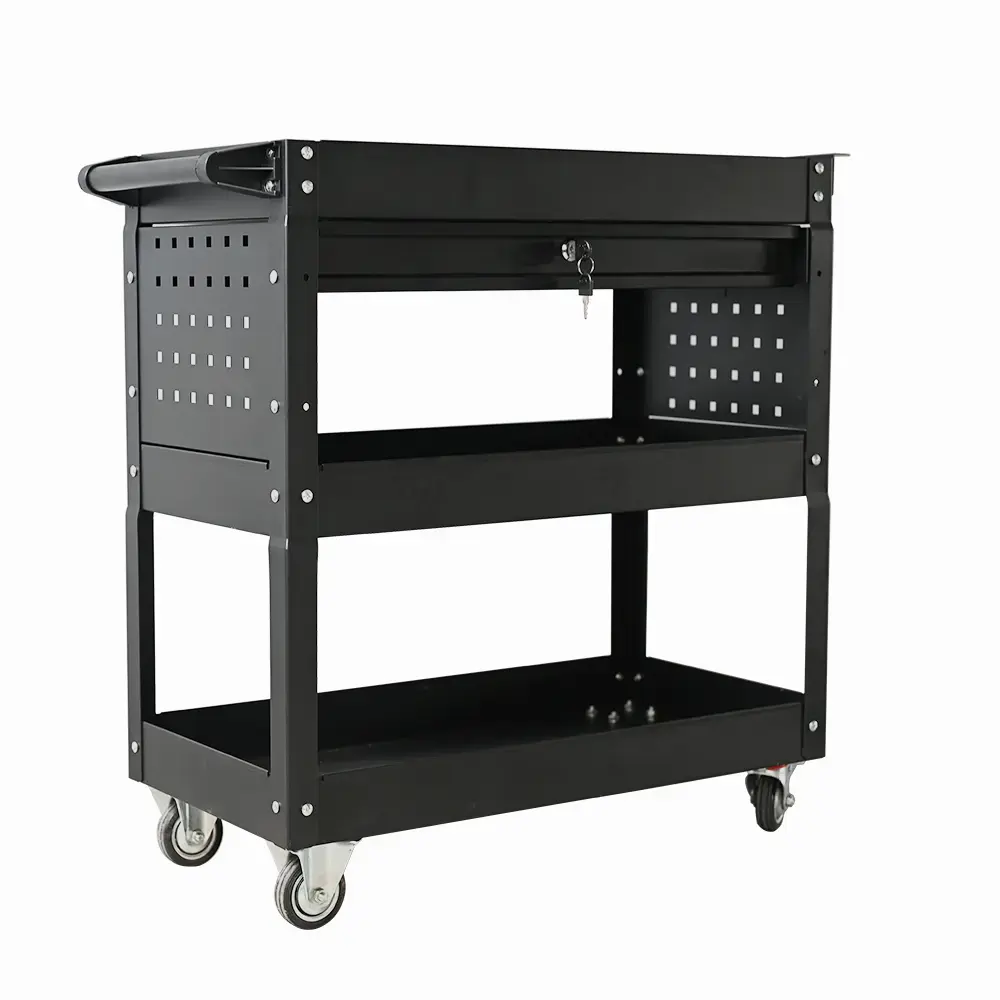
Never accept "heavy duty" as a rating. Require the slide load class in kilograms, stated per drawer, and a total rating that includes the cabinet's own mass. Then apply the dynamic factor: a Rolling Cabinet hits floor joints at 1.5 to 2.0 times static load, so a drawer rated 45 kg static is a 25 to 30 kg dynamic drawer. Stackable formats such as a 4 drawers interlocking utility rolling trolley must carry both figures.
The Tip-Over Sum Nobody Writes Down
Stability is a moment calculation. Take a cabinet 900 mm tall, 500 mm deep, 45 kg empty. Its centre of gravity sits about 250 mm behind the front caster line, so the restoring moment is 45 times 0.25, or 11.25 kg·m.
Now open a drawer holding 60 kg of tools with its load centre 450 mm past that line. The overturning moment is 27 kg·m, more than double the restoring moment, and the cabinet goes over. Height makes it worse: a top chest raising the centre of gravity to 600 mm cuts the tipping angle sharply. Do this sum for every cabinet you buy.
Demand a Stability Statement and an Anchoring Provision
Put the test in the contract. Require the supplier to state in writing that the cabinet remains stable with all drawers fully extended at rated load, and with a 250 newton horizontal pull at handle height, using ASTM F2057 or EN 16121, and ask for the report, not a claim.
Design for the failure anyway. Require a wall or floor anchoring point as standard, an M8 anchor into concrete, and an interlock allowing one drawer open at a time on tall units. Bolt adjoining cabinets together, because linked mass is the cheapest stability.
Choose Casters by Load, Floor and Bearing
Wheel material decides noise, floor damage and push force. Choose on four variables:
- Tread: polypropylene skids on dust, PVC marks polished floors, TPR and polyurethane are the default
- diameter 75 to 125 mm, with 100 mm the working minimum over joints
- precision ball bearings over plain bore, cutting push force by 30 to 50 per cent
- two total-lock brakes fixing swivel and rotation
Size the rating for three wheels, not four: uneven floors unload one corner, so require total caster capacity at least 1.5 times working load, meaning a 400 kg cabinet needs four casters rated 150 kg. Specify precision ball bearings over plain bore, which cut push force by 30 to 50 per cent, and two total-lock brakes that fix both swivel and rotation.

Match the Wheel to the Floor
Floor conditions change the specification more than any brochure admits. On smooth epoxy a hard tread rolls at a coefficient near 0.03; on polished concrete use a non-marking tread; on steel grating the wheel diameter must exceed the aperture three times.
Expansion joints and swarf are the two that wreck cabinets. Require a wheel diameter of at least three times the joint width, so a 20 mm joint wants a 100 mm wheel minimum. On floors carrying metal swarf, insist on sealed bearings and a tread width of 35 mm or more, because a narrow wheel picks up debris. A unit such as a multipurpose lockable outdoor toolbox with two drawers avoids the problem on rough ground.
Handle Height and Pushing Force
Set the handle at 900 to 1,050 mm so the operator pushes horizontally, and require a full-width grip, not a side rail. Then cap the force: 200 newtons for occasional moves, 100 newtons for daily repositioning.
Convert that to a wheel decision. A 400 kg cabinet on good epoxy needs about 120 newtons to start, but the same cabinet on swarf-covered concrete can exceed 450 newtons, which no technician should push. Specify maximum starting force in the purchase document and test it on the real floor.
Specify the Cabinet as a System
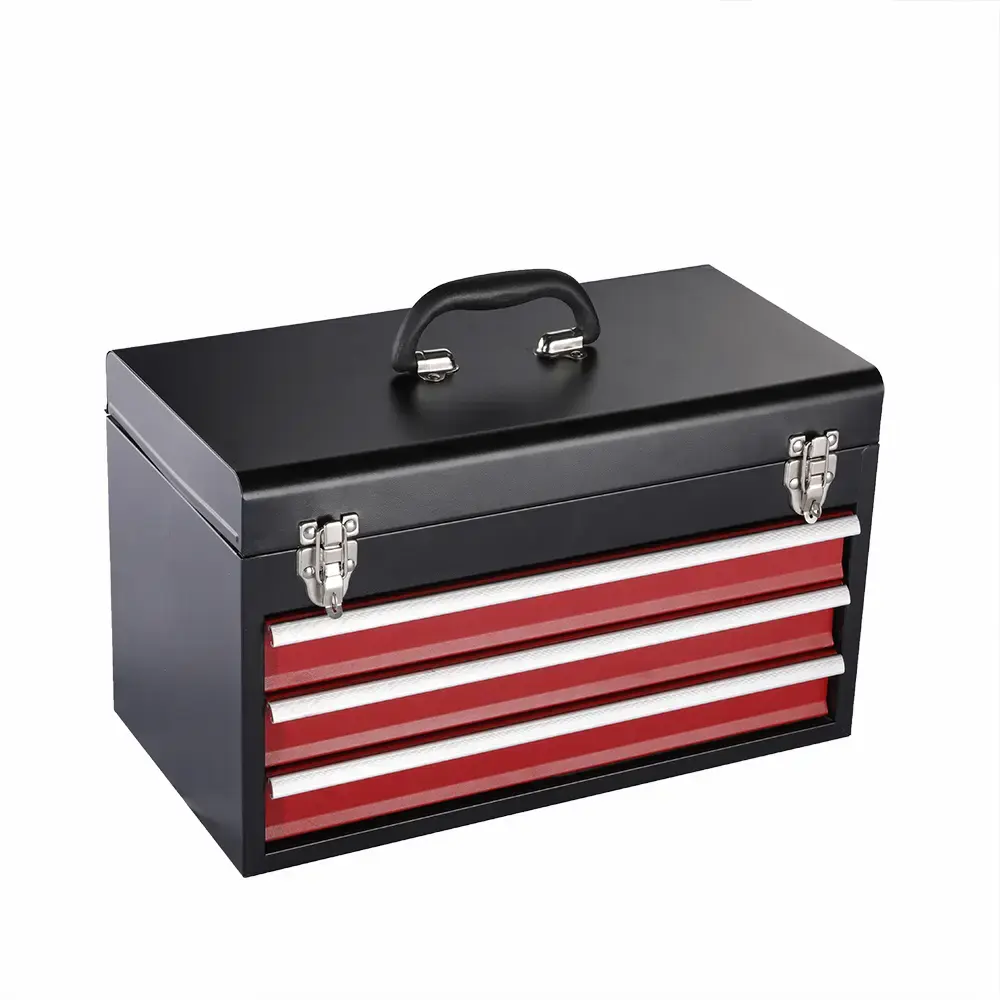
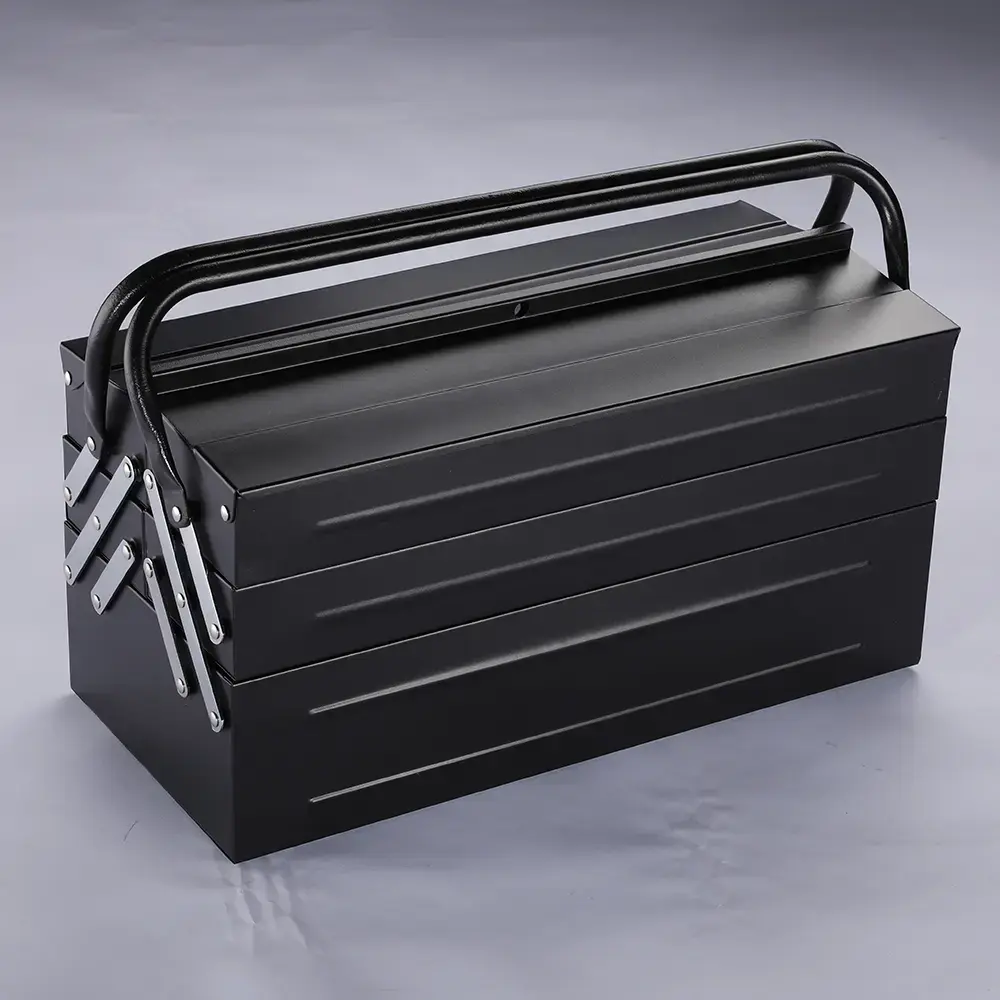
Buyers quote a cabinet; they should quote a loaded system. List what actually goes in each drawer: a 200-piece socket set is about 18 kg, a torque wrench set 8 kg, and a drawer of power tools easily reaches 40 kg. Hand that load map to the supplier and require written confirmation for every drawer. Fixed sites that never move the unit should consider a 3 tier 5 tray cantilever metal toolbox instead.
Then verify on delivery: weigh the loaded cabinet, confirm caster ratings, and re-run the tip-over sum with real drawer loads. Any heavy duty metal tool storage cabinet trolley should arrive with its anchoring kit in the box.

The Bottom Line
A roller cabinet is a stability system, not a box on wheels. Specify per-drawer load and total load separately, apply a dynamic factor of 1.5 to 2.0, and run the tip-over moment sum before you buy. Require a written stability statement with an anchoring provision and single-drawer interlock. Choose 100 mm sealed-bearing casters rated 1.5 times the load, match the tread to the floor, and cap starting force at 200 newtons. Do that and the cabinet stays upright when three drawers open.