
Leave Your Message




0102030405
Black & Red Baking Paint Technology in Chinese Factories
2026-03-03
Black & Red Baking Paint Technology in Chinese Factories
(Color Fastness Differences vs. Southeast Asian Factories)
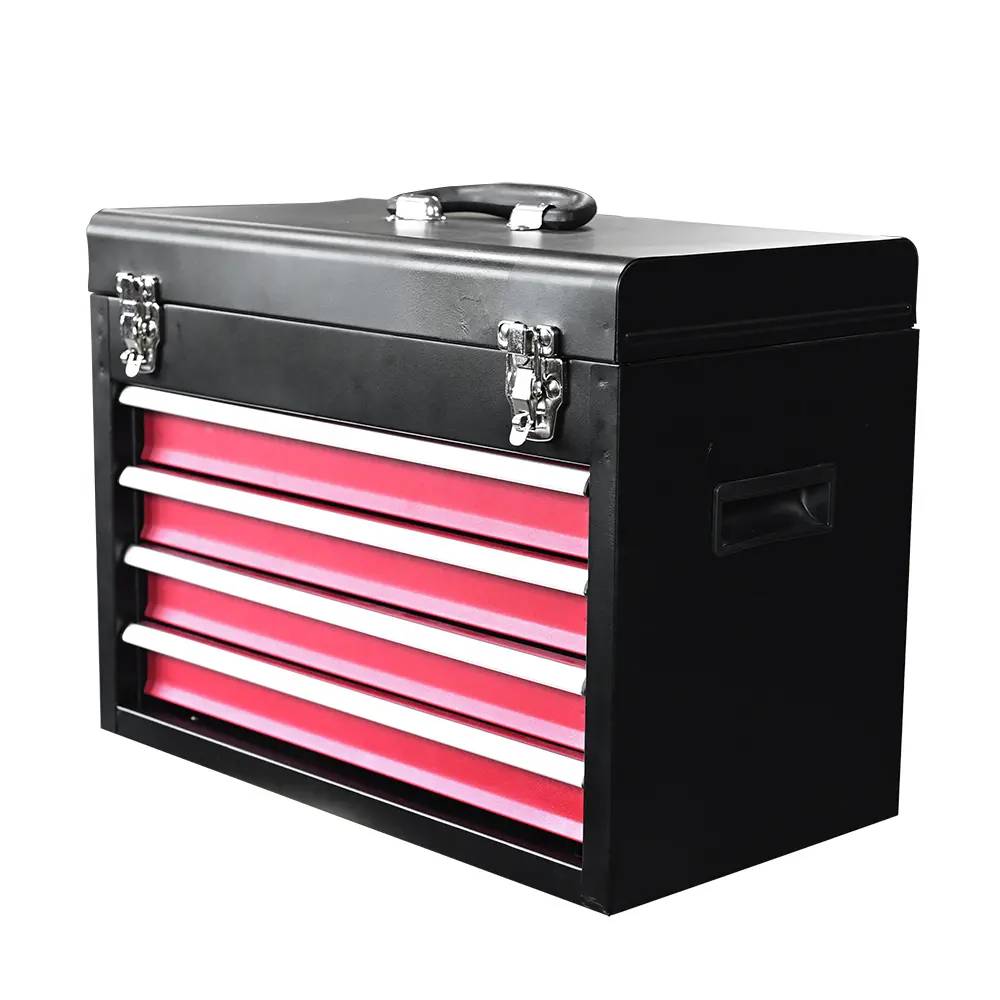
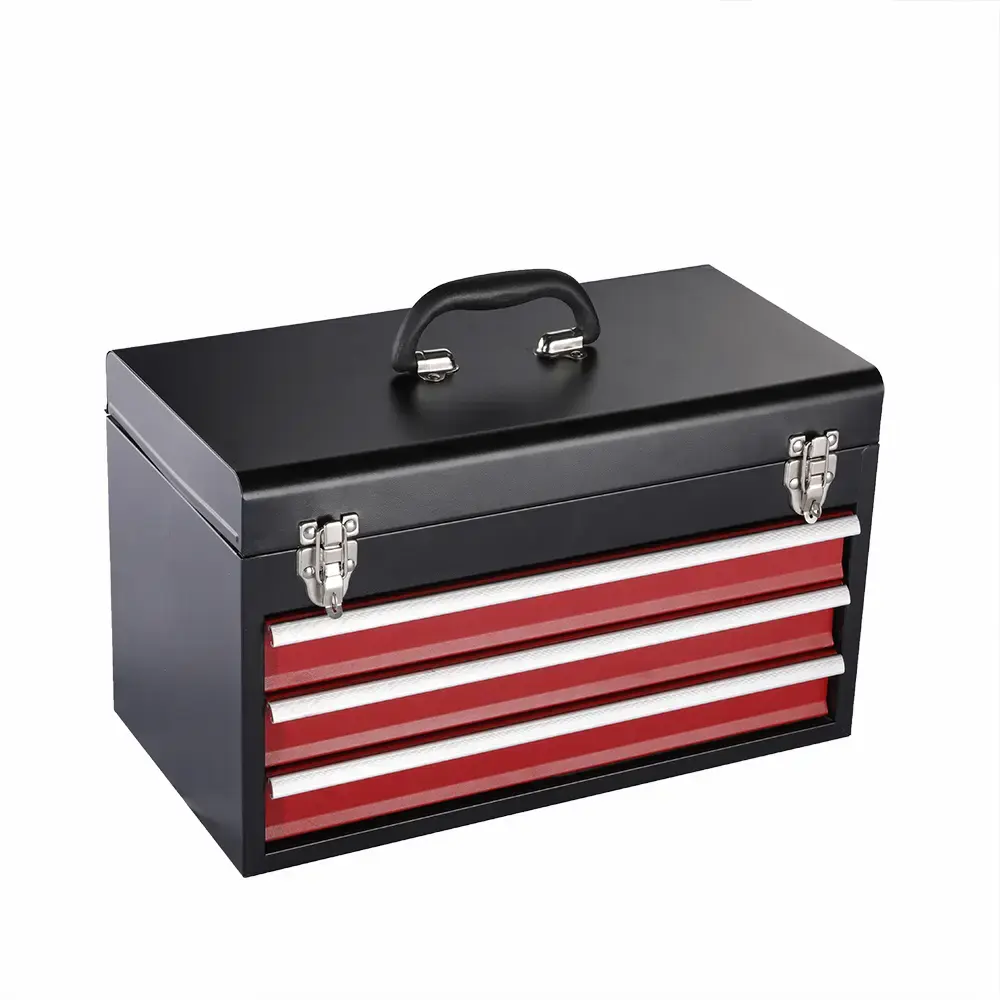
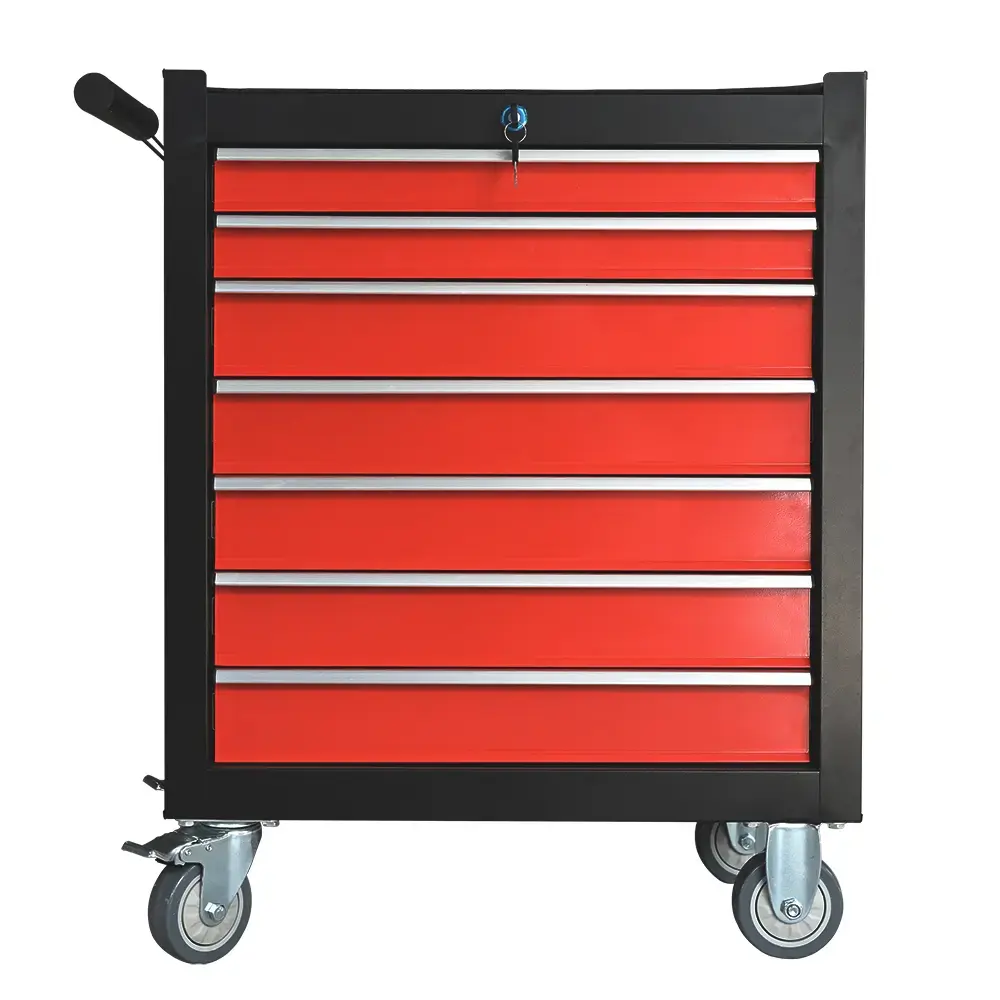
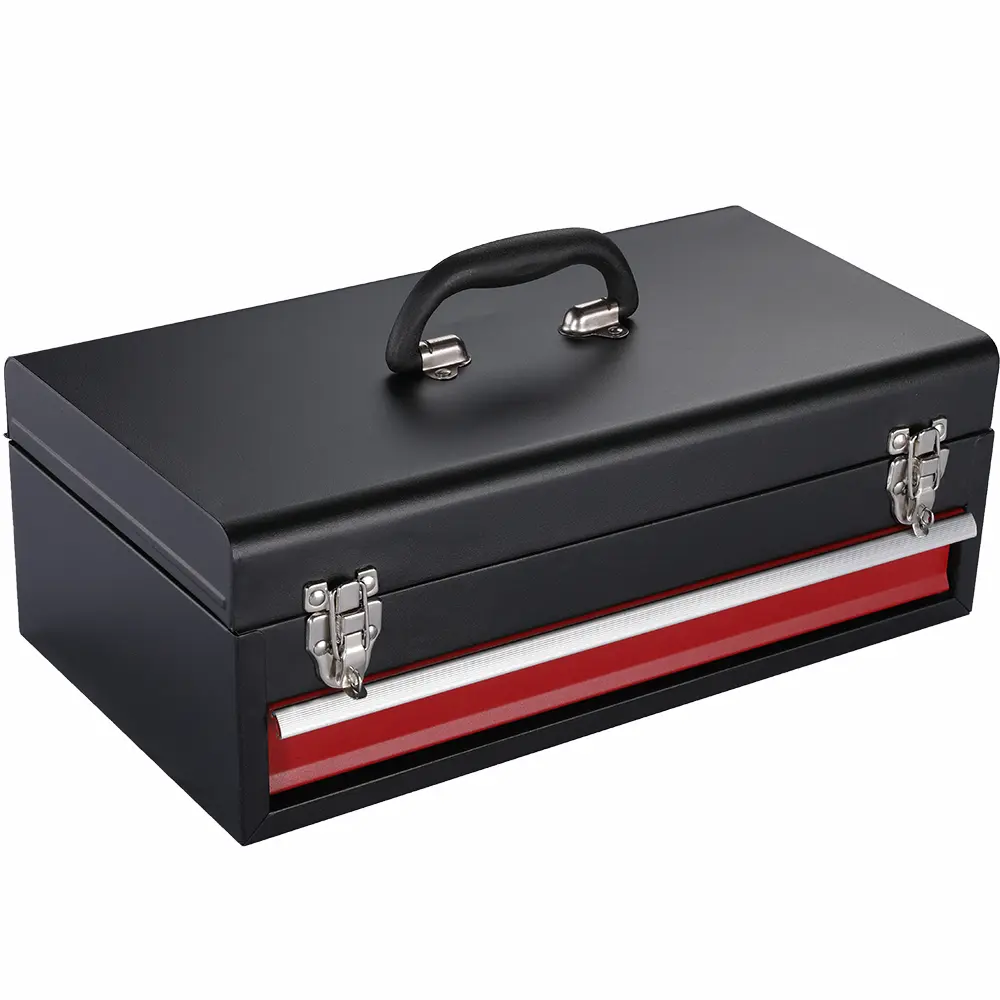
Have you experienced this embarrassment? A batch of Tool Cabinets arrives at the port looking bright and glossy. But less than six months in an auto repair shop or production line, the vivid red fades, darkens, or even discolors unevenly.
This is usually not just “bad paint” — it reflects deep differences in the full baking paint process chain. For the iconic black and red colors used in professional tool cabinets, color fastness is the ultimate test of a factory’s technical strength.
This article compares the core differences in baking paint technology — especially for black and red — between Chinese factories and Southeast Asian contract manufacturers. Using real Cases and data, we explain why visually identical colors can perform completely differently in weather resistance, scratch resistance, and long-term appearance.
1. The Chemistry Behind Color:
Why Black & Red Are the Most Difficult to Get Right
In tool cabinet baking paint, black and red are natural “testing standards” because of the physical and chemical properties of their pigments.
- Black Mostly uses carbon black pigment, which has strong tinting strength and UV absorption. But low-grade carbon black or poor dispersion leads to chalking: the topcoat degrades and exposes a grayish base, making it look faded.
- Red Especially bright red pigments (like phthalocyanine red) have molecular structures highly sensitive to UV light. They easily undergo photo-oxidation, causing the color to darken, brown, and lose vibrancy.
Excellent baking paint requires targeted reinforcement — a complete system from pretreatment, primer, topcoat, to clear coat.
To cut costs, some Southeast Asian factories:
- Shorten or simplify pretreatment (degreasing, phosphating)
- Use cheaper, lower-weather-resistance paint resins and pigments
Real Feedback from a European Importer
Red tool cabinets from a Vietnamese factory used in southern Spain (strong sunlight) showed serious gloss loss and darkening on top surfaces after only 8 months. Identical black cabinets from Ningbo, China, performed well in the same environment after 2 years.
Common Doubt
We checked color with a colorimeter — why do they perform so differently later? A colorimeter only measures instant Lab color values. It cannot test:
- Weather resistance
- Chemical stability
- Microscopic coating structure
Like two identical-looking fabrics (cotton vs. polyester), they age very differently. The real difference lies in the resin system, pigment grade, and curing level.
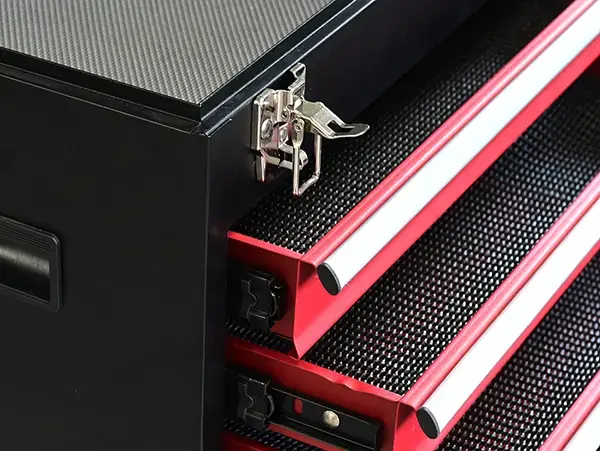
2. The “Devil Details” in the Process Chain
Real color fastness comes from steps often ignored in price lists and inspection standards.
Step 1: Pretreatment & Primer
Chinese factories: Typically use a 7–8 tank standard line: degreasing → washing → surface adjustment → phosphating → washing → passivation → drying A uniform, dense phosphate layer ensures strong adhesion and anti-rust performance.
Some Southeast Asian factories: Simplify to 5–6 tanks or use room-temperature phosphating, resulting in weaker film quality and stability. Without good adhesion, paint bubbles and peels easily — color fastness is impossible.
Step 2: Electrostatic Spraying & Paint Control
Professional electrostatic spraying ensures even thickness. The real key is the paint material itself.
- High-end factories use capsulated composite pigments (inorganic shell on organic red pigment) to greatly improve light resistance.
- Resin uses weather-resistant polyester or fluorocarbon-modified resin, costing 20–30% more but extending aging life by several times. Large Chinese factories work with stable chemical suppliers for custom powder matching.
Step 3: High-Temperature Curing
This is where powder turns into a durable, dense film.
Standard curing: 180–200°C for 15–20 minutes
- Too low temp / too short time → incomplete curing → poor hardness, chemical resistance, weather resistance
- Too high temp / too long → pigment decomposition (especially red) → yellowing
Chinese factories: Multi-zone temperature control + forced hot air circulation → even heating across large cabinets.
Some low-management factories: Unstable furnace temperature, overcrowded products → uneven curing.
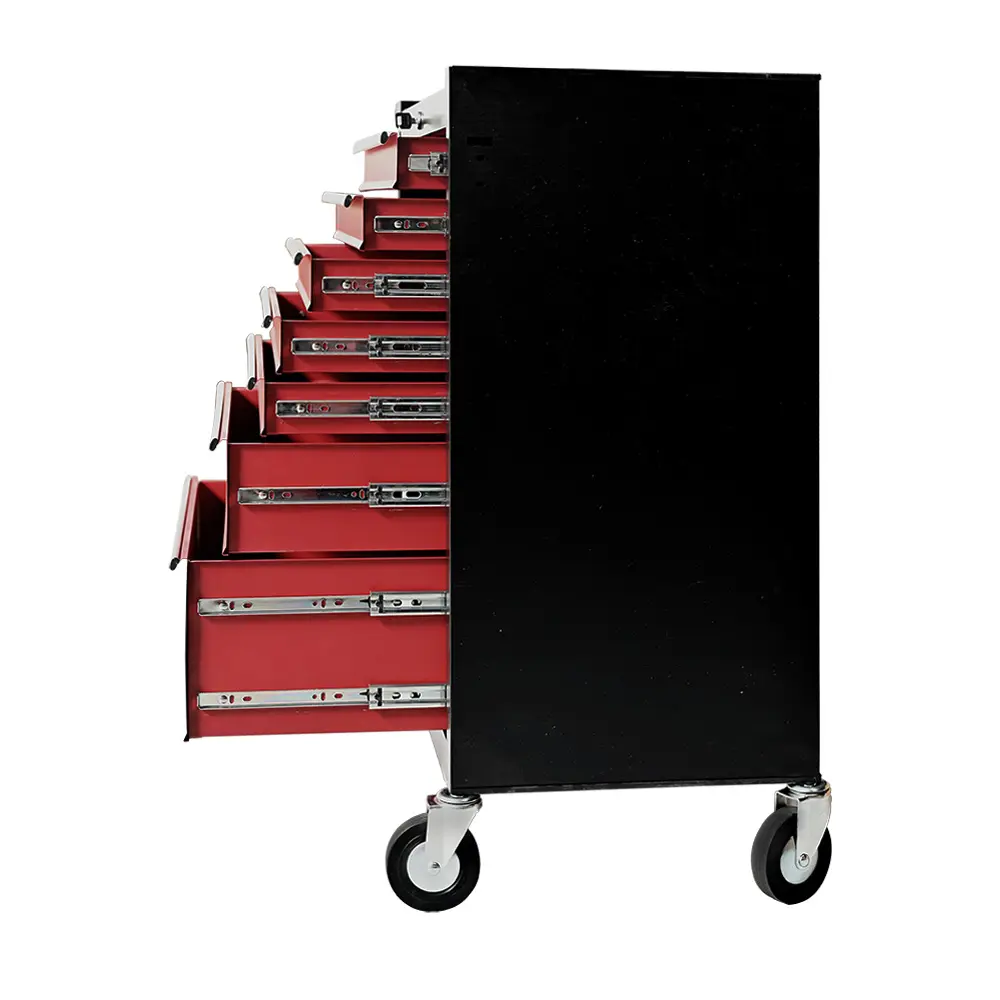
3. Environmental Simulation Testing:
Data Reveals Years of Difference
Reliable buyers demand third-party accelerated aging reports.
QUV UV Aging Test
Simulates sunlight, rain, and dew. Qualified outdoor/semi-outdoor tool cabinet paint:
- ≥ 500 hours QUV
- Gloss retention > 80%
- ΔE < 1.5 (almost invisible to the eye)
Neutral Salt Spray Test (NSS)
Tests corrosion resistance, especially on edges. Standard:
- ≥ 500 hours no red rust
- Corrosion spread < 2 mm from scratches
Comparative Test Data
- Top Chinese factory “engineering red”: 1000 hours QUV → ΔE = 1.2
- Southeast Asian general red: 500 hours QUV → ΔE = 3.5 (obvious darkening)
This difference translates to: 1-year appearance vs. 5-year appearance.
Quick Field Test (From Experienced QC)
Pinch the edge firmly with a fingernail (not sharp tools):
- Well-cured paint: hard & tough, only a faint white mark
- Under-cured paint: soft, obvious indentation, rubbery elasticity → fast aging later
4. Cost vs. Value:
Is Paying for Color Fastness Worth It?
Chinese factories with high-standard baking paint usually cost 10–25% more than basic Southeast Asian manufacturers. Is the premium worth it?
Consider two factors:
- Total Cost of Ownership (TCO)
- Brand risk
For professional markets (auto repair, aviation maintenance, precision electronics): A faded, shabby cabinet directly damages perceived professionalism.
Real Case: German Tool Distributor
Split an order for red tool cabinets between Shandong, China and Thailand.
- Early stage: Thailand product sold well due to lower price
- After 1 year: Europe saw much higher return & complaint rates (fading, rust spots)
- Final decision: shift main orders back to China, with QUV test required in contract
Result: higher unit price, but better profit margin and brand reputation.
5. Practical Advice for Cross-Border Buyers
To ensure reliable black & red baking paint:
- Go beyond color samples — demand data Ask for powder coating TDS, focusing on:
- Outdoor-grade weather resistance
- QUV test hours & results
- Salt spray test hours
- Inspect the process, not just finished products Check:
- Complete pretreatment line
- Regular bath testing records
- Stable curing oven temperature curve (±5°C)
- Do comparative sample testing Test same-color panels side-by-side:
- Alcohol wipe
- Outdoor exposure
- Coin/key scratch test
- Write clear quality standards into contracts Include:
- Adhesion level 0
- QUV requirements
- ΔE color difference tolerance
The advantage of Chinese factories comes from decades of manufacturing accumulation, complete supply chains, and consistent quality investment. For buyers pursuing long-term stability and brand value, this deep technical capability is the safer investment.

FAQ
Q1: Quick on-site way to judge paint quality without a lab?
Use an oily marker pen. Draw on the side, wait 1 minute, then wipe with industrial alcohol.
- Good paint: ink erases completely, no stain
- Poor / under-cured: difficult to wipe, leaves permanent mark
Q2: Is there weather resistance difference between orange-peel texture and smooth flat paint?
Visually, orange-peel better hides minor scratches. In terms of weather resistance: little difference at the same quality level. The key is still resin and pigment, not texture.
Q3: Can faded cabinets be repaired?
- Large-area uniform fading: no good low-cost fix; repaint cost is close to new
- Small-area gloss loss: may be improved with professional polish Best solution: control quality at sourcing.
Meta Description
Worried about tool cabinet color fading? This article deeply compares black & red baking paint technology between Chinese and Southeast Asian factories, covering pigment chemistry, process details, and aging test data. Help cross-border buyers see through price differences and choose suppliers with reliable long-term color fastness.
Keywords
tool cabinet baking paint technology, black red paint color fastness, Chinese factory paint, tool cabinet weather resistance, electrostatic spraying process