
Leave Your Message




0102030405
Boost Garage Efficiency: Save Costs with Bulk Tool Carts
2026-05-29
For managers of garages, service centers and fleet operations, tool managementis a critical factor affecting labor efficiency and operating costs. Traditional scattered Toolbox management or non-standardized procurement often leads to high tool loss rates and low technician mobility efficiency. From an operational management perspective, this article explains how to systematically solve garage operation pain points and achieve real cost reduction and efficiency improvement through bulk standardized procurement of tool carts.
1. Operational Pain Points: Efficiency Black Holes & Hidden Costs
Garages without standardized tool cart management typically face three core challenges:
Severe Wasted Labor Hours
Technicians spend an average of 15–20% of their workdaysearching for tools, traveling to and from Tool Cabinets, and organizing messy equipment. This accumulation of non-value-added time directly lowers bay turnover rates.
Tool Asset Loss
Decentralized management makes tool loss and misplacement difficult to trace. Statistics show that tool loss rates in repair businesses due to poor management can exceed 60%, causing direct replacement costs and potential disruptions to critical repair tasks.
Inefficient Mobile Collaboration
In multi-station collaboration (panel beating, mechanical repair, electricians), fixed tool cabinets force frequent technician travel or use of makeshift carts, interrupting workflow and increasing safety risks in tight spaces.
2. The Solution: Efficiency Logic of Bulk Standardized Tool Cart Procurement
To address these pain points, bulk purchasing and standardized configuration of tool carts is the most direct path to higher operational efficiency.
2.1 Establish a “One Technician, One Cart” Mobile Workstation Model
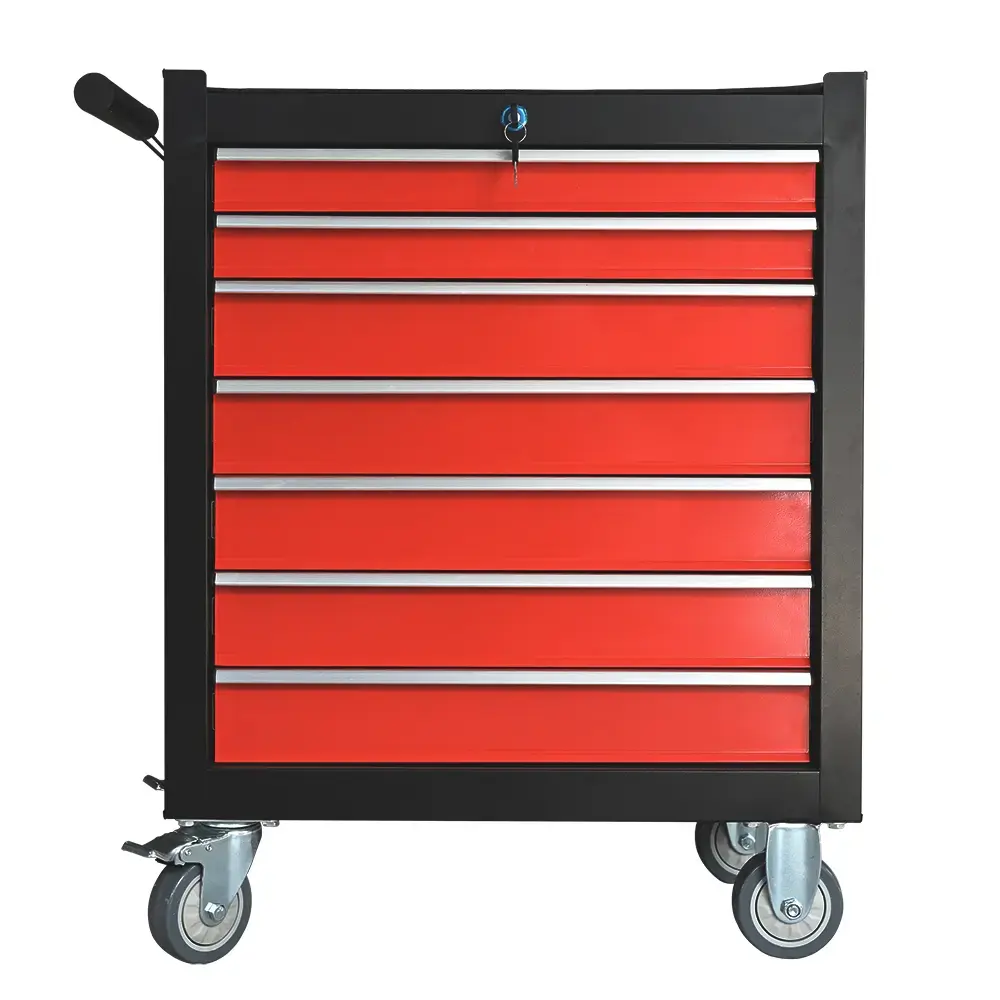
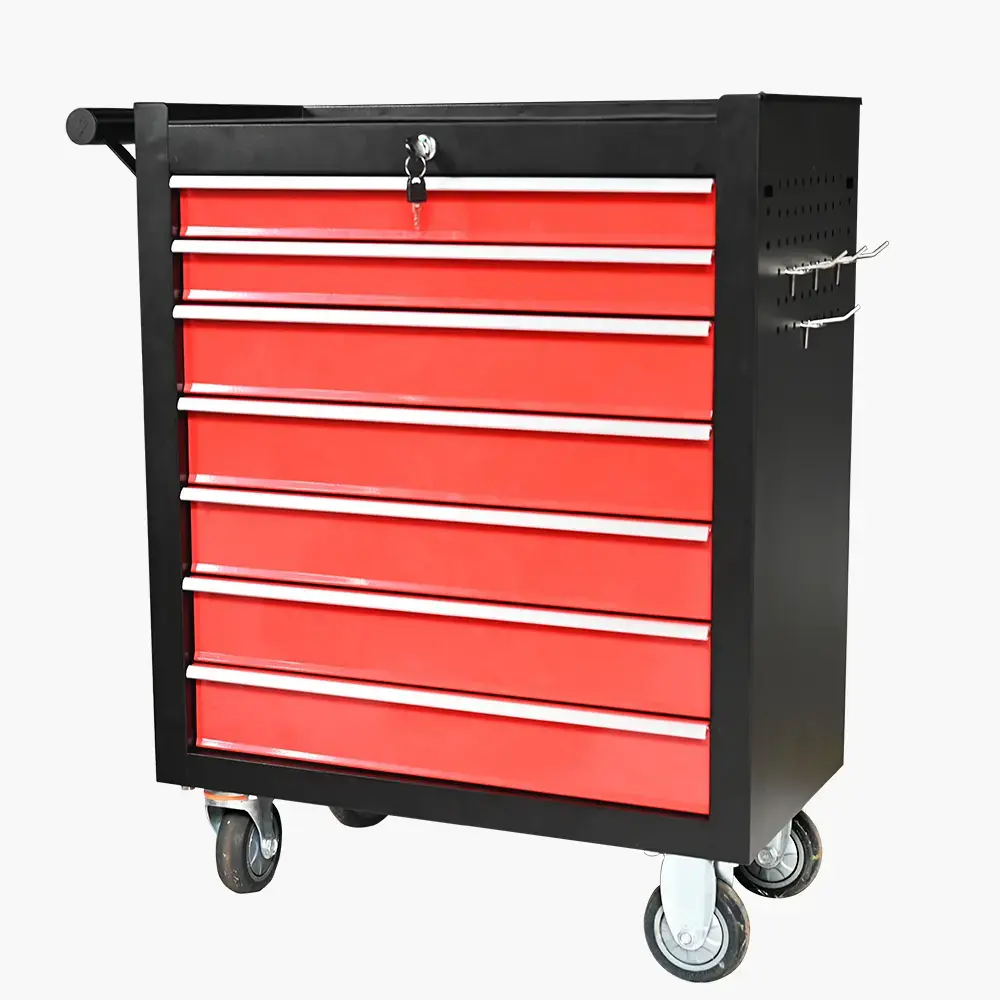
Equip each technician with a standardized multi-drawer tool cart as a dedicated mobile workstation.
- Efficiency Improvement: Store high-frequency tools by usage priority (top drawers for frequent use, bottom for infrequent). Technicians keep all tools within reach while moving between bays. Field data shows this model reduces preparation time for single repair jobs by approximately 30%.
- Cost Control: Bulk purchasing significantly lowers per-unit costs, typically delivering 15–30% volume discounts, while simplifying spare parts inventory for casters, drawer locks and other components.
2.2 Standardized Configuration Reduces Total Cost of Ownership (TCO)
A key advantage of bulk buying is long-term savings from standardization:
- Maintenance Cost: Uniform tool cart models allow interchangeable casters, slide rails, locks and other wear parts, greatly simplifying spare parts management and reducing maintenance training expenses.
- Management Cost: Consistent drawer layouts and labeling systems enable fast tool inventory and shorten onboarding time for new technicians.
3. Procurement Decision Guide: Key Technical Evaluation Points for Bulk Purchasing
When making bulk tool cart procurement decisions, buyers should prioritize these technical specifications to ensure long-term operational efficiency:
| Evaluation Dimension | Key Indicators & Recommendations | Operational Value |
|---|---|---|
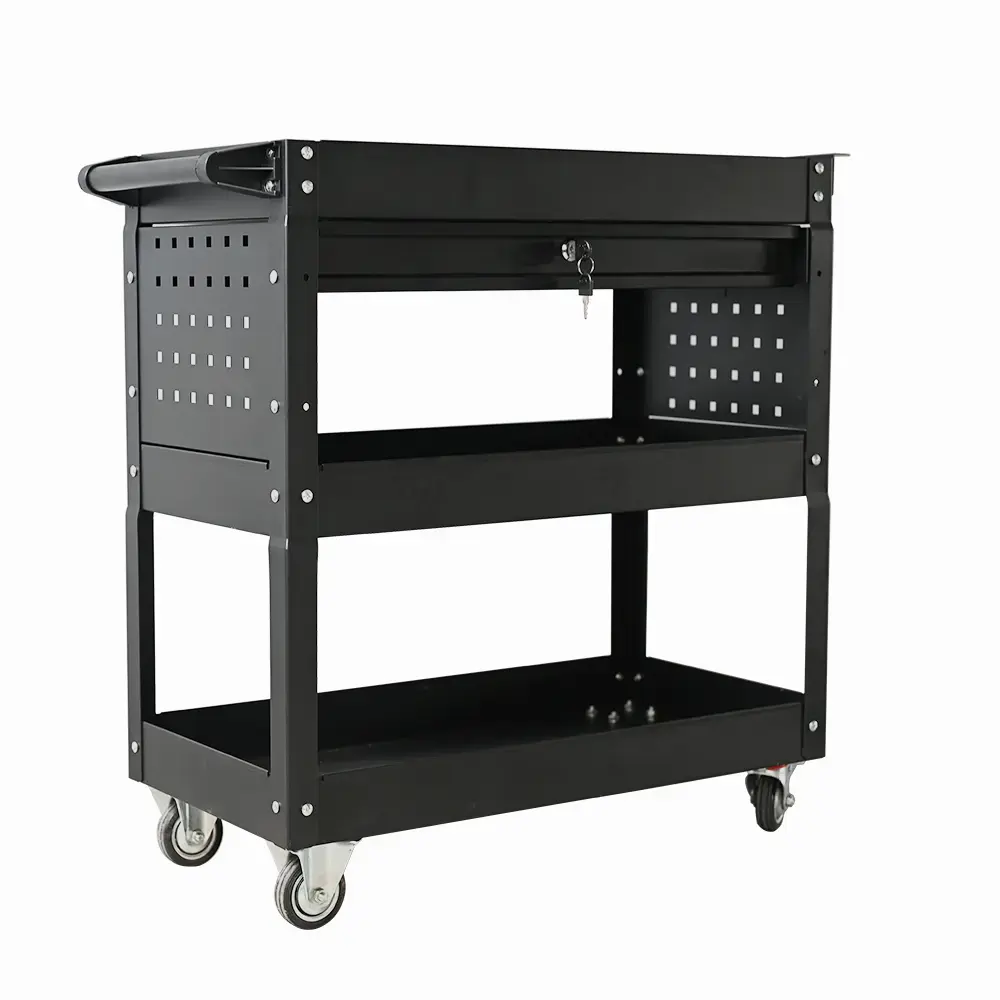
| Mobility | Select models with 4–5 inch industrial casters (with dual brake systems) for smooth movement on oily floors and stable positioning. | Reduces pushing resistance, avoids collision risks, and improves cross-bay collaboration efficiency. |
| Load Capacity & Layout | Single-drawer dynamic load ≥ 45kg, static total load ≥ 150kg; adopt a drawer + side mesh basket 3D storage design. | Supports heavy Tool Storage, achieves all-in-one mobility, and reduces extra handling equipment. |
| Durability | Body made of ≥1.0mm cold-rolled steel plate, finished with epoxy powder coating or electrophoretic treatment. | Resists chemical corrosion from oils and fluids, extends service life, and lowers premature rust-related replacement rates. |
| Safety & Compliance | Drawers with auto-locking (anti-slippage) and overall master lock system. | Prevents injury from falling tools, secures high-value tools overnight, and reduces insurance and liability risks. |
4. Cost-Benefit Analysis (ROI): Beyond Unit Price
Buyers should adopt a Total Cost of Ownership (TCO) perspective rather than focusing only on purchase price:
- Explicit Costs: Purchase price + freight
- Hidden Costs: Tool loss cost + technician search time cost + equipment maintenance cost
ROI Calculation: A standard tool cart valued at $500 that saves a technician 30 minutes daily typically achieves full return on investment within 3–6 months based on local labor rates.

Conclusion
For garage operators, bulk tool cart procurement is far more than equipment replacement — it is an upgrade to lean operations. By introducing a standardized, modular tool cart system, chaotic tool management transforms into a predictable, quantifiable high-efficiency workflow, fundamentally solving efficiency and cost control challenges.