
Leave Your Message




0102030405
Choosing the Ideal Drawer Configuration for Every User Market
2026-07-23
In global B2B procurement of Tool Storage equipment, drawer configuration is not a catalog parameter where “more is better”—it is a structural decision directly tied to end‑user scenarios. Automotive technicians, industrial line maintenance teams, aerospace MRO warehouses, DIY home garages, and outdoor engineering crews have vastly different requirements for drawer count, depth, load capacity, divider systems, and slide types. Buyers using a single 5‑drawer standard cabinet for all markets face three concurrent issues: high return rates in professional channels, perceived overpricing in DIY channels, and insufficient depth for industrial clients. This article provides a verifiable drawer configuration framework for procurement specifications, segmented by end‑user markets, and embeds core and long‑tail keywords aligned with global buyers’ actual search habits.
Why Drawer Configuration Must Be Backward‑Engineered from End‑User Markets
The drawer system of tool chests and rolling tool cabinets is defined by four variables: drawer count, drawer depth gradient (shallow/medium/deep), single‑drawer dynamic load capacity, and internal divider system. The combination of these variables directly determines tool organization efficiency and retrieval time.
Industry data shows that unorganized tools cost automotive technicians approximately 45 minutes of wasted search time per shift, totaling nearly 195 hours annually. A well‑designed drawer layout can reduce tool loss incidents by about 67%. This means drawer configuration is essentially a labor‑saving device, not just a storage container.
Different markets define “labor savings” differently: automotive requires high‑frequency access, industrial needs heavy‑duty categorization, DIY prioritizes visual neatness, and outdoor demands vibration resistance. Below is a market‑by‑market breakdown.

Automotive Aftermarket & Fleet Repair Market: Deep Drawers Primary, Shallow Drawers Secondary, Slide Load Capacity Priority
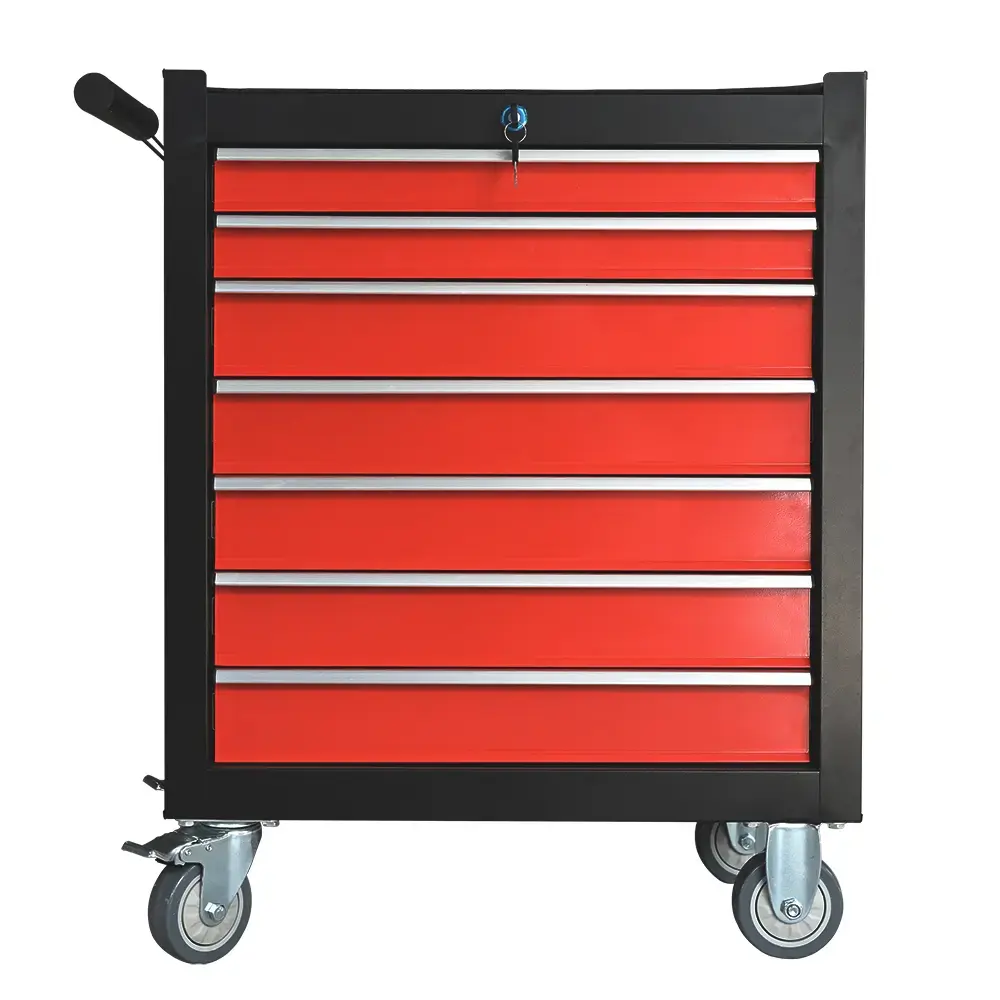
North American and European automotive channels (dealerships, independent garages, fleet shops) are the main market for Rolling Tool Cabinets. The typical configuration logic:
- Total drawers: 7–11; bottom 2 drawers ≥ 100mm deep for socket sets, impact wrenches, and torque wrenches
- Middle 3–4 drawers: 60–90mm medium depth for ratchets, screwdrivers, and measuring tools
- Top 2–3 drawers: ≤ 40mm shallow for screws, circlips, washers, and small electrical parts
- Single‑drawer dynamic load capacity: ≥ 45kg; professional target 60–80kg, paired with heavy‑duty ball‑bearing full‑extension slides
- Anti‑tilt interlock is mandatory to prevent tipping when multiple drawers are open
- Drawer interiors: CNC‑milled EVA foam or adjustable plastic dividers, compatible with 1/4” and 3/8” drive socket sets
Key search terms for this market: 7 drawer roll cab configuration for automotive workshop, deep drawer tool chest 60kg slide rating. Procurement specifications should explicitly reference ANSI/BIFMA X5.9 for storage unit cycle and rack testing, not just vague phrases like “durable slides.”
Industrial Manufacturing & MRO Warehouses: Uniform Depth, Multi‑Drawer, Modular Dividers, Central Locking
Factory maintenance, injection molding shops, food processing plant mechanics, and logistics sorting line maintenance rooms represent industrial end‑users. Unlike automotive users, industrial clients have diverse tool types, moderate individual weights, large total inventories, and frequent tool issuance per work orders.
Recommended configuration:
- Drawer count: 9–13; gentle depth gradient (50–80mm dominant) to avoid deep drawers burying lower tools
- Cabinet body: 0.8–1.2mm cold‑rolled steel; industrial grade up to 16–18 gauge (≈1.2–1.6mm)
- Single‑drawer load capacity: 35–50kg; high cycle‑life slides (10,000+ cycles) prioritized
- Modular divider systems: grid boxes, back panel hanging boards, aluminum profile slots inside drawers
- Central locking bar or keyed‑alike system, with optional RFID or electronic locks for high‑value measuring tools
- RAL color customization to match factory 5S signage
European industrial buyers reference EN 14749 for furniture storage safety: no drawer dislodgement under sudden pulling, structural integrity under 200N downward force, and sliding door durability under 4kg load. These metrics must be included in technical annexes for industrial clients.

Aerospace & High‑Value MRO: Shallow Drawers, High Density, ESD Protection, Traceable Dividers
Aircraft maintenance, avionics workshops, and precision measuring tool warehouses are a specialized industrial subset. Tools here are high‑value (micrometers, torque sensors, avionics probes), so configuration prioritizes damage prevention over storage volume:
- Dominantly shallow drawers (30–50mm), one tool type per drawer to avoid stacking damage
- 100% custom CNC foam inserts with out‑of‑slot alerts
- Optional ESD anti‑static coating for work surfaces and drawer liners
- Silent soft‑close slides to prevent vibration‑induced precision tool displacement
- Independent drawer numbering + QR code asset tag slots
This niche market is small but high‑margin. Buyers search for terms like ESD tool cabinet drawer foam insert configuration, aviation MRO tool chest shallow drawer. Independent site category pages should create dedicated application sections instead of merging with automotive pages.
North American DIY & Home Garage: 5–7 Drawer Combos, Aesthetics‑Driven, Space‑Constrained
The residential market operates on entirely different principles from professional channels. DIY users have small tool inventories, low usage frequency, but high sensitivity to appearance and garage footprint.
Mainstream configuration:
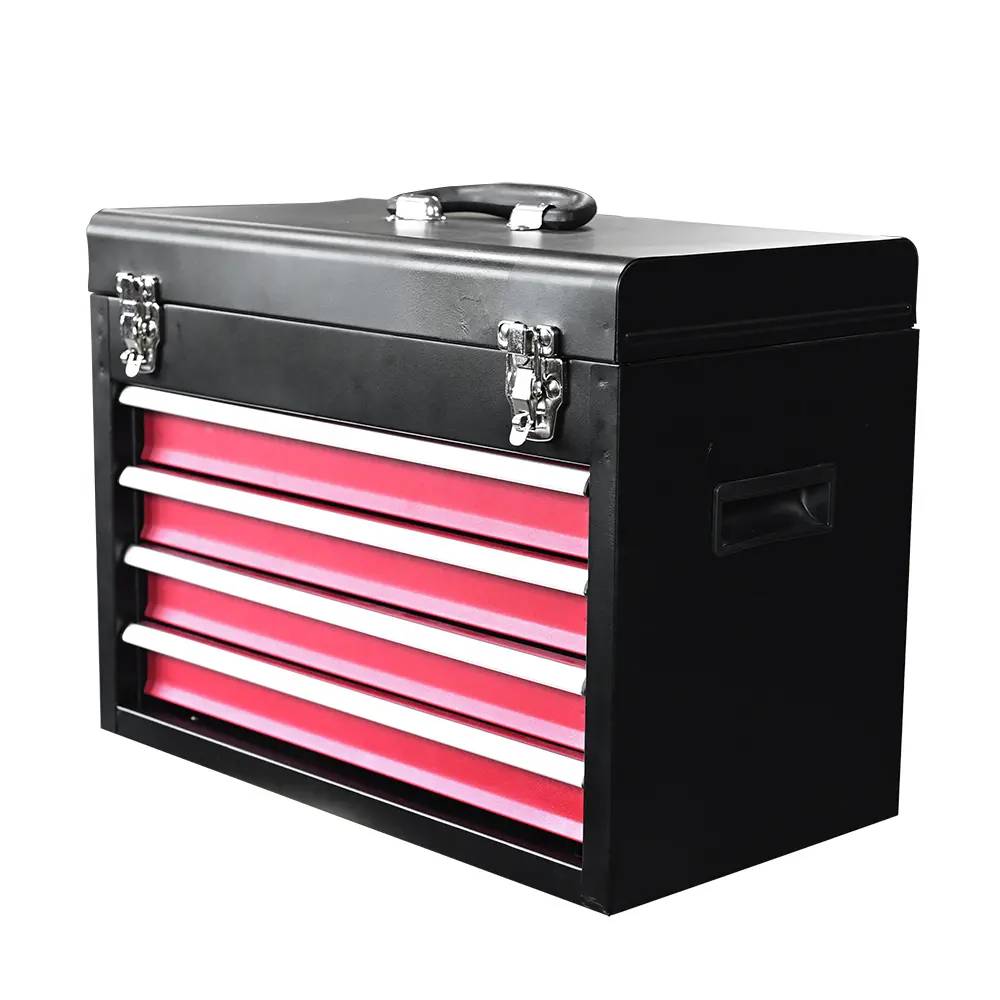
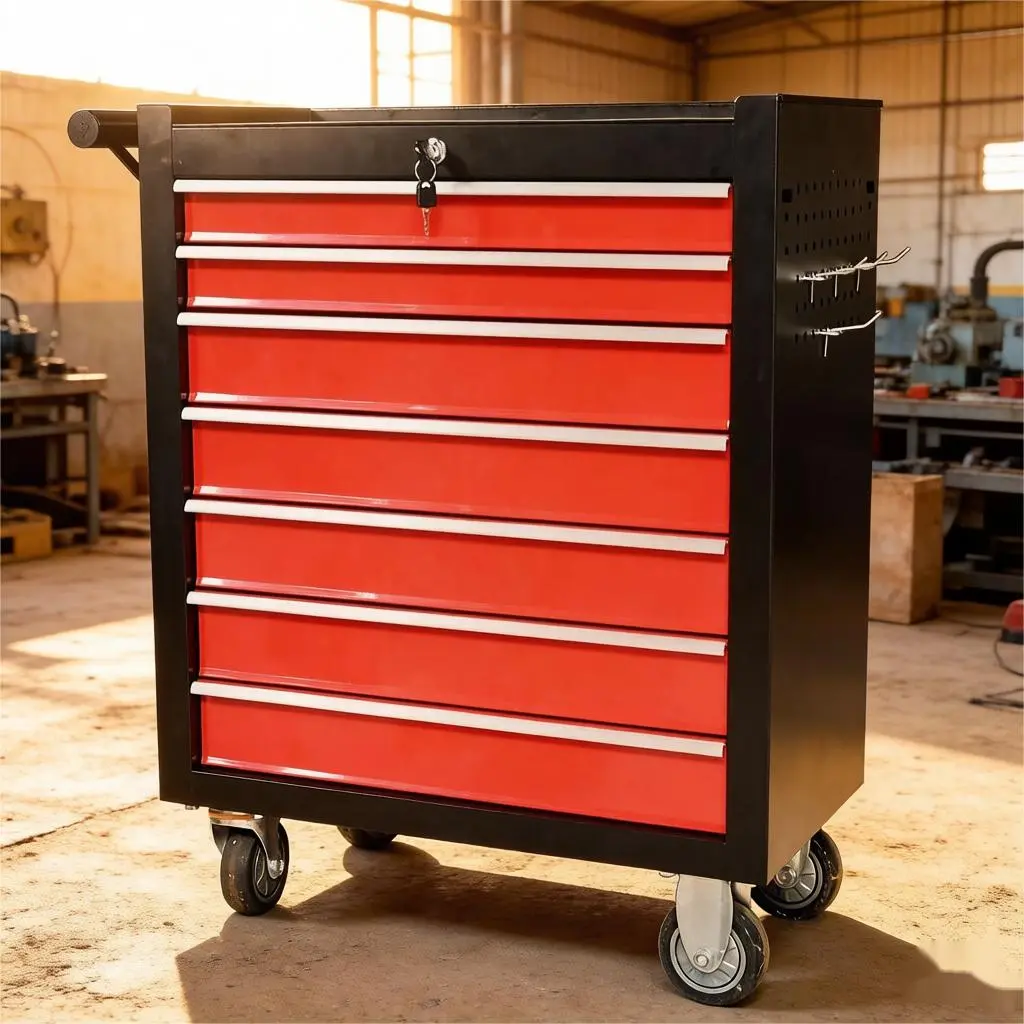
- 30–42 inch wide rolling tool cabinets with 5–7 drawers
- High proportion of shallow drawers (most home hand tools are wrenches/screwdrivers; 100mm+ depth unnecessary)
- Acceptable steel thickness: 0.7–0.9mm; cost‑sensitive
- Dominant colors: red, black, blue, yellow; custom finishes command premium pricing in DIY channels
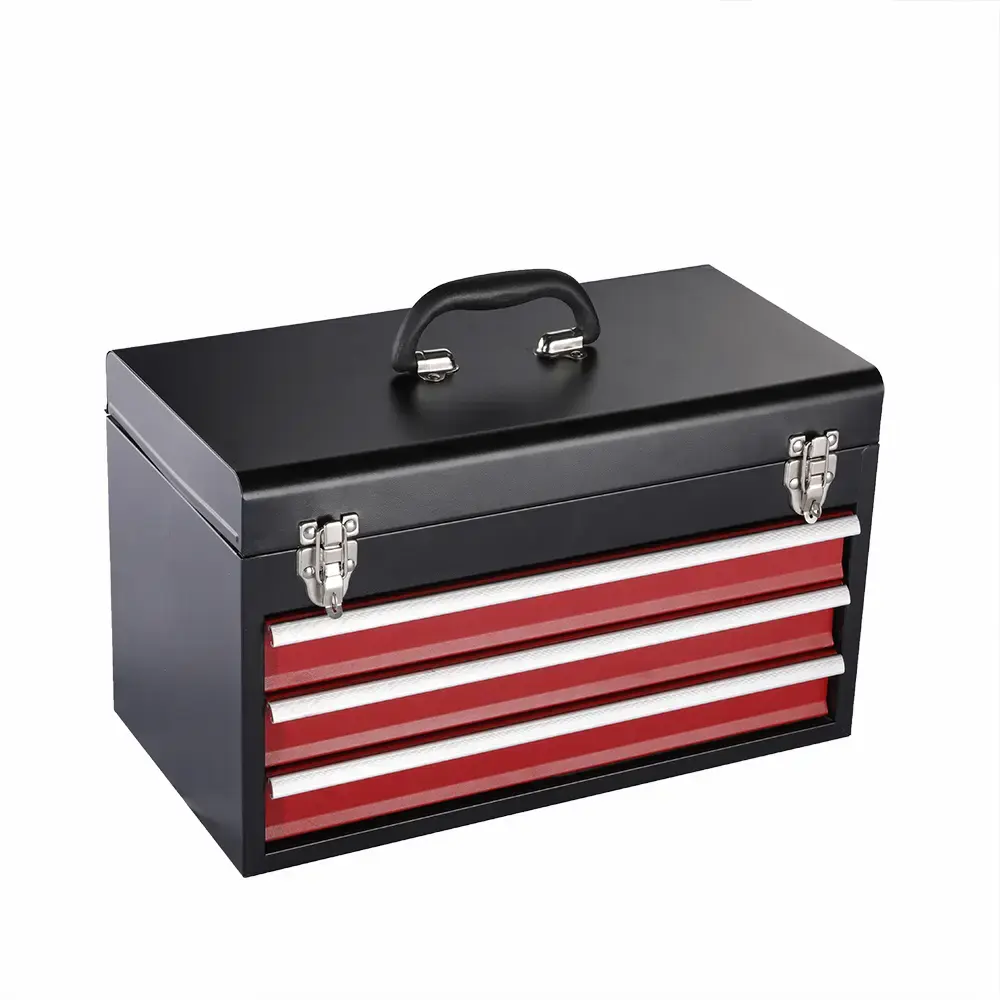
- Two‑piece combo (top chest + roll cab) is a top‑selling structure in North America
- Anti‑tilt interlock not standard, but ball‑bearing full‑extension slides are mandatory to avoid “sticky drawer” complaints
DIY buyer search terms: best 5 drawer tool chest for home garage, 30 inch rol
l cab DIY configuration. This market has low fault tolerance—one slide jam leads to a 3‑star review. Reduce materials where possible, but never compromise slide performance.
Outdoor Engineering, Agricultural Machinery & MENA Markets: Few Drawers, Large Depth, Dust‑Proof Locks, Salt‑Spray Resistance
Outdoor inspection crews, farm maintenance teams, and mining mobile repair units have unique drawer configuration needs:
- Drawer count: 3–5, but each drawer is deep and high‑capacity (≥ 50kg)
- Prioritize dust exclusion when closed and sand‑resistant locks over fine dividers
- Powder coating salt‑spray target: 240–480 hours (ISO 9227 / ASTM B117)
- Optional stainless steel hinges and lock cylinders for high‑temperature, dusty environments
- Large‑diameter 5–6 inch PU casters for gravel terrain
Buyer search terms: heavy duty 5 drawer service cart for field maintenance, dust proof roller toolbox configuration. Configuration sheets must list “sealability” and “caster diameter” as standalone items; do not reuse automotive templates.
Universal Baselines for Drawer Slides & Steel Thickness (Cross‑Market Contract Requirements)
Across all end‑user markets, the following metrics serve as baseline standards (not upper limits) for framework agreements:
- Cold‑rolled steel body: DIY ≥ 0.7mm; professional 0.8–1.2mm; industrial 1.2–1.6mm
- Slide type: ball‑bearing full‑extension; roller slides prohibited
- Single‑drawer dynamic load: DIY ≥ 30kg; automotive 45–60kg; industrial 35–50kg (cycle life prioritized)
- Anti‑tilt: mandatory for professional and industrial markets
- Coating: epoxy powder 70–90μm; salt‑spray hours market‑specific (DIY NA: 240h; EU industrial: 480h)
- Locking: central bar or keyed‑alike; optional electronic/RFID
- Standard references: ANSI/BIFMA X5.9, ISO 7170, EN 14749, ISO 9227; specify market‑applicable versions, no mixing
Buyer Assortment Strategy: Three‑Tier SKU Structure by Market, Not One‑Size‑Fits‑All
Export independent sites and distributors are recommended to build three base drawer platforms segmented by end‑user:
- DIY Home Platform: 5–7 drawers, 0.7–0.9mm steel, 30kg slides, two‑piece combo, 3+ color options
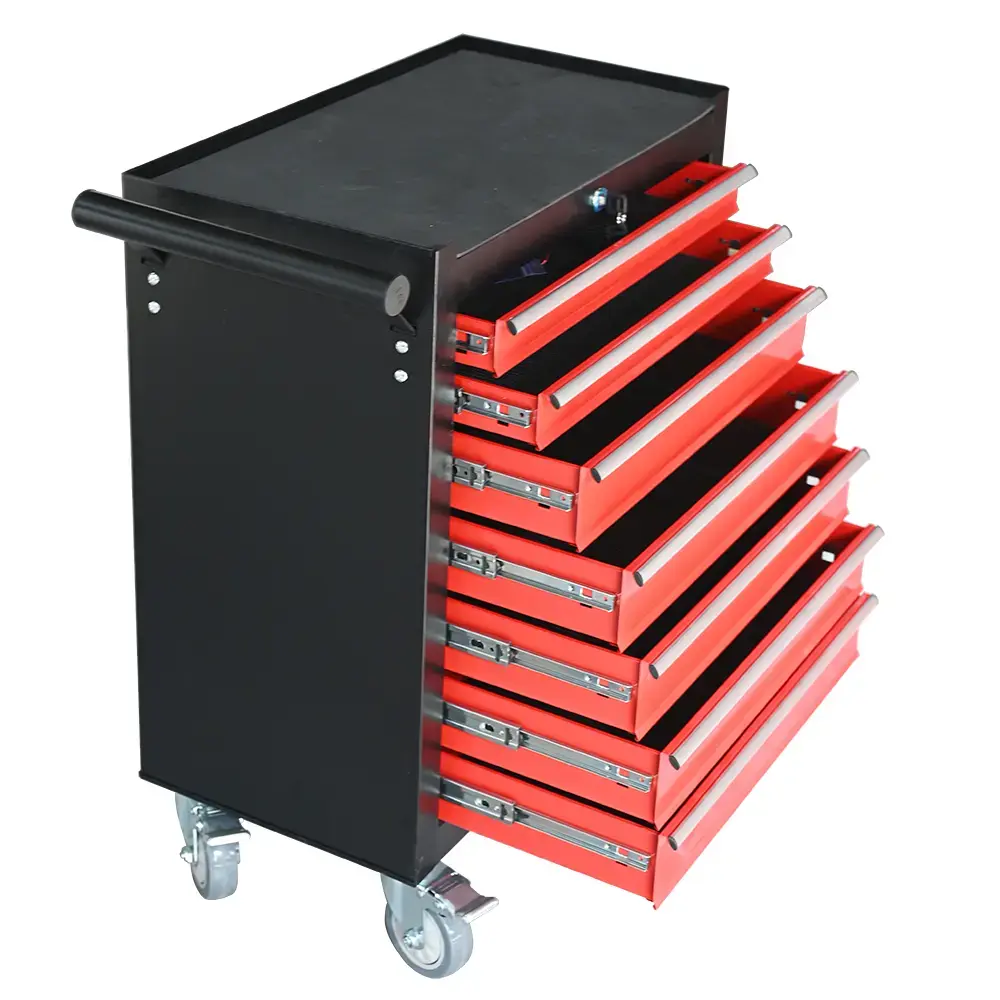
- Automotive Professional Platform: 7–11 drawers, 0.8–1.2mm steel, 45–80kg slides, anti‑tilt + foam inserts, stackable top chest
- Industrial MRO Platform: 9–13 uniform‑depth drawers, 1.0–1.6mm steel, modular dividers, central/electronic locking, RAL customization
If factory tooling supports drawer count and depth reconfiguration, pilot orders should test “one SKU per platform” instead of a single 10‑drawer universal model.