
Leave Your Message




0102030405
Home Tool Cabinet Buying Guide: How to Choose the Right Size, Structure & Versatility for Families & B2B Buyers
2026-03-13
Home-Use Tool Cabinet Recommendations: Balancing Size and Versatility
Opening Introduction
Last week, a long-term client who does cross-border e-commerce for hardware tools complained to me. He took a batch of "seemingly good" Tool Cabinets from the factory, but after sending them to end users in the US, the return rate was almost as high as his son’s exam score. When I asked carefully, where was the problem? Either the 56cm depth couldn’t fit into the garage corner, or the cabinet had seven or eight drawers, but the 18-inch saw couldn’t fit vertically or horizontally. In fact, we’ve seen this too many times in the industry—the biggest fear when choosing a home-use tool cabinet is not buying an expensive one, but the size conflicting with the home space, and the functions looking good but being awkward to use. Today, based on feedback from hundreds of B2B clients I’ve worked with over the years, I’ll break down exactly what kind of tool cabinet home users need, in detail.
1. Size Selection: Not the Bigger the Better, "Just Right" is King
Many people start by asking: "What’s the largest cabinet you have?" This question sounds bold, but it’s easy to step into a trap. The home environment is not a factory workshop—you first need to figure out how much space you can spare at home.
Golden Depth: The Secret of 35-45cm
Based on our experience serving the European and Japanese markets, the most practical cabinet depth for home garages or storage rooms is actually 35-45cm. Why? If it exceeds 50cm, once you place it against the wall, you won’t be able to park your car; if it’s less than 35cm, you can’t fit battery-powered drills or angle grinders. I’ve seen a typical Case: a DIY enthusiast in Germany had a garage only 2.4 meters wide, but he insisted on buying a 60cm deep cabinet. In the end, he couldn’t open the car door after parking, and had to move the cabinet to the yard to get rained on. You need to know that garages in many old European houses are not as spacious as those in the US—this data has been repeatedly verified.
Height: Reach the Top, But Not Touch the Ground
There’s a principle for home storage: make use of vertical space. A height of 180-200cm is ideal, and you can place infrequently used Toolboxes or consumables on top. However, note that it’s best to leave a 10-15cm skirting space at the bottom of the cabinet or install casters. On the one hand, it’s convenient for cleaning—robot vacuums can get in; on the other hand, it prevents moisture during the rainy season in the south. If the cabinet is directly placed on the ground, the tools at the bottom are prone to rust.
User Common Question: I Don’t Have Many Tools at Home, Is It Okay to Buy a Small One?
This needs to be viewed from two sides. Tools, like books, will only increase over time. If you buy a small cabinet, you’ll run out of space in two years and have to buy another one. Two cabinets with different styles will look even messier. My suggestion is to leave 20% room for the future. For example, if you only have 10 tools now, buying a cabinet that can hold 15-20 tools is the safest choice.

2. Internal Structure: Don’t Be Fooled by the Number of Drawers, Focus on the "Combination"
Whether a tool cabinet is easy to use doesn’t depend on how many drawers it has, but on whether it can hold all the "odd-shaped" tools you have. Drills, hand saws, levels, screwdrivers... these tools vary greatly in length and thickness.
Mix Logic: Shallow Drawers + Deep Drawers + High Side Cabinets
When we did OEM for a major North American client, they put forward a requirement: the drawer heights must include three specifications—8cm for screwdriver bits and small parts, 15cm for drills and angle grinders, and over 25cm for nail guns and hand saws. This configuration later became a bestseller. Because many people find that after buying a cabinet with all shallow drawers, long tools can’t lie flat; with all deep drawers, small things run around.
Drawer Slides: Smoothness Depends on "Load Capacity" and "Steel Stamp"
B2B purchasers must pay attention to this detail. The minimum load capacity for drawer slides of home-use tool cabinets is 30-45kg. Don’t believe empty words like "mute"—look for the steel stamp. A real full-extension three-section drawer can be fully pulled out, so you don’t have to lean forward when looking for things at the front. A South Korean client once returned goods because the slides were too thin; after filling the drawer with wrenches, pushing it back was like pulling a broken cart.
Pegboard Side Hanging: An Underrated Tool
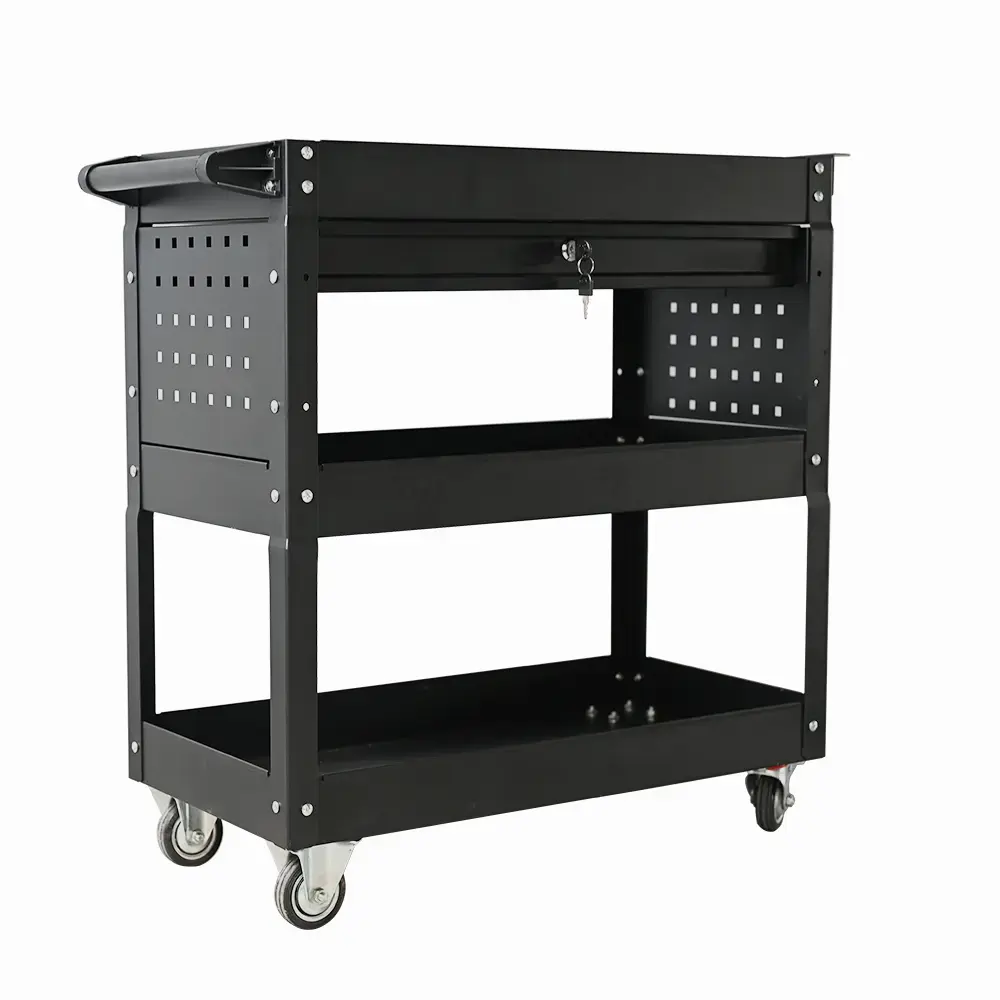
Many home users overlook a problem—opening and closing drawers every time for high-frequency tools (tape measures, gloves, utility knives) is troublesome. A popular practice in recent years is to add a pegboard on the side of the cabinet. When the cabinet is placed against the wall, the side faces the work area; hanging tools on it saves time and doubles efficiency. This detail doesn’t cost much, but overseas users really appreciate it.
3. Material & Mobility: "Special Requirements" for Home Environments
The biggest difference between home and factory environments is: factories have flat floors, dry conditions, and fixed placement. At home, there may be children running around, sloped floors, and garages that are hot in summer and cold in winter.
Cold-Rolled Steel is Mainstream, But Thickness Matters
90% of home-use tool cabinets on the market are made of cold-rolled steel. However, the thickness of the steel is tricky. There’s a rough classification in the industry: 0.6-0.8mm is lightweight, suitable for hand tools like screwdrivers and pliers; 0.8-1.0mm is mainstream, which can bear the weight of cordless drills and small electric hammers; over 1.0mm is somewhat industrial-grade. Don’t expect a 0.6mm cabinet to hold a full set of socket wrenches—the shelf will definitely bend over time.
Casters Are Not Decorations: Must Have Brakes and Sufficient Diameter
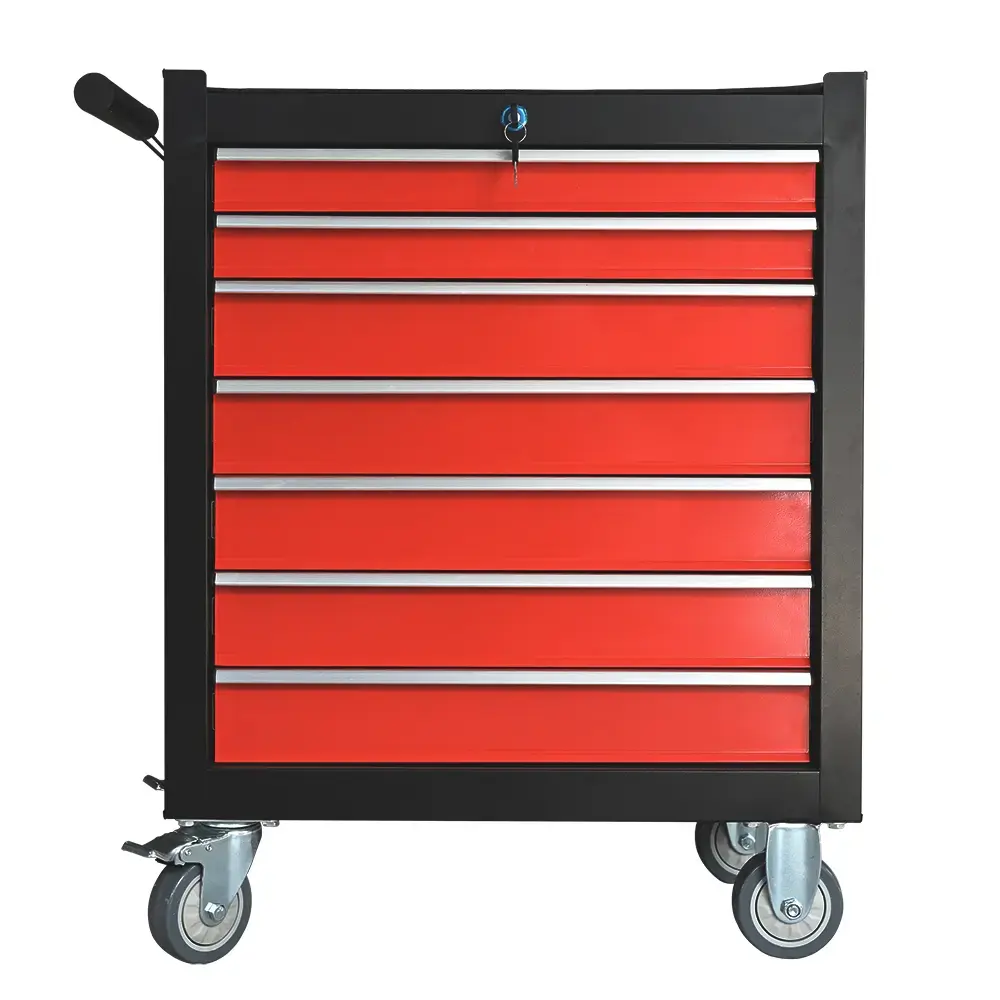
Home floors are not always flat—there are tile gaps, carpet edges, and garage expansion joints. If the caster diameter is less than 5cm, it’s easy to get stuck when pushing. It’s recommended to choose rubber casters with a diameter of more than 5cm, and at least two of them should have brakes. An American client told me that once he was repairing his car in a sloped parking space; the cabinet didn’t have brakes, slid down, and dented his bumper. He was so angry that he directly replaced the entire cabinet with one with brakes.
Rust Prevention: A "Must-Answer Question" for Coastal and High-Humidity Areas
If you sell to humid places like Japan, the UK, or the US West Coast, the surface treatment should be electrostatic spraying, and even some hardware parts should be electroplated. For ordinary painted garage cabinets, rust spots will definitely appear around the door hinges in two years.

4. Safety & Certification: "Invisible Thresholds" B2B Purchasers Must Not Ignore
Many new traders easily fail here. Unlike industrial users, home users have children and pets, so safety is the top priority.
Anti-Tipping Device: Must Be Equipped Above a Certain Height
Generally speaking, if the cabinet height exceeds 60cm (or 75cm according to some standards), it needs an anti-tipping design. Either the cabinet itself has a stable center of gravity, or it has wall-mounted fixtures. In 2023, there was a notification case in the EU where a tool cabinet toppled over and hit someone because the center of gravity shifted forward when all drawers were pulled out. Now European clients are very sensitive to this, and it’s often written in black and white in procurement contracts.
Rounded Corners and Surface Burrs
It sounds trivial, but it can be a big problem if something goes wrong. The edges and corners of home-use tool cabinets must be rounded. Especially the bottom and handle positions—if a child runs around and hits a right angle, the consequences are unimaginable. I once worked with a Canadian purchaser who brought a white glove during inspection, felt every corner, and checked for burrs.
"Classification" Concept of Locks
A lock is not just a formality. For ordinary home use, a single-point lock is enough; but if the tool cabinet is placed where children can reach it (such as in an apartment), it’s better to choose one with a key or password. A "child safety lock" design is now popular in the US market, which requires two actions to open. Although it’s a bit cumbersome, it’s safe.
5. Cost-Effectiveness & Procurement Logic: How B2B Clients "Copy the Homework"
The last point is specifically for friends doing cross-border trade and wholesale. When you help end users choose products, you’re also helping them save money.
Standard Products Are King, Customization is Advanced
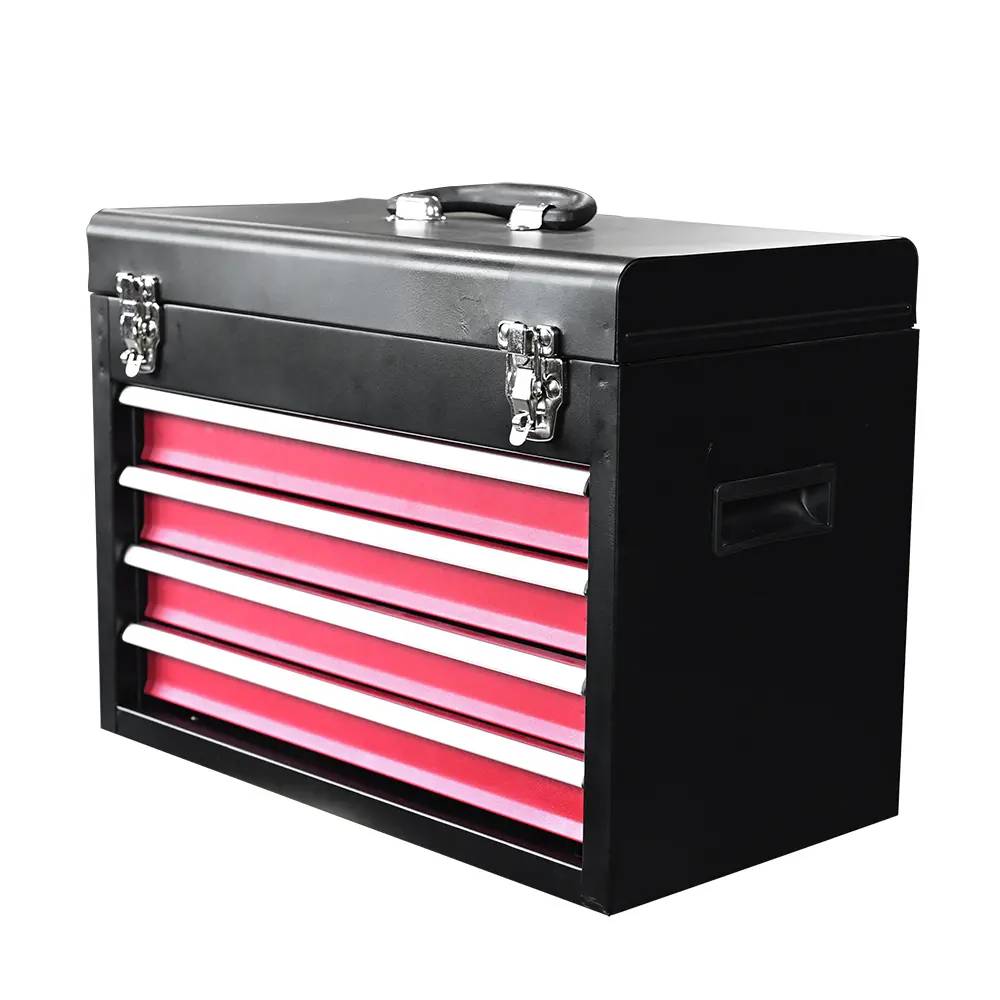
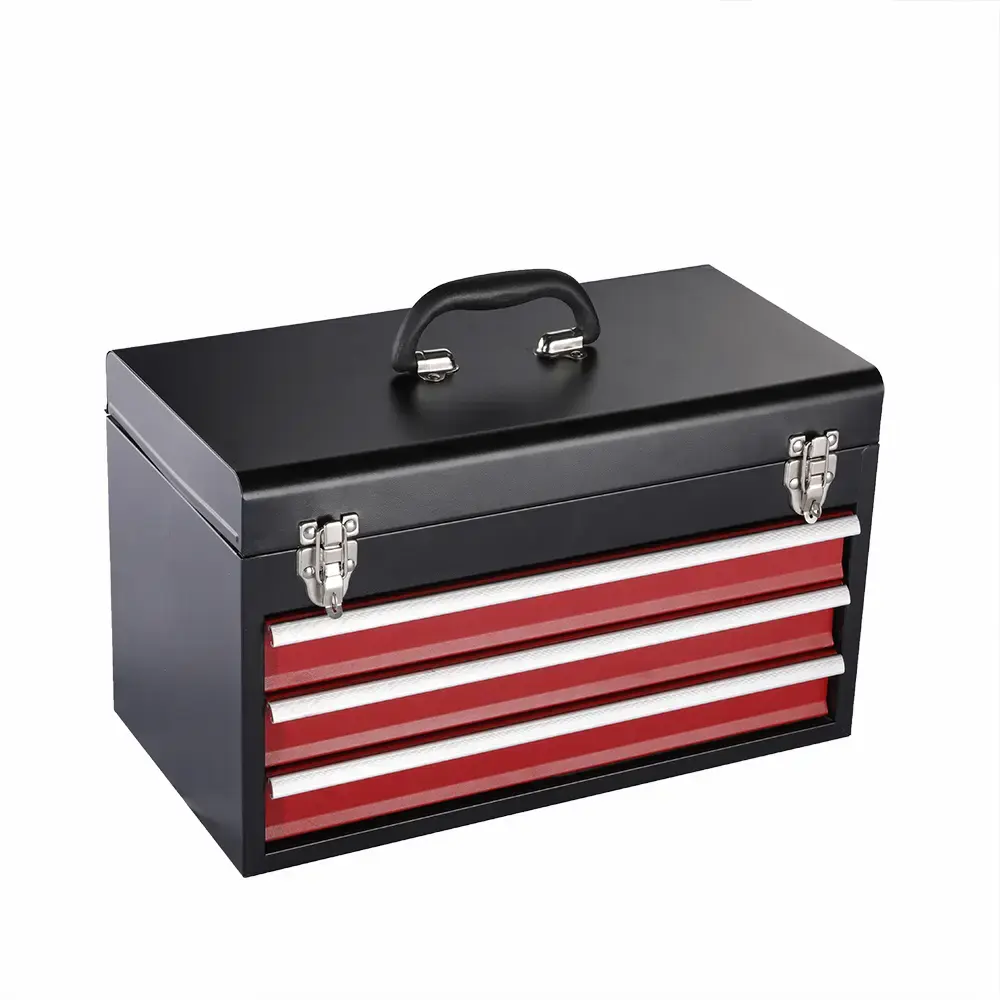
The procurement decision chain for home users is short—they don’t like to wait. In-stock standard products that support 48-hour delivery have a conversion rate 30% higher. In terms of size, a heavy-duty multi-layer locked steel tool cabinet around 800×400×1800mm is a "one-size-fits-all" product. It can be used for auto repair, garages, and even small workshops. This type of product has low stocking risk for B2B tool cabinet procurement.
Understand "CPV Expression" to Optimize Search
Data from the 1688 backend shows that titles with more than 3 accurate attribute words (such as "full steel four-layer locked thickened drawer tool cabinet") have a click-through rate 41% higher. Don’t be lazy when listing products—include material, number of layers, lock type, and mobility. European and American purchasers have direct search habits; they start by searching for "steel tool cabinet with lock and wheels".
After-Sales Policy: The Most Concerned Point for B2B Clients
What do home users hate the most? Receiving a cabinet and finding that the drawers don’t slide smoothly or a screw is missing. At this time, the return cost is higher than the cabinet itself. Mature purchasers will definitely ask: Can the slides be replaced separately if they break? How long is the warranty period? Industrial-grade brands dare to guarantee 3-5 years, and home-grade ones should be at least 1-2 years. Can you stock common accessories (slides, lock cores, casters) at the destination port? This is related to your reputation.

FAQ: Three Most Asked Questions by Purchasers
Q1: If I’m doing cross-border e-commerce and placing a trial order for tool cabinets for the first time, which sizes are safe to choose?
A: It’s recommended to prioritize combinations with 40-50cm width, 35-40cm depth, and 4-6 drawers. This specification is a "universal size" in both North America and Europe—it can hold drills and hand tools, and the logistics cost is moderate. Once you get data, then consider launching larger ones like 72-inch models.
Q2: Stainless steel vs. cold-rolled steel—how do home users choose?
A: Unless it’s placed in a humid environment (such as kitchen renovation, gardening greenhouses), cold-rolled steel with spraying is completely sufficient. Stainless steel is more expensive and heavier, making it difficult for home users to move. Cold-rolled steel with good surface treatment has no rust problems and is much more cost-effective.
Q3: How to quickly judge the quality of drawer slides when purchasing?
A: Pull out two-thirds of the drawer and press down with your hand. If it shakes severely or makes a "creaking" sound, the steel is too thin or the slide precision is insufficient. Also, check if it has soft-close function—home users have very low tolerance for "slamming" sounds.
Meta Description
How to choose a home-use tool cabinet? Balancing size, structure and versatility is key. This guide provides professional advice based on real cases, covering garage space utilization, drawer combination logic, material rust prevention, safety certification and B2B procurement strategies. Both DIY enthusiasts and cross-border purchasers can find practical and cost-effective tool cabinet selection solutions. Click to read and optimize your tool storage decisions.
Core Keywords
home tool cabinet, multi-functional tool cabinet, tool cabinet size, drawer tool cabinet selection, B2B tool cabinet procurement