
Leave Your Message




0102030405
Maximize Efficiency with Heavy-Duty Tool Storage Solutions
2026-04-09
In modern Mechanical Manufacturing Plants, Maintenance, Repair, and Operations (MRO) is the lifeline to ensure production capacity. However, the procurement departments of many enterprises often focus on expensive CNC machine tools and automated production lines, but overlook the infrastructure that supports the daily operation of these equipment — Comprehensive Tool Storage Cabinets.
For procurement managers responsible for factory asset management, choosing a Tool Cabinet is not just buying an iron box, but building a management system forheavy-duty tools. If the load-bearing capacity of the tool cabinet is insufficient, it will cause drawer deformation and jamming; if the rust resistance is poor, the service life of the cabinet will be greatly shortened under the erosion of cutting fluid and oil stains — a common pain point in mechanical manufacturing procurement that leads to increased maintenance costs.
From the perspective of industrial procurement, this article will in-depth analyze the core parameters of comprehensive Tool Storage Cabinets in mechanical manufacturing scenarios (such as static load, dynamic load, and slide rail system), and how to accurately adapt to the characteristics of heavy-duty tools.
1. Core Parameter Analysis: Why Do Mechanical Manufacturing Need "Heavy-Duty" Standards?
In a machining workshop, the weight of a standard socket set, torque wrench, or precision measuring tool is often beyond ordinary cognition. Ordinary office-grade storage cabinets are often vulnerable in the face of these "heavyweights". For mechanical manufacturing enterprises, only industrial-grade tool cabinets can meet the long-term use needs of heavy-duty tools.
⚙️ Drawer Slides & Load Capacity
This is the dividing line between ordinary cabinets and industrial-grade cabinets. The quality of the slide rail directly determines the service life of the tool cabinet and the safety of tool storage.
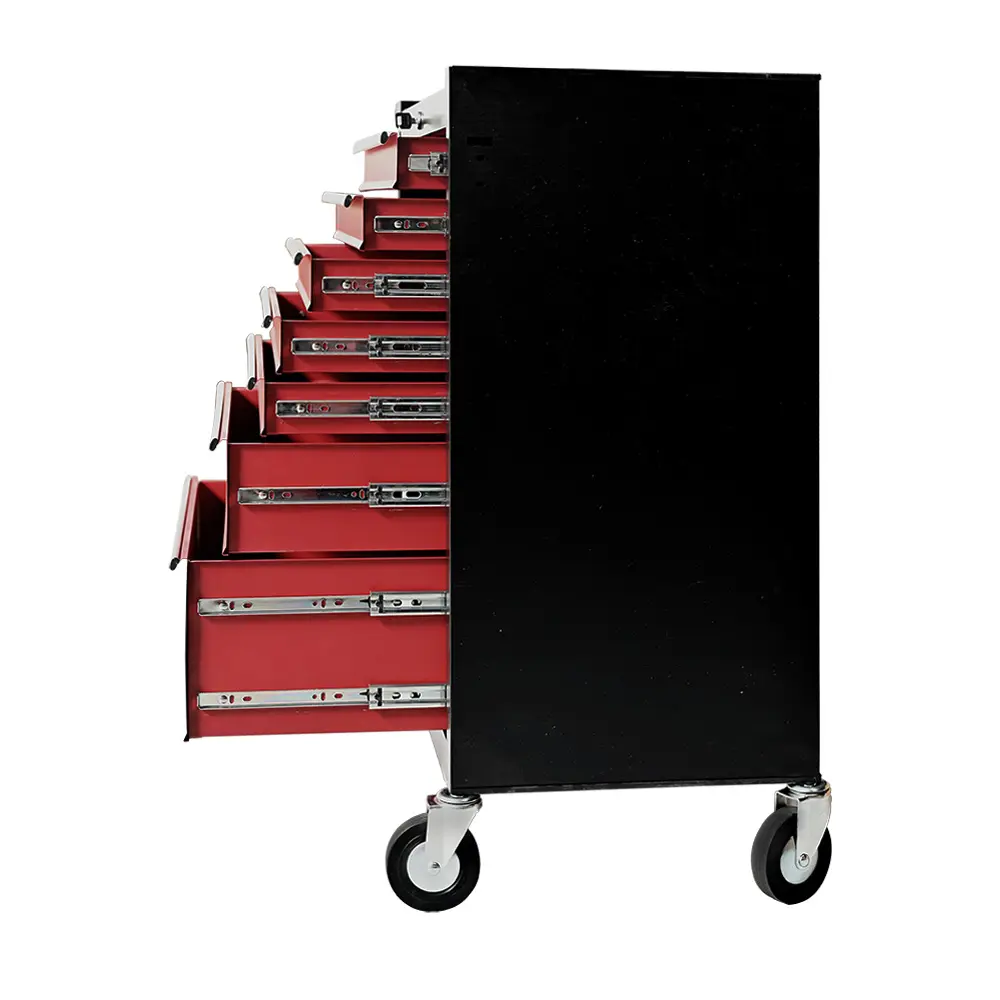
Industrial Standards: For professional tool carts or cabinets used in mechanical manufacturing, their drawer slides must be made of thickened cold-rolled steel and have a Full Extension function, allowing the drawer to be fully pulled out for easy access to tools at the back.
Data Indicators: The load capacity of a single drawer should reach more than 100kg (about 220lbs). This is to meet the storage needs of heavy-duty sockets, cast iron counterweights, or entire boxes of cutting tools. If the load capacity of a single drawer in the parameter table is less than 75kg, please directly exclude it from mechanical manufacturing scenarios — it cannot bear the weight of heavy-duty tools and will cause safety hazards.
🛡️ Surface Treatment & Anti-corrosion
Machining workshops are full of cutting oil, coolant mist, and metal dust, which are highly corrosive to tool cabinets. Poor anti-corrosion performance will not only shorten the cabinet life but also contaminate precision tools.
Phosphating and Spraying: When purchasing, pay attention to whether the cabinet has undergone Phosphating treatment. This is a chemical conversion film process that can greatly enhance the adhesion between the coating and the base material, laying a foundation for anti-corrosion.
Weather Resistance: Cabinets treated with high-quality phosphating and Powder Coating must have extremely strong oil resistance and chemical corrosion resistance, preventing the cabinet from rusting and causing powder peeling, which in turn contaminates precision measuring tools and affects their accuracy.
🔒 Locking Mechanism
To ensure the safety of expensive tools and dangerous tools, a linked locking system is a standard configuration. That is, one key can lock all drawers, and the drawers should have an anti-pry function when locked, preventing tool theft and ensuring workshop safety.
2. Scene-Oriented Adaptation: Combination Logic of Upper and Lower Cabinets
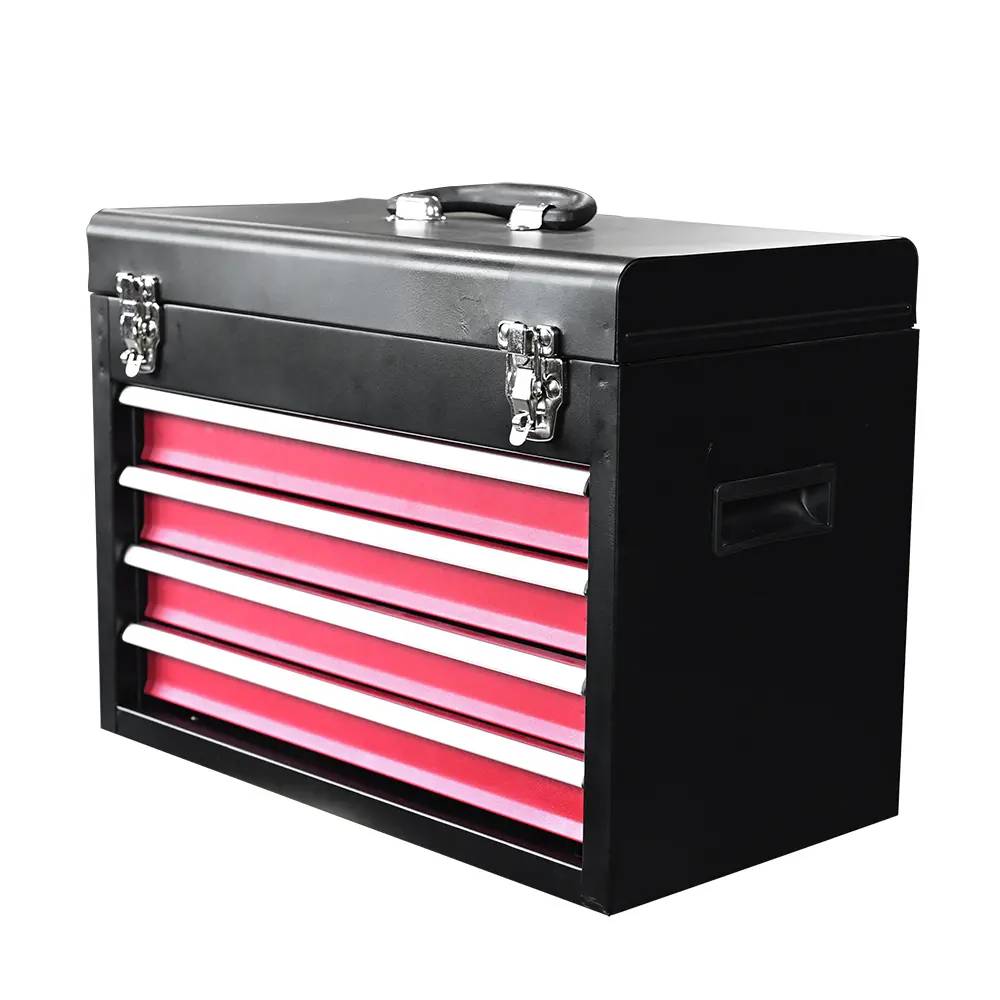
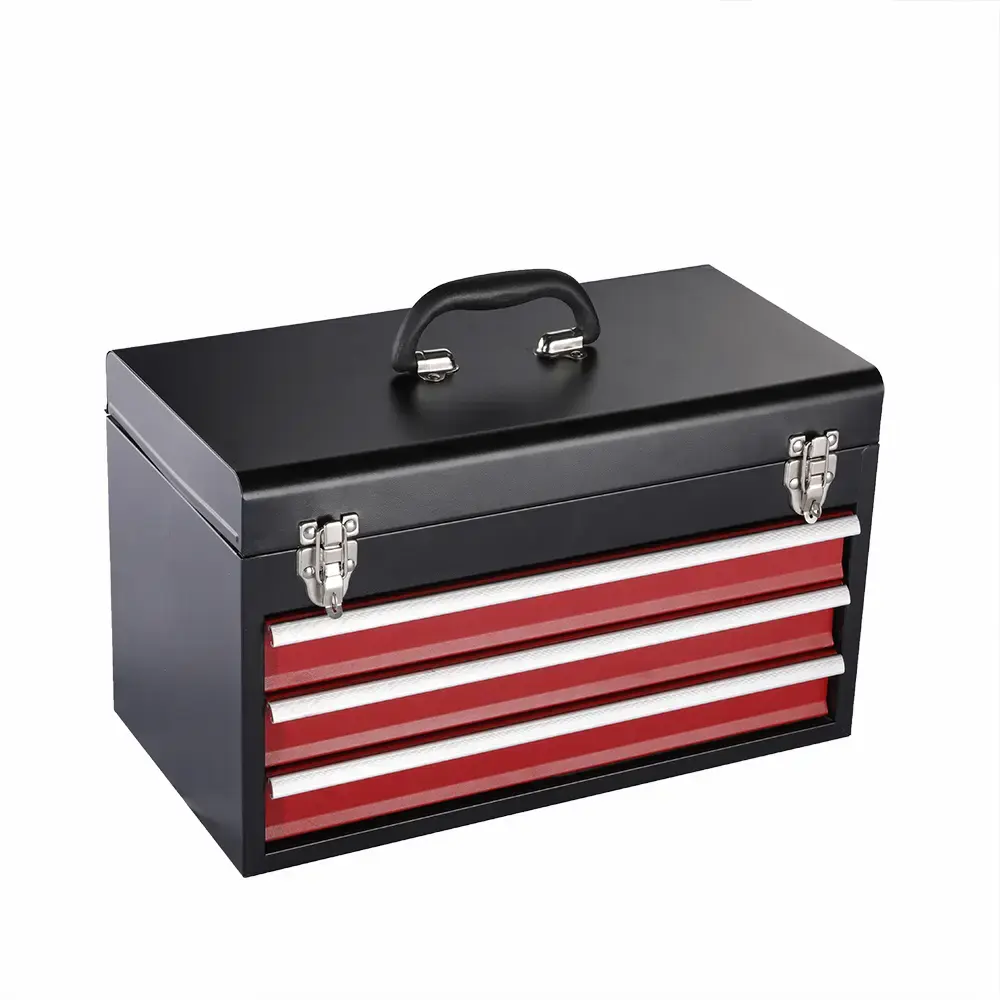
In the tool room management of mechanical manufacturing enterprises, "comprehensive tool storage cabinets" usually adopt the form of Matching Upper and Lower Toolboxes. This design is to optimize space utilization and conform to ergonomics, improving the work efficiency of maintenance engineers.
📦 Lower Cabinet: Fortress for Heavy-Duty Tools
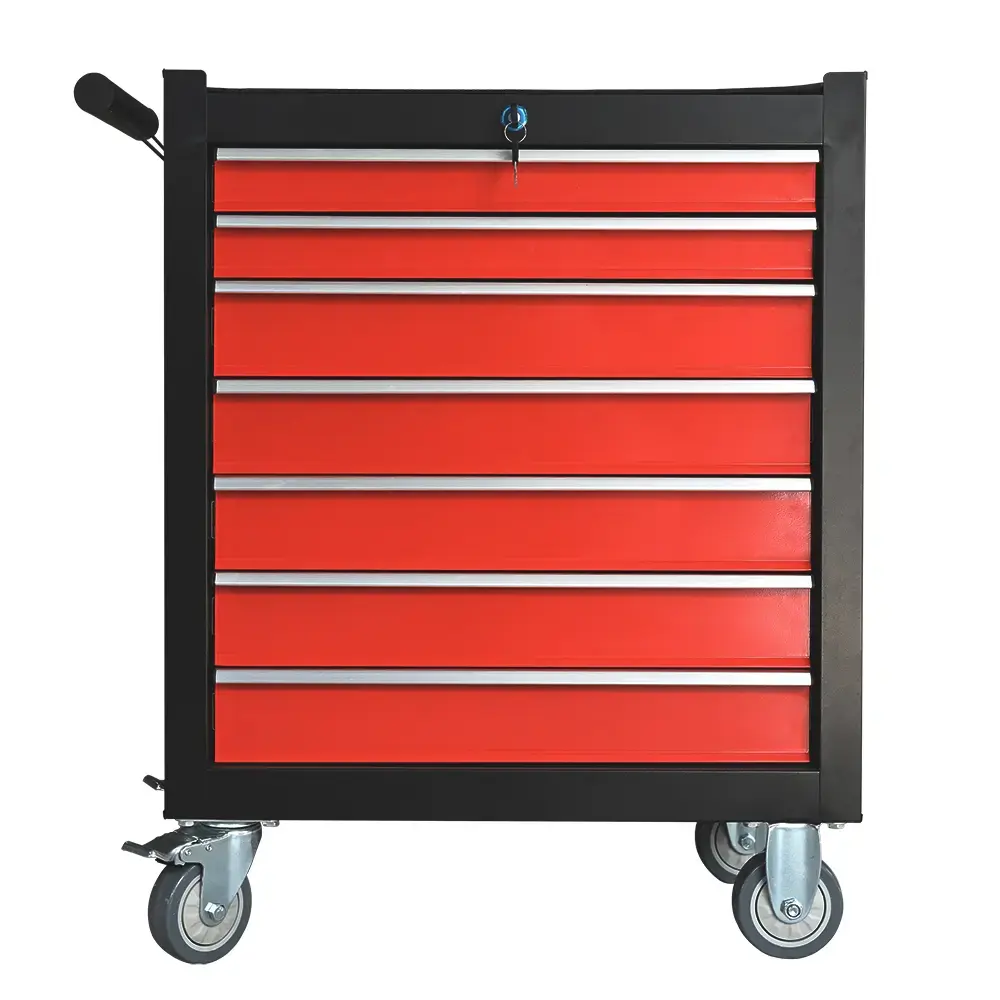
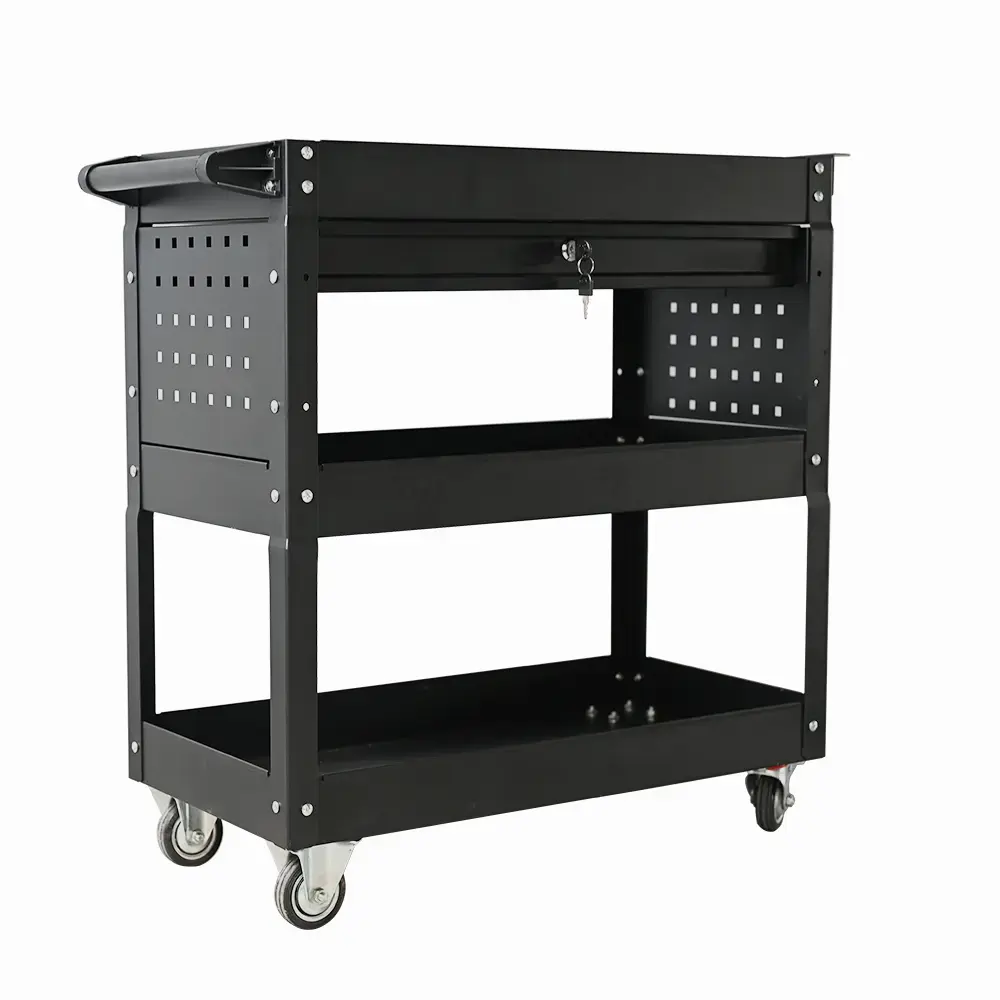
The lower cabinet is usually equipped with wide Wheels, making it a Rolling Tool Cabinet, which is convenient for moving tools to the production line for on-site maintenance.
Adaptation Objects: Store heavy-duty wrenches, hydraulic pullers, and large-size measuring tools.
Procurement Suggestions: It must be equipped with double-brake universal wheels. Even when fully loaded, it can stably park on the oily ground, preventing tools from sliding and causing work-related injuries — a key safety requirement for mechanical manufacturing workshops.
📚 Upper Cabinet: Library for Precision Tools
The upper cabinet is usually fixed on the lower cabinet or hung separately, used to store frequently used but expensive items, avoiding damage and loss.
Adaptation Objects: Hexagon wrenches, precision vernier calipers, and drill bits.
Procurement Suggestions: Choose styles with Dividers and anti-static liners to prevent precision tools from colliding with each other and causing scratches, which will affect measurement accuracy. This is crucial for ensuring the quality of mechanical processing.
3. Procurement Risk Control: Slide Rail Jamming and Cabinet Deformation
As a professional industrial equipment supplier, when supplying goods to mechanical manufacturing enterprises, we must be alert to the following two common procurement pitfalls, which can avoid after-sales disputes and cost losses.
Slide Rail Material Fraud: There are products on the market that use thin iron sheet stamping slide rails. When purchasing, check the cross-sectional thickness of the slide rail. Industrial-grade slide rails usually have a thickness between 1.5mm - 2.0mm. Thin slide rails will suffer metal fatigue under long-term heavy loads, leading to drawers being unable to push or pull.
Welding Process Defects: The structural strength of industrial cabinets relies on Full Welding technology. Virtual welding or spot welding will cause the cabinet to fall apart during forklift handling or collision. The acceptance standard should include checking whether the welding points are uniform and free of air holes.

4. Trends in Intelligence and Customization
With the advancement of Industry 4.0, tool management in mechanical manufacturing enterprises is transforming towards digitalization. This trend is also changing the procurement criteria for comprehensive tool storage cabinets.
Intelligent Integration: Modern comprehensive tool storage cabinets began to reserve RFID chip installation positions or integrate electronic lock systems. This allows the procurement department to track the collection and return records of expensive tools, realizing the leap from "physical management" to "data management", and improving tool management efficiency.
OEM/ODM Customization: Different production line layouts require cabinets of different sizes. Professional tool cabinet suppliers should provide non-standard customization services, customizing tool cabinets of specific sizes according to the column spacing or production line height of the factory, to maximize the use of vertical space and adapt to the actual needs of the workshop.
Conclusion
In the grand system of mechanical manufacturing, although the comprehensive tool storage cabinet is small in size, it is the closest partner of maintenance engineers. For procurement professionals, choosing a tool cabinet with industrial-grade core parameters (such as high-load-bearing slide rails and phosphating anti-rust) is an insurance for the continuous operation of the production line, reducing downtime caused by tool management problems.
In your next factory upgrade project, please be sure to examine each candidate product with the above standards to ensure that they can withstand the test of heavy-duty tools and meet the long-term development needs of the enterprise.