
Leave Your Message
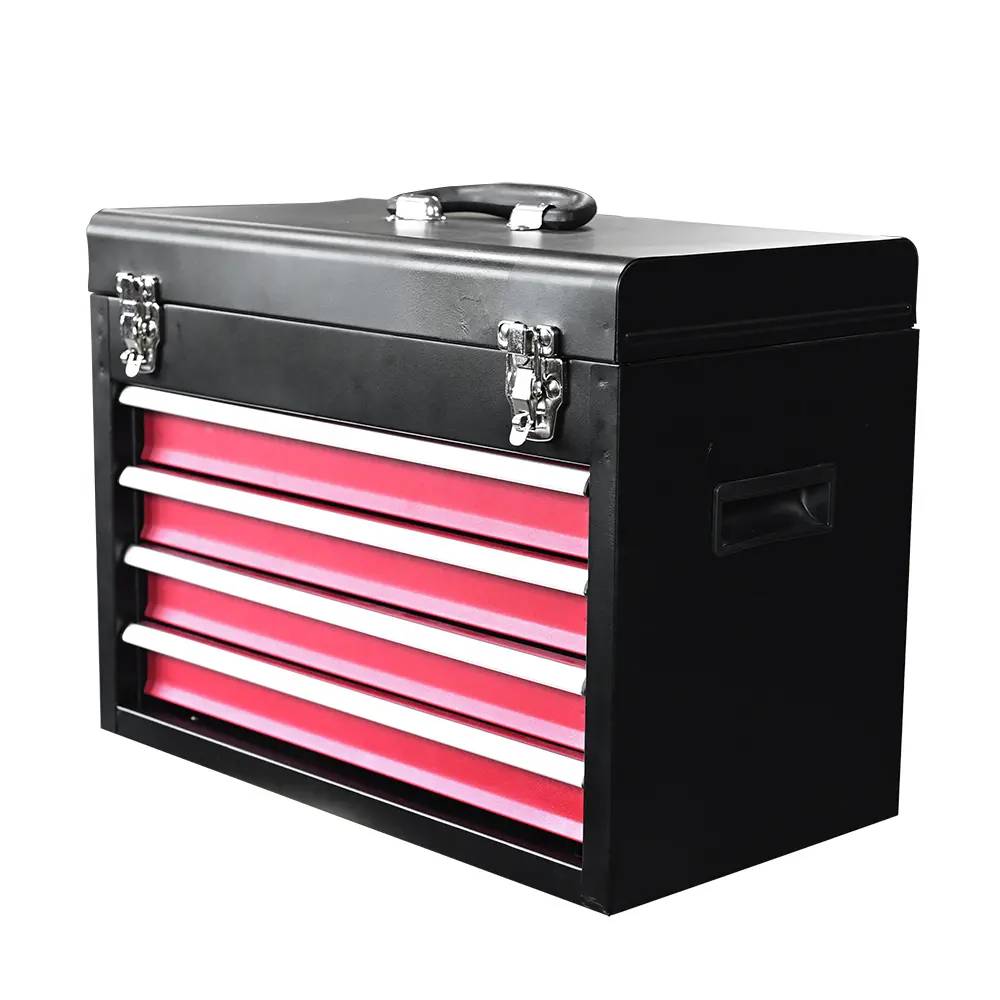
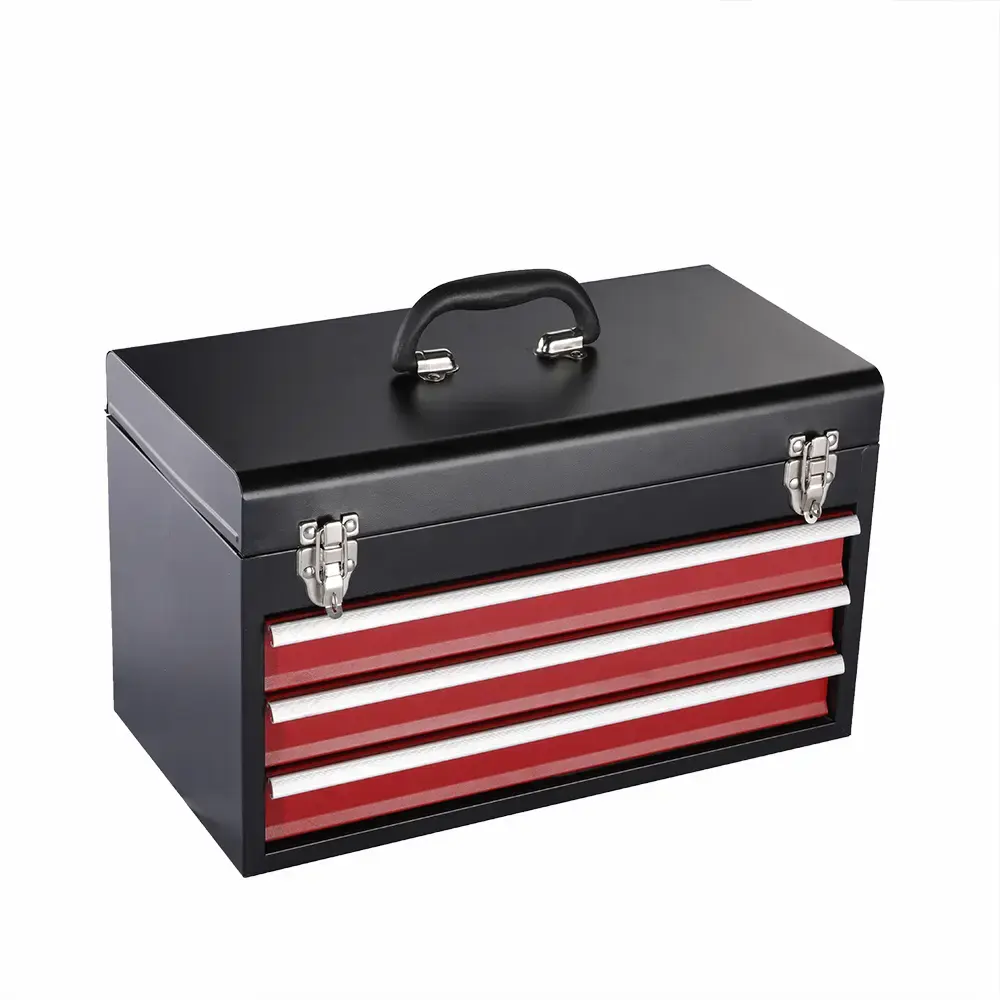

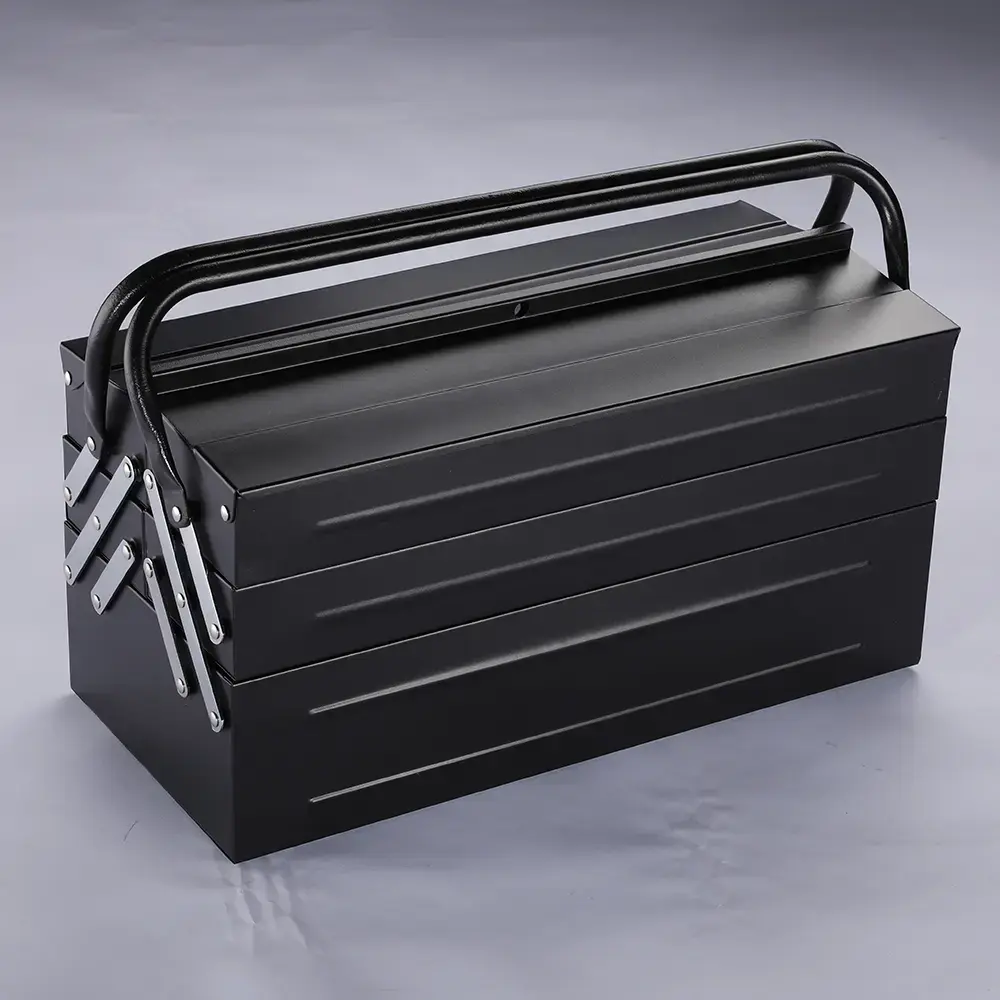
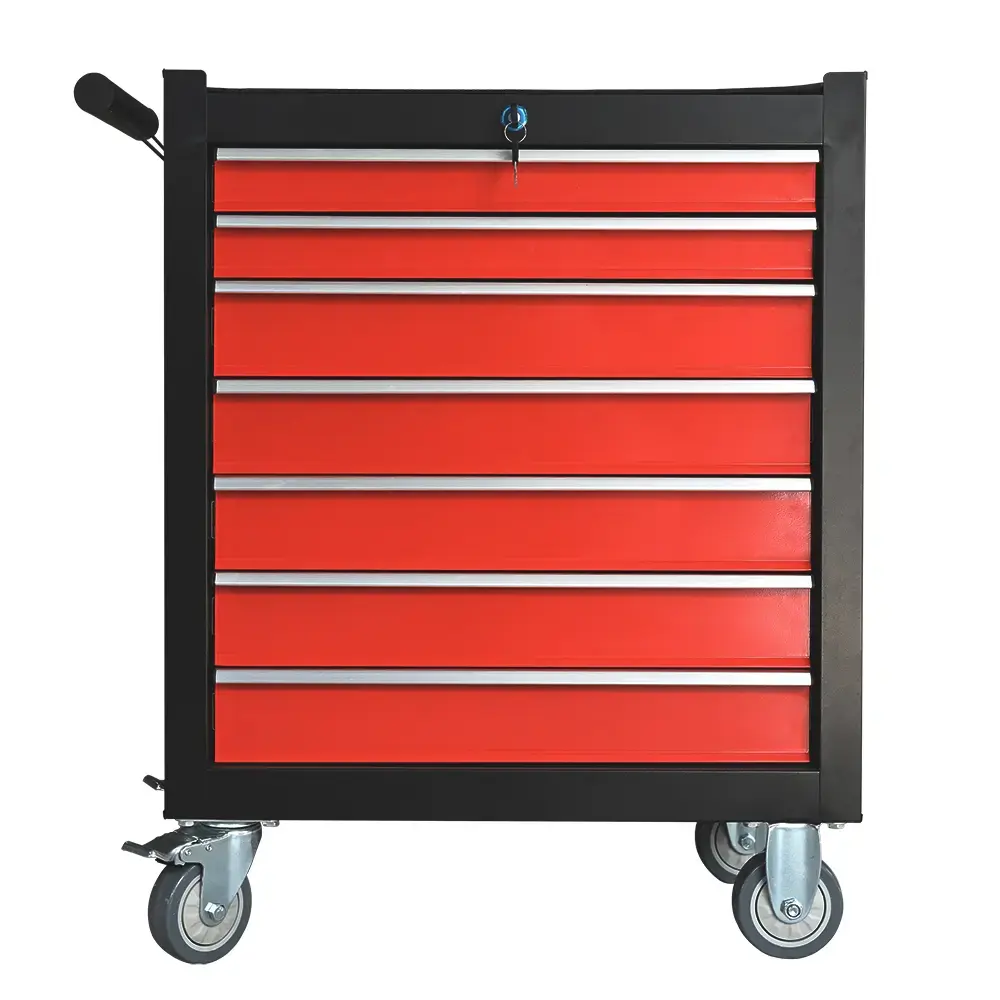



Maximize Space: 7-Drawer Tool Cabinet Tips for Efficiency
In professional workplaces, workshops or home garages, Tool Cabinets are not merely storage devices; they are the nerve centers of work efficiency. A disorganized tool cabinet will waste precious working hours, increase work frustration and even affect work quality. A well-planned and organized 7-drawer tool cabinet can become a powerful engine for productivity improvement.
As professional storage planners, we are well aware that "storage" is not merely about hiding items, but rather establishing a dynamic system with clear logic and efficient access. The 7-drawer design, which offers excellent classification levels and vertical space utilization, has become the top choice for many professionals. This article will delve into 7 core usage tips to help you and your team fully unleash the full potential of this storage powerhouse.
Technique One: Top-down, follow the golden rule of "usage frequency"
This is the fundamental principle of all professional Storage Systems. Ergonomic research shows that improper bending over and standing on tiptoes can significantly increase operational fatigue and reduce efficiency. Therefore, it is crucial to strategically partition the seven drawers.
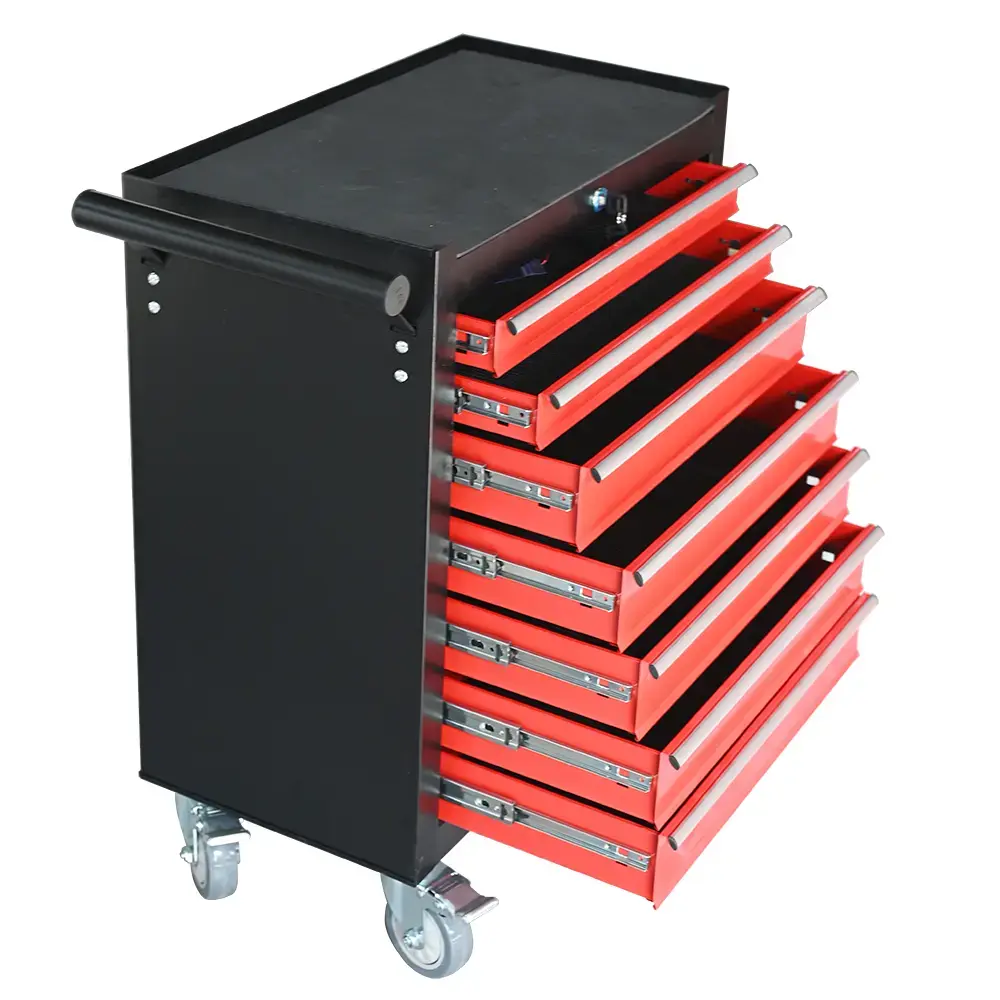
Top drawer (1-2 layers) : This is the "golden area" that best conforms to the natural standing posture of the human body. High-frequency tools that are used every day or even every hour should be stored. For example: Commonly used wrenches, screwdrivers, pliers, multimeters, measuring tools (tape measures, calipers), and personal protective equipment (such as safety glasses, gloves). The goal of this area is to be "within easy reach at a glance".
Middle drawer (3-5 layers) : This area is suitable for storing tools and consumables that are frequently used. For example: Common inventories of special sleeves, drill bit sets, cutting tools, fasteners (such as bolts, nuts, screws), lubricants, etc. These tools may not be used in every project, but they are regularly employed in weekly or monthly tasks.
Bottom drawer (6-7 layers) : This area should be planned as a storage zone for low-frequency or heavy tools. For example: large wrenches, special pullers, pneumatic tools, spare motors or equipment maintenance kits. These items are large in size and heavy in weight, and are not frequently used. Placing them at the bottom not only ensures the stability of the cabinet but also avoids frequent bending over.
Data Insight: According to industry observations, a reasonable frequency zoning can save technicians an average of about 15% to 20% of the time they spend looking for tools in their daily work.
Technique Two: Introduce a modular separation system to bid farewell to the "Sea of Chaos"
Simply throwing tools into the drawer is a huge waste of space in the 7-drawer tool cabinet. The core of professional storage lies in "fixed position" management. We strongly recommend using adjustable drawer dividers, foam linings or custom-cut storage trays.
Adjustable separator: It offers extremely high flexibility, allowing the cell size to be adjusted at any time according to changes in the shape and size of the tool. It is very suitable for storing long tools such as wrenches and screwdrivers.
Customized foam lining: This is the highest level of professional storage solution. By cutting out exclusive grooves for each tool in high-density foam, not only is perfect fixation achieved, but also "trace management" can be realized. After the tools are taken away, the empty space left behind is clearly visible, making it easy to count and return them, which greatly reduces the probability of tool loss. It is particularly suitable for fields such as aerospace and precision manufacturing that have strict requirements for tool management.

Technique Three: The Ultimate Utilization of Vertical Space - Layering and embedded accessories
Don't regard a drawer as a single two-dimensional plane. By making full use of its height, astonishing additional storage space can be created.
Drawer layer shelves: For drawers storing small items (such as fasteners and electronic components), small layer shelves can be used to divide the space into upper and lower layers, easily doubling the capacity.
Magnetic strips and hooks: Installing small magnetic strips or hooks on the inner walls or top plates of drawers can be used to fix small items that are prone to rolling or getting lost, such as knives, precision screwdriver heads, and metal rulers. This ingenious idea can effectively utilize the often overlooked three-dimensional space.
Skill Four: Establish a clear classification logic and identification system
Classification is the prerequisite for efficient retrieval. Avoid using vague classifications such as "common tools", and instead adopt more specific and function-based classification methods. For example:
Classified by tool type: One drawer is dedicated to "wrenches and sockets", and the other is for "screwdrivers and Allen sockets".
By task/project classification: Set up a "Special Drawer for Electrical Maintenance", which houses all related tools and materials such as multimeters, electric pens, cable pliers, and crimping caps.
By size classification: For standard parts such as screws and nuts, by specification (such as M3, M4, M5...) Store in separate compartments.
After classification, identification is the key to the closed loop. Use a label machine to create clear and uniform labels for each drawer and each compartment. This not only facilitates current users but also enables new employees or temporary staff to quickly familiarize themselves and position themselves, reducing communication costs in team collaboration.
Technique Five: Design exclusive solutions for special-shaped tools
Each toolbox contains some "irregular-shaped" tools. They are of irregular shapes, difficult to store and tend to get tangled up in the drawers.
Long-handled tools, such as crowbars and large torque wrenches, can be placed in the deepest drawer and the space at the back of the drawer can be utilized to install fixed clamps or elastic straps to prevent them from rolling.
Coiled items such as wires, cables, and hoses can be wound with a wire winder or directly coiled and placed in larger compartments to prevent mutual entanglement.
Precision instruments such as digital calipers and dial indicators must be placed in independent compartments with shock-absorbing foam to prevent inaccurate accuracy due to bumps.
Tip six: Security and Maintenance: An Underlying Logic that Cannot Be Ignored
A professional tool cabinet must also be managed professionally and safely.
Balanced weight distribution: Follow the principle of "heavier at the bottom and lighter at the top", place the heaviest tools in the bottom drawer to ensure the stability of the cabinet's center of gravity and prevent the risk of toppling over due to being top-heavy.
Drawer load management: Although each drawer has a load-bearing limit, avoid concentrating overly heavy items in the front half of a single drawer, as this will accelerate the wear and tear of the slide rails and the cabinet body.
Regular maintenance and cleaning: Establish a simple maintenance cycle (such as once a month), clean the inside of the drawers, check if the slide rails are smooth, and promptly sort out the disrupted classifications. This can ensure that your storage system remains in top condition for a long time.
Skill Seven: Embrace dynamic thinking to achieve continuous optimization
Your collection of tools and work requirements are not set in stone. An excellent 7-drawer tool cabinet system should be adaptable and scalable.
Review your storage system regularly (such as every quarter). Which tools have seen changes in their usage frequency? Which newly added tools have not yet "settled down"? Based on the feedback from actual usage, make minor adjustments to the layout of drawer allocation and separation. This dynamic optimization process is the key to ensuring that your tool cabinet is always in sync with your workflow.

Investing in a high-quality 7-drawer tool cabinet is just the first step towards a professional working environment. What truly endows it with a soul is the well-considered and scientifically planned storage system behind it. By implementing the above seven professional techniques, you will not merely be "storing" tools, but building a powerful platform that enhances work efficiency, ensures tool security, and reduces operational costs. A well-organized tool cabinet is the most direct manifestation of professionalism, silently conveying respect for work and the pursuit of quality. Start planning your exclusive system right away to ensure that every tool access becomes a smooth and precise operation experience.