
Leave Your Message




Rust Prevention Technologies for Tool Cabinets: Performance Differences Between Galvanizing, Chrome Plating, and Painting
Rust Prevention Technologies for Tool Cabinets: Performance Differences Between Galvanizing, Chrome Plating, and Painting
Rust prevention techniques for tool cabinets directly determine product lifespan and suitability for specific applications. Many cross-border buyers and wholesalers have faced high post-sale complaints and replacement costs due to selecting the wrong rustproofing process. This article dissects the core differences between three mainstream techniques—galvanizing, chrome plating, and spray painting—and provides selection strategies based on real-world Cases to help you precisely match end-user requirements. Below, we analyze each method based on its fundamental process, performance outcomes, and suitability for specific scenarios.
Galvanizing: The Cost-Effective Choice for Long-Term Rust Prevention in Outdoor Tool Cabinets
Galvanizing primarily falls into two categories: hot-dip galvanizing and electrogalvanizing. Both rely on the sacrificial anode effect of the zinc layer to isolate air and moisture, creating dual physical and electrochemical protection. Hot-dip galvanized coatings reach 50-150μm thickness, offering 20-50 years of outdoor durability. Electrogalvanized coatings are thinner at 5-15μm, typically lasting 5-10 years.
We once customized outdoor tool cabinets for an overseas construction site supplier. After hot-dip galvanizing, they passed neutral salt spray testing for 800 hours without significant corrosion—far exceeding the client's 500-hour requirement. These cabinets endured three years in Southeast Asia's rainy season with only minor oxidation at edges, boosting client repurchase rates by 40%.
Buyers often ask if electrogalvanizing is suitable for semi-outdoor settings. In fact, electrogalvanized tool cabinets are perfectly adequate for dry, inland regions with minimal rainfall. Their cost is only 60%-70% of hot-dip galvanized options, making them ideal for budget-constrained scenarios with low environmental corrosion.
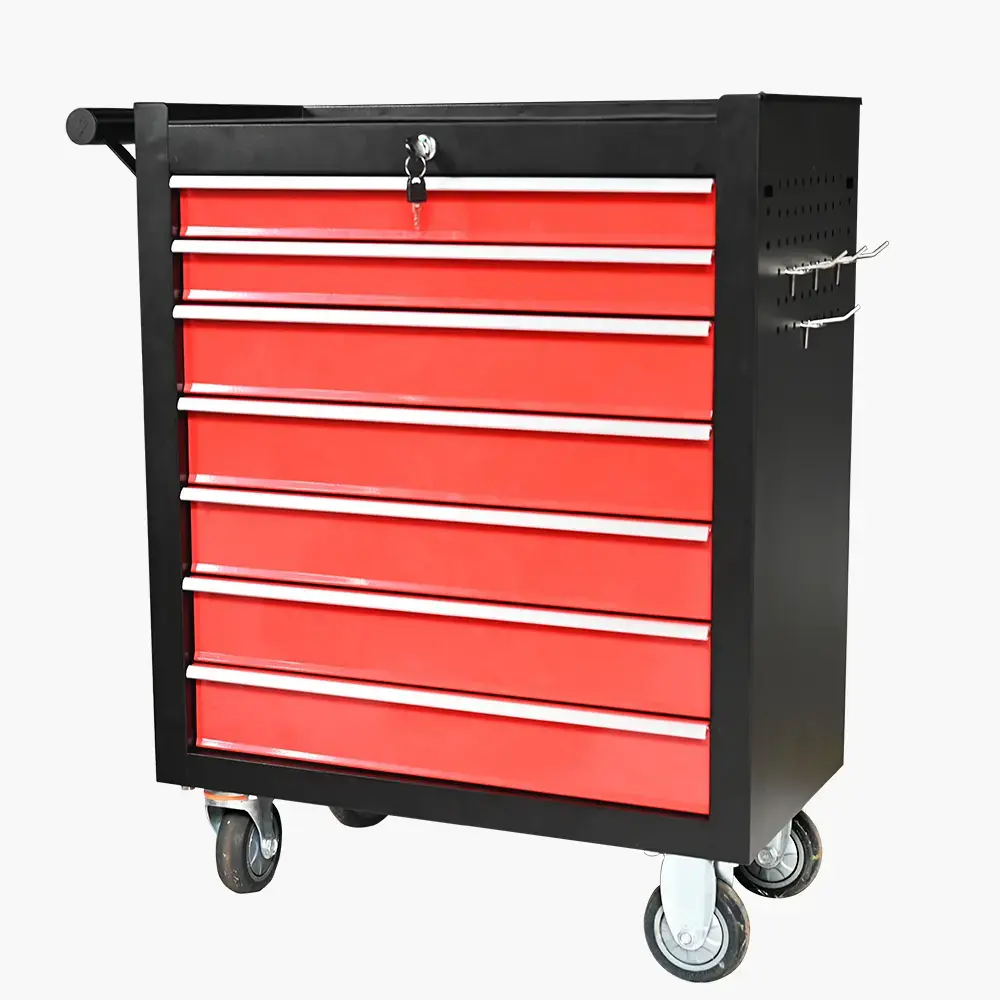
Chromium Plating: The Preferred Choice for Indoor Settings Emphasizing Aesthetics and Wear Resistance
Chromium plating forms a chromium passivation layer on the tool cabinet surface through electrolysis. This layer offers high hardness and excellent gloss, significantly enhancing surface wear resistance. However, its rust prevention capability is relatively limited, with an outdoor lifespan of only 2-5 years, making it more suitable for dry indoor environments.
A chain auto repair shop selected chrome-plated tool cabinets for storing precision repair tools. The chrome finish not only provides an elegant appearance but also withstands frequent tool impacts. After over two years of use, the surfaces remain free of scratches or rust marks.
Users often wonder how to address localized rust on chrome-plated tool cabinets. This typically results from oxidation of the metal substrate after coating damage. First, sandpaper can be used to remove rust, followed by applying a specialized chrome repair agent. This provides a temporary extension of 1-2 years.
Spray Painting: A Flexible, Customizable Rust Prevention Solution for Diverse Scenarios
The spray painting process involves multiple steps: degreasing, rust removal, acid washing, and baking. It offers controllable coating thickness, a wide range of color options, and can be paired with electrostatic powder coating to enhance adhesion. It achieves salt spray resistance exceeding 500 hours, making it suitable for various complex environments.
Tool cabinets customized for a Daqing Oilfield operation zone employ outdoor-grade electrostatic powder coating. The coating formula is optimized for the oilfield's high-humidity, oil-contaminated environment. After one year of use, only minor surface oil residue was observed with no rusting—significantly outperforming standard spray-painted products.
Many customers ask how to extend the outdoor lifespan of spray-painted tool cabinets. The key lies in detailed protection: installing EPDM sealing strips on cabinet doors, reserving drainage holes at the bottom, and annually reapplying specialized anti-rust paint. This approach can extend the lifespan to 8-10 years.

FAQ: Common Questions About Tool Cabinet Rust Prevention
1. Which rustproofing technology is best for coastal environments? Coastal salt spray corrosion demands priority use of hot-dip galvanizing + sealing paint combinations, or 316 stainless steel substrates with fluorocarbon spray paint. Neutral salt spray testing must exceed 1000 hours.
2. How do maintenance costs rank across the three processes? Painting has the highest maintenance cost, requiring periodic recoating. Chrome plating is next, with localized damage needing professional repair. Galvanizing has the lowest cost, requiring minimal maintenance in outdoor settings.
3. How to verify rustproofing quality during bulk procurement? Conduct random neutral salt spray tests, require suppliers to provide test reports, and inspect coating adhesion using the cross-hatch test—no peeling indicates qualification.
Selection should balance usage environment, budget, and aesthetic requirements. Choose chrome plating for high-end indoor settings, prioritize galvanizing for long-term outdoor applications, and opt for spray painting when strong customization is needed. Only the right rustproofing solution reduces end-user costs and enhances product competitiveness—rustproofing technology is a core factor determining tool cabinet reputation.
Meta Description
This article analyzes the performance differences between galvanizing, chrome plating, and spray painting in tool cabinet rust prevention. Using real-world industry cases and data, it helps cross-border buyers and wholesalers precisely match solutions to specific scenarios, reducing after-sales costs. Master the rust resistance lifespan, maintenance requirements, and suitable applications for these three processes to boost your B2B clients' product competitiveness. Bookmark now for future reference!
Keywords
Tool cabinet galvanized rustproofing, tool cabinet anti-corrosion treatment technology, outdoor tool cabinet rustproofing process, tool cabinet electrostatic powder coating technology, tool cabinet rustproofing selection solutions