
Leave Your Message




0102030405
Selection Guide for Building Materials Wholesalers: Convenience and Market Demand of Rolling Tool Cabinet Carts with Handles
2026-03-27
Boost Sales: Top Rolling Tool Cabinets with Handles for Pros
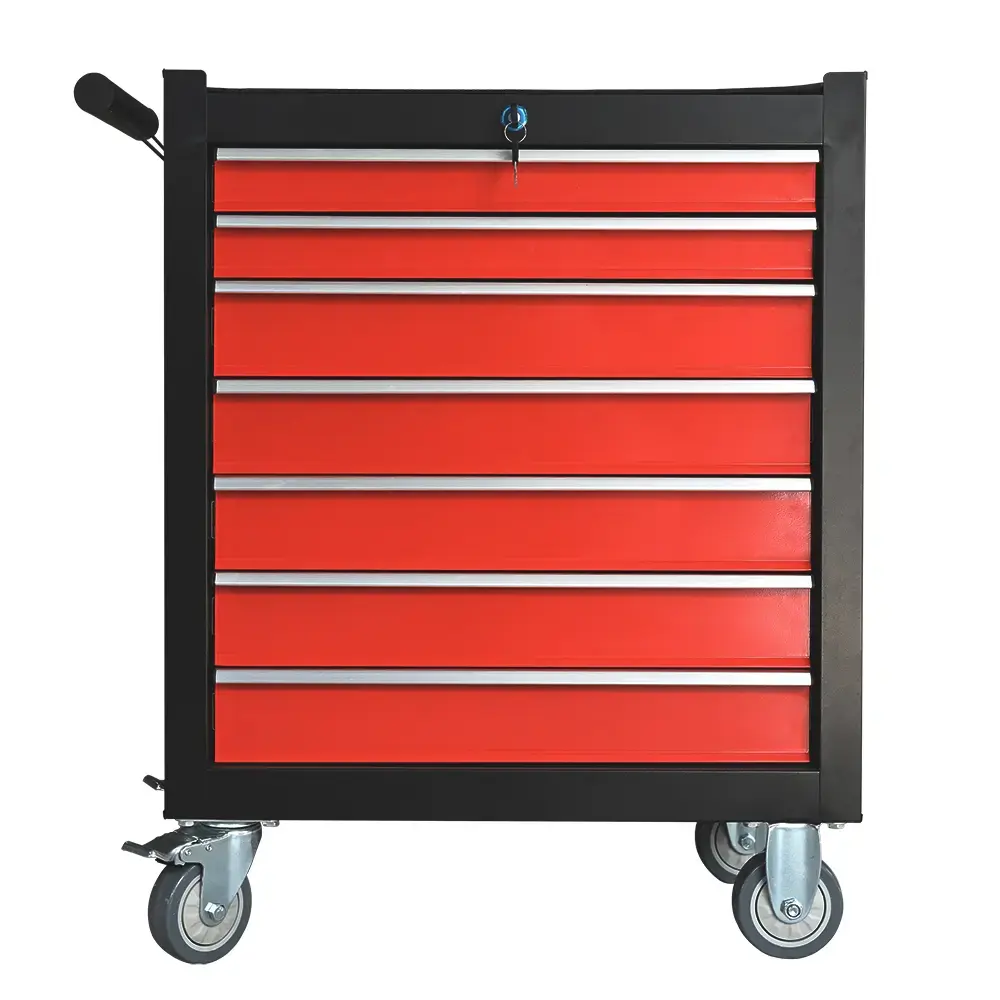
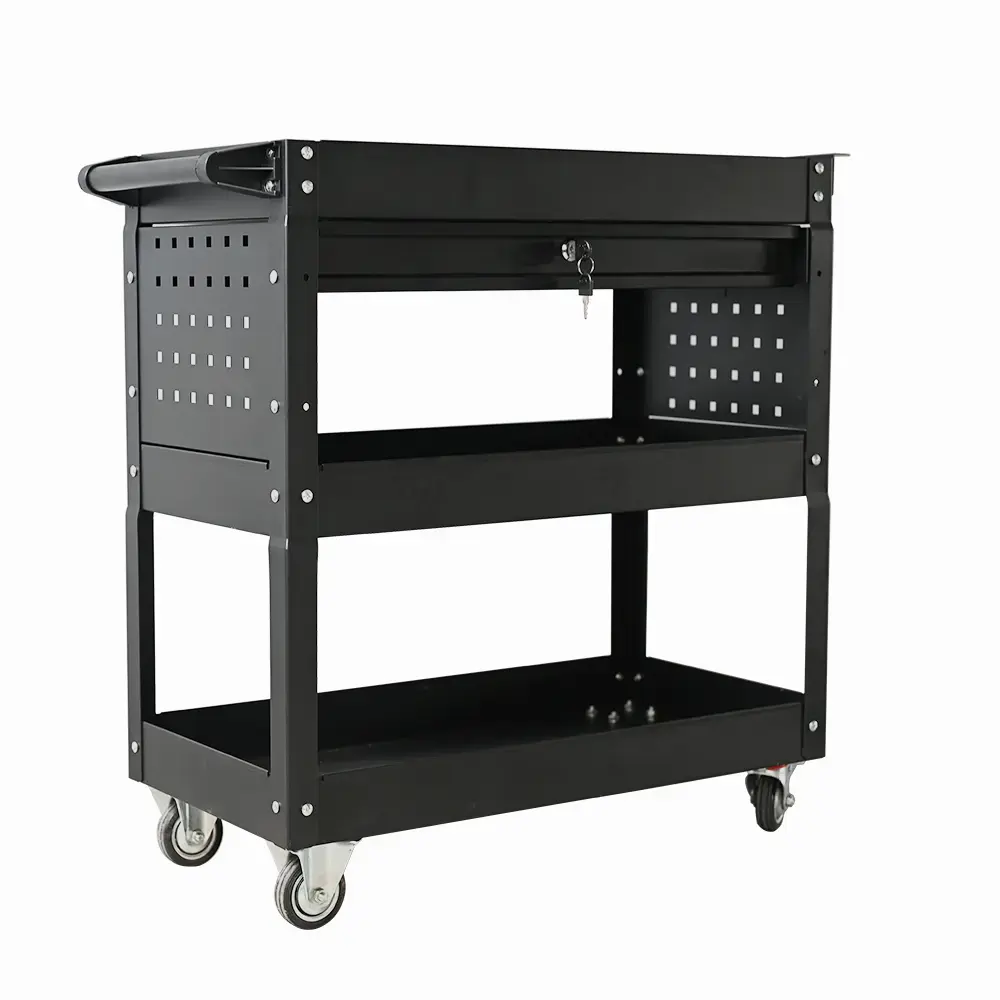
In the field of building materials wholesale and hardware retail, the efficient utilization of warehouse space and the mobility of on-site operations are directly related to operational costs and customer satisfaction. Traditional fixed Tool Cabinets can meet basic storage needs, but their limitations have become increasingly prominent in scenarios requiring frequent cargo handling, workstation adjustment or on-site display.Rolling Tool Cabinet carts with handles, as a product that deeply integrates storage functions with mobility, are becoming a key equipment for wholesalers to optimize internal logistics and improve service response speed.
For building materials wholesalers, product selection is not just buying a "cabinet with wheels", but choosing a mobile solution that can adapt to the storage of multi-category tools, bear heavy load handling, and maintain reliability in long-term use. How to conduct a comprehensive evaluation from multiple dimensions such as structural design, load-bearing capacity, wheel set configuration and segmented market demand is the key to ensuring return on investment. This article will provide references for procurement decisions from these technical perspectives.
Core Selection Dimension 1: Structural Design and Load-Bearing Capacity
Tools and hardware accessories of building materials wholesalers are usually characterized by heavy weight and irregular shape. Therefore, the structural design of rolling tool cabinet carts must first meet the requirements of heavy-duty working conditions. When purchasing, focus on the following aspects:
- Cabinet material and thickness: High-quality products generally adopt cold-rolled steel plates, and the thickness of plates at key load-bearing parts (such as columns and drawer guide mounting plates) should not be less than 1.2mm. Thicker plates can effectively resist cabinet deformation under heavy loads.
- Drawer guide rails: This is a core component to measure product durability. Full-extension ball bearing guide rails are the current mainstream configuration; confirm their nominal load-bearing capacity (e.g., 50kg, 80kg per drawer) when purchasing. Some high-end models are equipped with self-locking mechanisms to prevent drawers from sliding out accidentally when the cart is moving.
- Top workbench surface: Many models are designed with a thickened workbench surface on the top of the cabinet, which can be used for temporarily placing tools or performing simple assembly operations. Whether the table surface adopts anti-slip design and whether the edges are rounded are details that affect the user experience.

Core Selection Dimension 2: Ergonomic Design of Rollers and Handles
Mobility convenience is the core value that distinguishes this type of product from fixed cabinets, and this highly depends on the design level of wheel sets and handles. When selecting products, wholesalers should not only focus on "having wheels", but also evaluate the performance of wheel sets in actual working conditions.
Wheel Set Configuration
The ideal configuration is two fixed casters + two swivel casters (with brakes). Fixed casters ensure the stability of the cart when moving in a straight line, while swivel casters provide flexibility for turning. When purchasing, confirm:
- Wheel diameter: A wheel diameter of more than 4 inches (about 100mm) is usually more suitable for use on warehouse floors and even crossing thresholds, with low rolling resistance.
- Material: Heavy-duty casters are mostly made of polyurethane (PU) or rubber, which are quiet and do not damage the ground. Avoid using all hard plastic wheels.
- Brakes: The brake device should be firm and reliable, and it is best to be designed on the swivel casters for easy one-foot fixation.
Handle Design
The position, shape and height of the handle directly affect the comfort of pushing. An ergonomically designed handle should be located at the middle upper part of the cart height, and the grip area should have anti-slip treatment. For double-door open tool cabinets, the installation position of the handle should not affect the normal opening of the cabinet doors.
Market Demand Trends: Functional Modularization and Scene Segmentation
With the improvement of terminal users' requirements for operation efficiency, the demand of building materials wholesalers for rolling tool cabinet carts is also evolving from "general-purpose" to "scene-based". Understanding these trends helps wholesalers more accurately select product combinations that are suitable for the market.
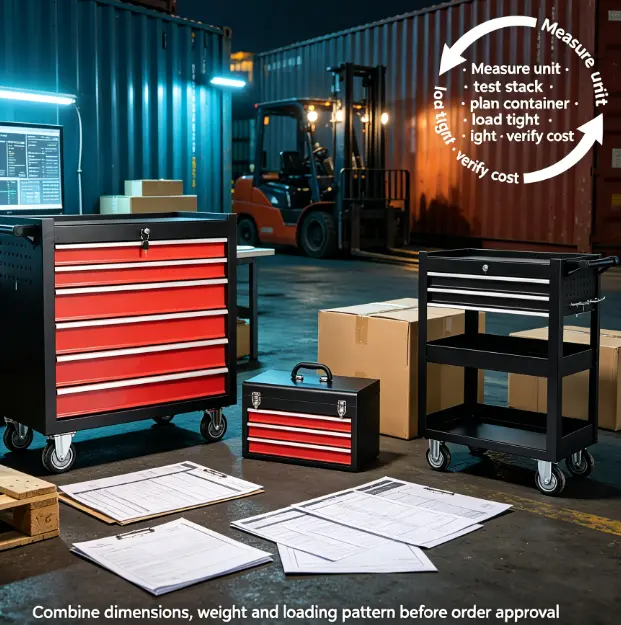
- Modular combination: Many professional users begin to prefer modular tool box systems that can be stacked or combined. Wholesalers can pay attention to product lines under the same brand where the cart base with handles can be freely combined with tool boxes and Storage Boxes of different sizes. This design is convenient for users to configure on demand and also reduces the complexity of the wholesaler's inventory SKUs.
- Safety and anti-theft: In the environment of building materials stores or open warehouses, the anti-theft demand for tools and hardware is becoming increasingly prominent. Rolling tool cabinet carts equipped with a central lock system (one lock to lock all drawers) and a sturdy lock cylinder are more likely to be favored by wholesalers.
- Professional segmented models: Users in different industries have specific needs for tool cabinets. For example, the auto repair industry prefers models with heavy-duty casters and oil-proof drawer liners; the electronic assembly industry may need mobile workbenches with anti-static (ESD) functions. When selecting products, wholesalers can introduce corresponding segmented models according to their own customer groups.

Quality Verification and Supply Chain Stability Evaluation
For building materials wholesalers with bulk procurement, the consistency of products and the stability of the supply chain are as important as the performance of the products themselves. Before confirming cooperation, it is recommended to conduct a pre-evaluation of suppliers through the following methods:
- Sample durability test: Request samples from suppliers and conduct tests simulating actual working conditions. Focus on testing the smoothness of drawer push-pull under full load, the flexibility of cart pushing and steering under full load, and the stability in the locked state.
- Surface treatment process: Check the spraying process of the cabinet surface. Choose products that undergo phosphating treatment followed by electrostatic powder coating, which can provide better anti-rust and scratch resistance. Judge whether the treatment is in place by checking the inner part of the cabinet, corners and other parts that are not easy to spray.
- Certification and production capacity: Confirm whether the supplier has ISO 9001 quality management system certification, and understand the factory's production capacity and delivery cycle. Stable delivery capacity is crucial for large-volume orders.
Summary: Quick Evaluation Checklist for Wholesalers' Selection
To help building materials wholesalers efficiently screen suitable suppliers and products, we have compiled a concise evaluation checklist:
| Evaluation Dimension | Key Inspection Items | Recommended Standards |
|---|---|---|
| Structural Strength | Plate thickness, drawer guide load-bearing, overall welding process | Load-bearing parts ≥1.2mm; full-extension ball bearing guide rails; smooth welding without false welding |
| Mobility Performance | Wheel diameter, wheel material, brake reliability, handle design | Wheel diameter ≥100mm; PU/rubber material; double-wheel brakes; ergonomic design |
| Functional Adaptation | Locking system, modular compatibility, segmented models | One lock for multiple drawers; stackable and combinable; special design for industries |
| Process Quality | Surface spraying, corner treatment, smoothness of drawer guide rails | Electrostatic powder coating; rounded corners; smooth push-pull without jamming |
| Supply Assurance | Production capacity scale, certification qualifications, past cooperation cases | With ISO certification; the factory has large-scale production capacity; reference cases can be provided |

FAQs
Q: Is the more drawers a rolling tool cabinet cart has, the better?
A: Not necessarily. The number of drawers should be considered comprehensively with depth and division methods. Excessive shallow drawers may not be able to store large tools. Select the model with the most reasonable drawer configuration according to the size of the main stored items.
Q: How to judge whether the quality of casters is reliable?
A: Check the thickness of the caster bracket and the flexibility of rotation. The bracket of high-quality casters is usually made of thickened steel plates, and the swivel casters rotate flexibly without obvious gaps. Press the cart by hand and observe whether the wheels have deformation or abnormal noise.
Q: Are rolling tool cabinet carts with handles suitable for use on uneven outdoor ground?
A: If it is necessary to use outdoors, choose inflatable wheels or heavy-duty rubber wheels with a larger diameter (such as 6 inches or 8 inches). Ordinary 4-inch PU wheels are more suitable for flat indoor ground.
Q: When purchasing, how can wholesalers confirm that the products meet the safety standards of the export target market?
A: Require suppliers to provide relevant third-party test reports, such as EU CE certification (for mechanical safety), REACH regulation (Registration, Evaluation, Authorization and Restriction of Chemicals) testing on hazardous substances, etc. These are important references for entering the European and American markets.
Q: What is the minimum order quantity (MOQ) for custom LOGO or color usually?
A: Different suppliers have different requirements. Generally speaking, the MOQ for simple screen printing LOGO is low, while custom exclusive colors require orders of a full container or larger volume. It is recommended to clearly communicate custom needs when inquiring.