
Leave Your Message




0102030405
The safe design of a comprehensive tool storage cabinet: How to protect valuable tools?
2025-06-03
In the world of professionals and DIY enthusiasts alike, tools are more than just implements; they are valuable assets. A well - designed comprehensive Tool Storage Cabinet is essential for safeguarding these precious items. Here, we will explore various aspects of the security design of such cabinets to ensure your valuable tools are protected.
Physical Security Features
Sturdy Construction
The first line of defense for your tools is the cabinet itself. A high - quality comprehensive tool storage cabinet should be constructed from robust materials. For example, thick - gauge steel is an excellent choice as it is highly resistant to physical damage. Whether it's an accidental impact from a dropped heavy object or an attempt at forced entry, a steel - framed cabinet can withstand a significant amount of abuse. The thickness of the steel used can vary, but generally, a minimum of 1.2 - 1.5mm gauge is recommended for optimal strength. This ensures that the cabinet remains intact, keeping your tools safe inside.
Secure Locking Mechanisms
Locking systems are crucial in preventing unauthorized access to your tools. There are several types of locks available for tool storage cabinets. Traditional key - operated locks can be effective, but they come with the risk of lost keys or unauthorized key duplication. Electronic locks, on the other hand, offer enhanced security. Keypad - based electronic locks require a unique code to be entered, and some models even allow for multiple user - specific codes. This is especially useful in a professional setting where different employees may need access to the tools at different times. Biometric locks, such as fingerprint - scanning locks, take security to the next level. They ensure that only authorized individuals with pre - registered biometric data can open the cabinet, eliminating the need for keys or codes that could potentially be shared or stolen.

Environmental Protection
Waterproof and Moisture - Resistant Design
Tools can be severely damaged by exposure to water and moisture. Rust can quickly form on metal tools, rendering them useless over time. A good comprehensive tool storage cabinet should have waterproof features. This can include rubber gaskets around the doors to create a tight seal, preventing water from seeping in during a spill or in a humid environment. Some cabinets are also treated with special coatings that are resistant to moisture absorption. Additionally, internal ventilation systems can be incorporated to reduce humidity levels inside the cabinet. For example, small vents or fans can be installed to promote air circulation, keeping the air dry and preventing the build - up of condensation.
Fire - Resistant Properties
Fire is another major threat to your valuable tools. Fire - resistant tool storage cabinets are designed to protect your tools in the event of a fire. These cabinets are typically made from materials that have a high fire - resistance rating. For instance, they may be constructed with fire - retardant boards or have insulation materials that can withstand high temperatures for a certain period. Some cabinets are also tested to meet specific fire - safety standards, such as UL (Underwriters Laboratories) fire ratings. This ensures that your tools are protected from the intense heat and flames of a fire, giving you a better chance of salvaging them in Case of an emergency.
Organizational and Identification Features
Tool - Specific Compartments
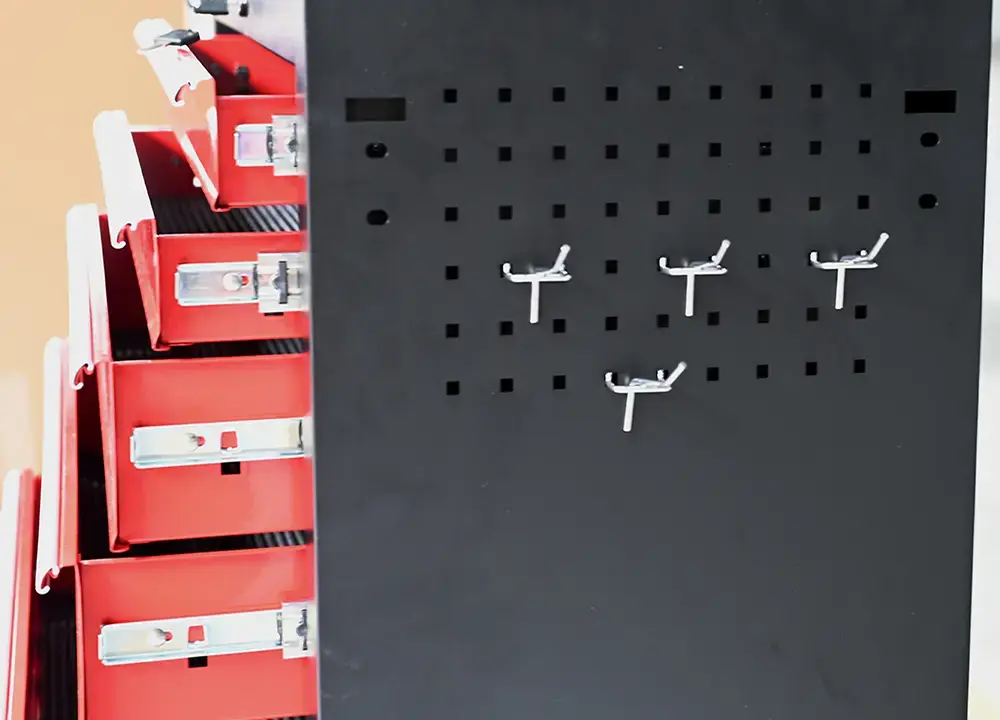
An organized storage cabinet makes it easier to keep track of your tools and also contributes to their security. Having tool - specific compartments helps in preventing tools from getting jumbled together, which can lead to damage. For example, long, slender tools like screwdrivers and wrenches can be stored in individual slots or holders, while larger power tools can have dedicated shelves or compartments. This not only keeps the tools in good condition but also makes it immediately obvious if a tool is missing. Labelling these compartments can further enhance organization, making it quick and easy to find the right tool when needed.
Asset Identification and Tracking
For professional users or those with a large number of valuable tools, asset identification and tracking systems can be integrated into the tool storage cabinet. This can involve attaching unique identification tags, such as barcodes or RFID (Radio - Frequency Identification) tags, to each tool. The cabinet can then be equipped with a scanner or reader that records when a tool is taken out or returned. This not only helps in inventory management but also acts as a security measure. If a tool goes missing, it can be quickly identified, and the last known location or user can be traced. Some advanced systems can even send alerts if a tool is removed from the cabinet without proper authorization.
Installation and Location Considerations
Secure Mounting
Proper installation of the tool storage cabinet is essential for its security. If the cabinet is not securely mounted, it can be easily tipped over or moved, making it vulnerable to theft or damage. Wall - mounted cabinets should be installed using heavy - duty brackets and bolts that are anchored into wall studs. This ensures that the cabinet is firmly attached to the wall and cannot be easily dislodged. Floor - standing cabinets can be bolted to the floor for added stability. In addition, some cabinets come with anti - tip features, such as weighted bases or stabilizer bars, which prevent them from toppling over even if they are bumped or if an attempt is made to move them forcefully.
Strategic Location
The location where you place your tool storage cabinet also plays a role in its security. It should be located in an area that is not easily accessible to unauthorized individuals. In a workplace, this may mean placing it in a locked storage room or an area with restricted access. At home, it could be in a locked garage or a basement area that is not visible from the street. Avoid placing the cabinet near windows or doors where it can be easily seen or accessed by potential intruders. Also, ensure that the area around the cabinet is well - lit, as this can act as a deterrent to thieves.
In conclusion, a comprehensive tool storage cabinet with a well - thought - out security design is essential for protecting your valuable tools. By considering physical security features, environmental protection, organizational aspects, and proper installation and location, you can ensure that your tools remain safe and in good condition for years to come.