
Leave Your Message




Tips for choosing a tipping bucket Toolbox: How to Pick the Right Toolbox?
In tool management, a suitable tipping bucket toolbox can not only effectively organize various tools, but also improve work efficiency and ensure the safety of tools. When choosing a tipping bucket toolbox, multiple key factors need to be considered, such as material, function and budget. This article will provide you with a comprehensive purchasing guide to help you find the most suitable Tool Storage solution.
First, material selection
1."Steel"
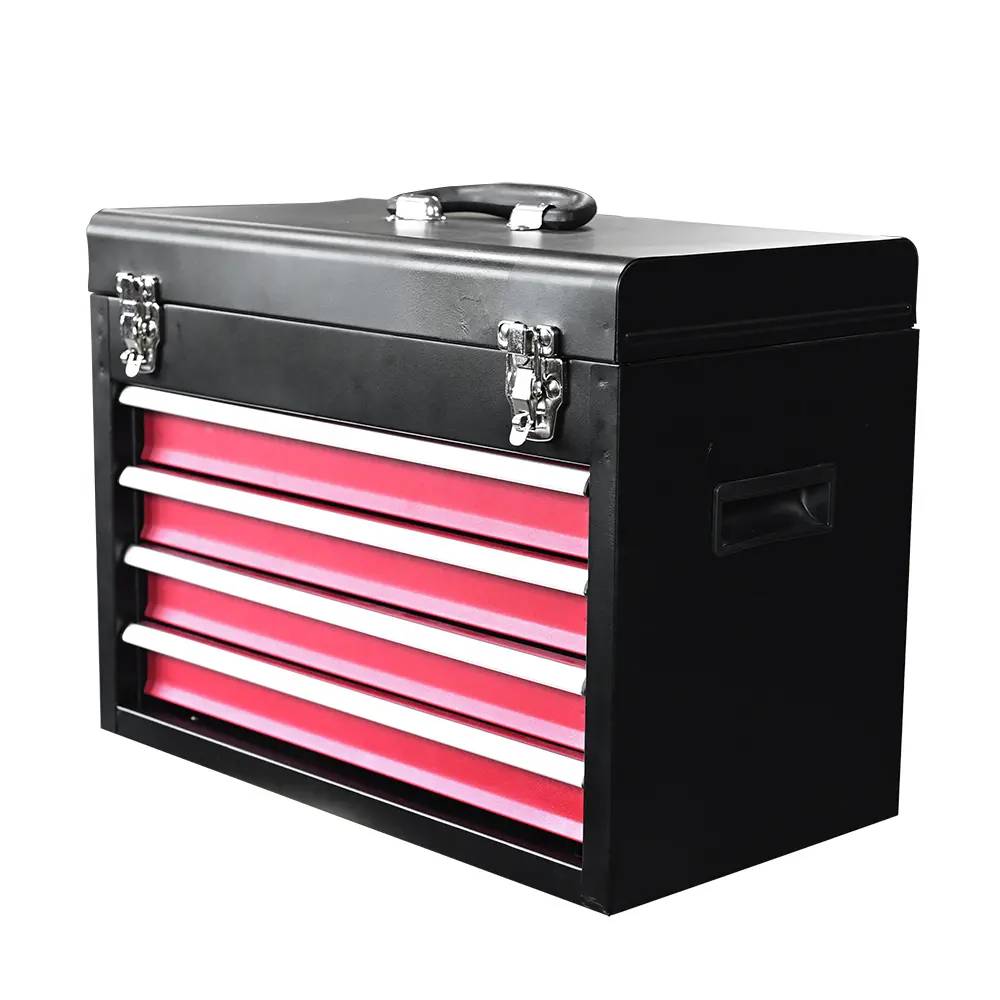
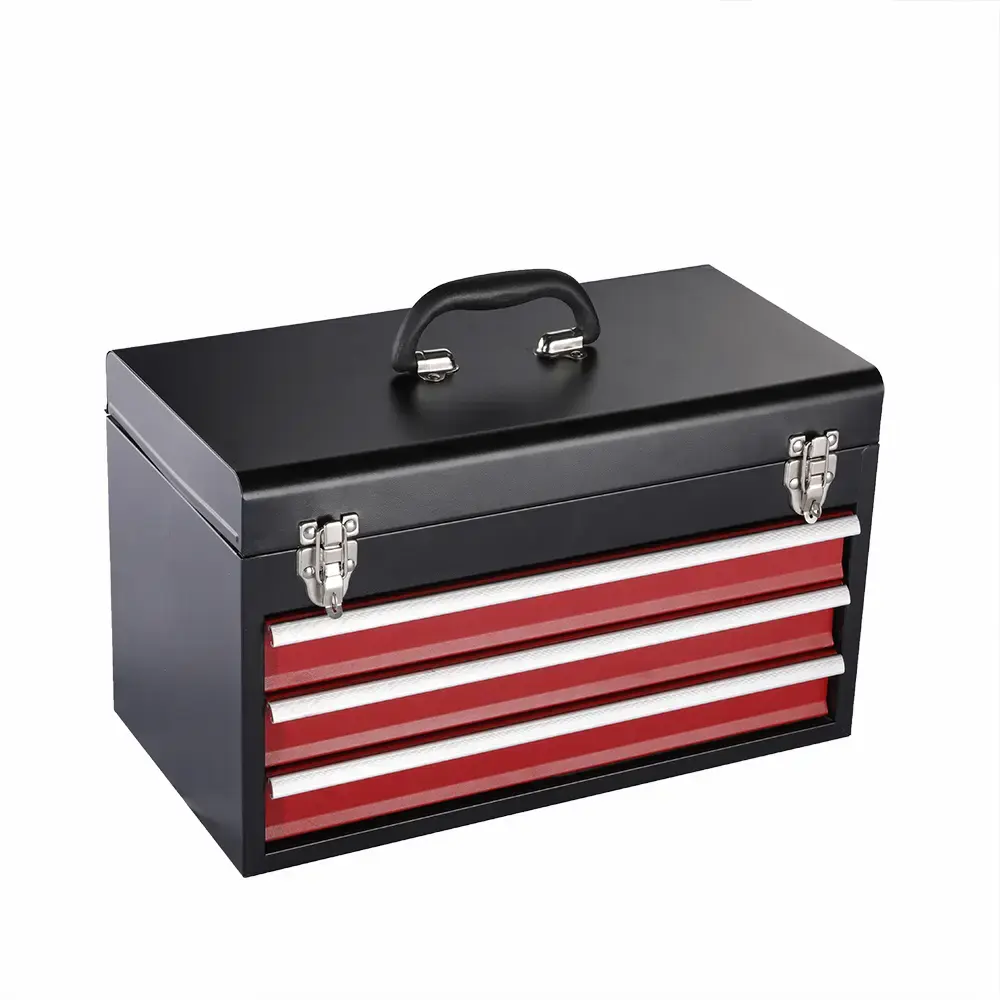
Steel is one of the commonly used materials for tipping bucket toolboxes, featuring high strength and durability. Steel toolboxes can withstand considerable weight and impact, making them suitable for storing heavy tools. In addition, steel has good corrosion resistance and is suitable for use in various environments. However, steel toolboxes are relatively heavy and may not be very suitable for frequent movement.
2. Aluminium alloy
Aluminum alloy toolboxes are favored by many users for their lightness and durability. Aluminum alloy has good corrosion resistance and high strength. Meanwhile, it is light in weight, making it easy to carry and move. This type of material toolbox is suitable for scenarios that require frequent movement, such as construction sites or outdoor operations.
3. Plastic
Plastic toolboxes are usually light and inexpensive, making them suitable for storing small tools and lightweight equipment. Plastic toolboxes have good insulation performance and are suitable for storing electronic tools. However, the durability and load-bearing capacity of plastic toolboxes are relatively low, making them unsuitable for storing heavy tools.
Second, function selection
Tipping bucket design
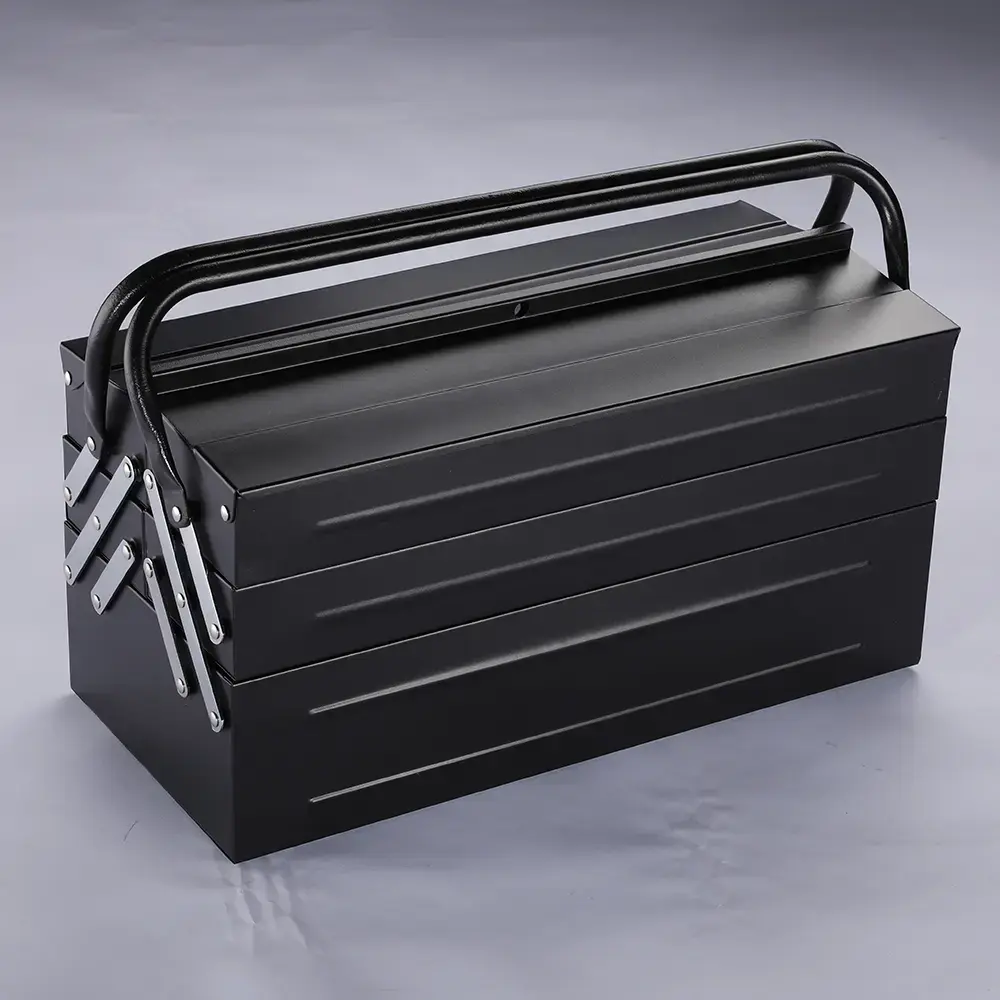
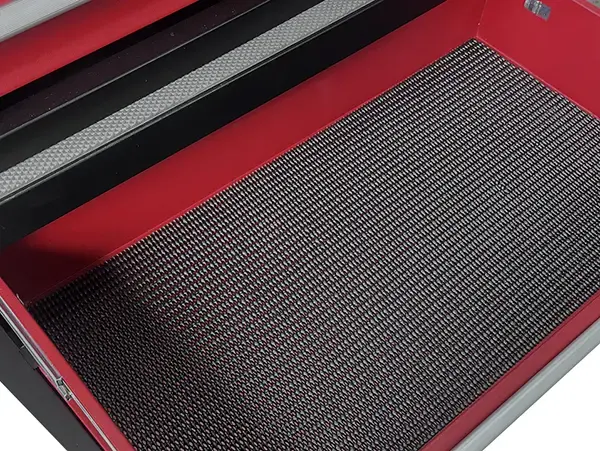
The most distinctive feature of the tipping bucket toolbox is its tipping function, which makes it more convenient to access the tools. When choosing a tipping bucket toolbox, make sure that the tipping bucket opens and closes smoothly and will not be damaged due to frequent use. In addition, the design of the tipping bucket should be capable of withstanding a certain weight to ensure the stable storage of the tools.
2. Layering and partitioning
A good hierarchical design can significantly improve the organizational efficiency of the tool. Choose a toolbox with multiple drawers and compartments, which can be classified and stored according to the size and type of tools. For example, small tools such as screwdrivers and wrenches can be placed in small drawers, while large tools such as electric drills and cutters can be placed in larger compartments. This classification and storage method not only facilitates search and use, but also reduces the collision and damage between tools.
3. Mobility
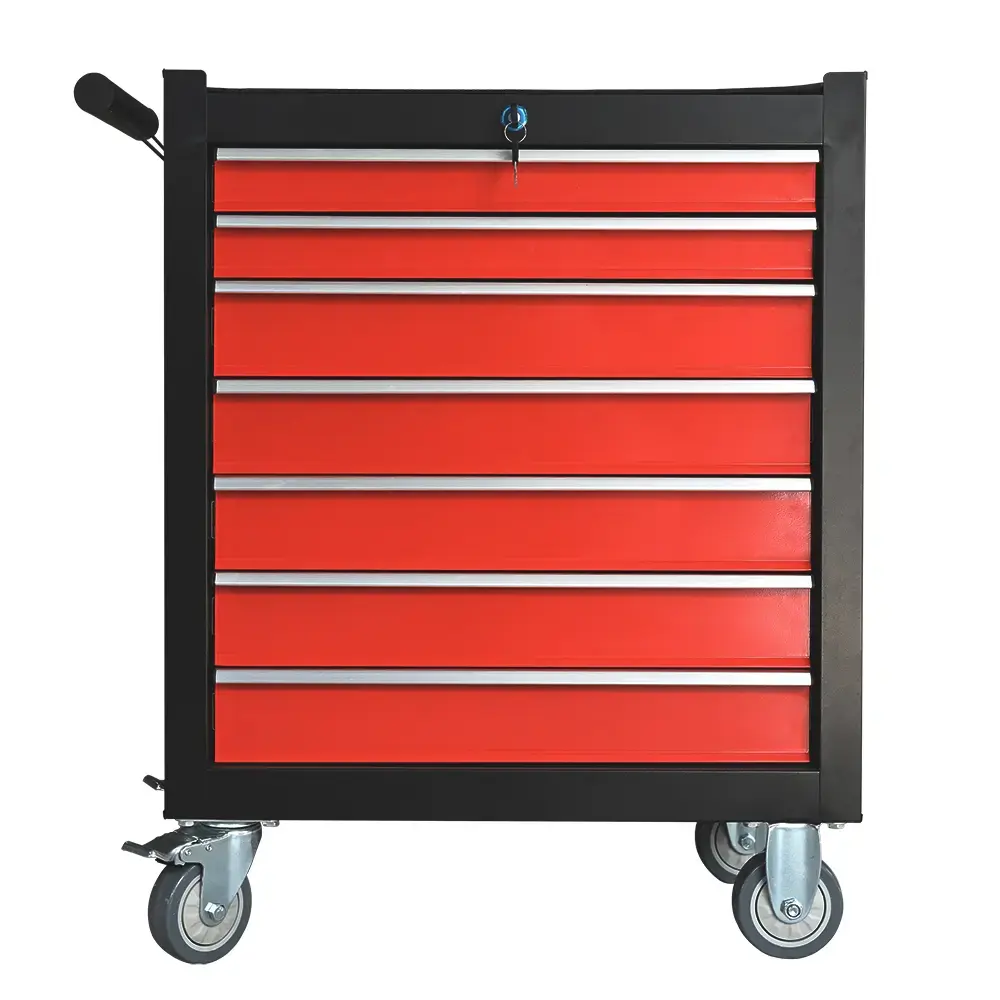
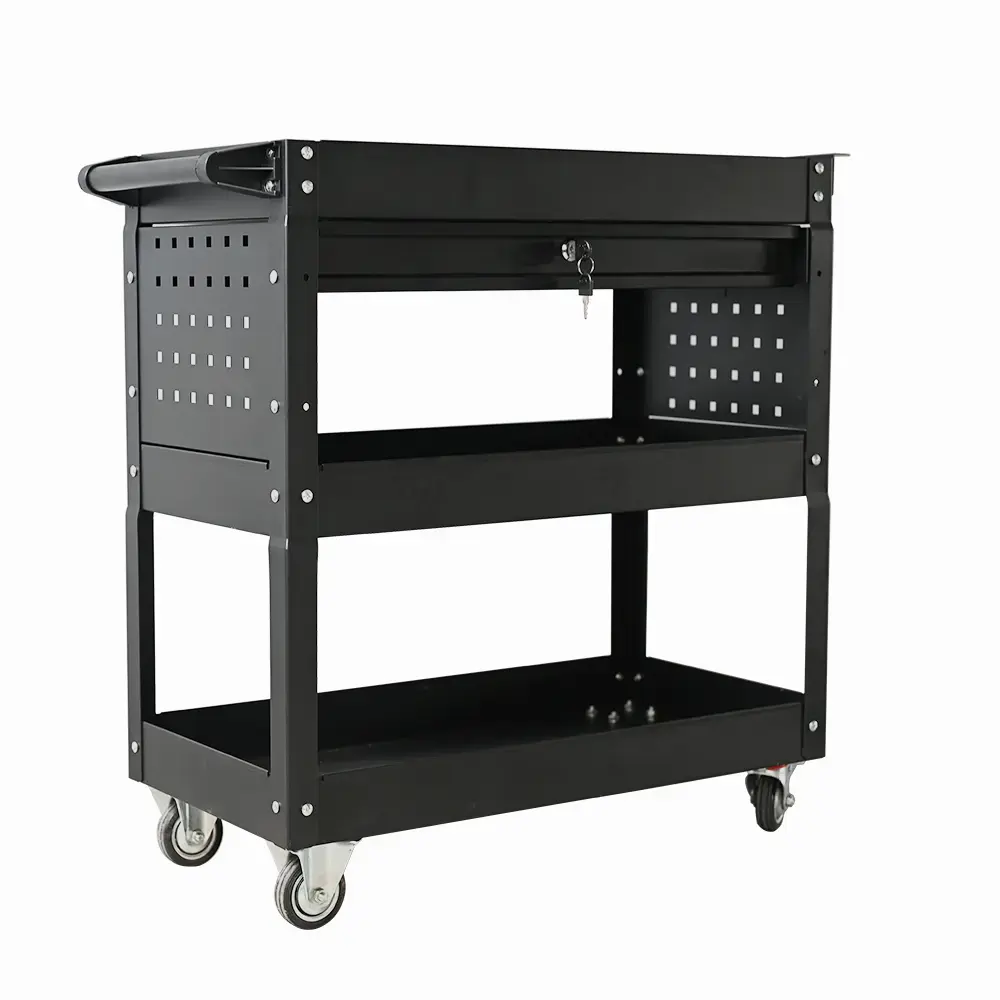
For toolboxes that need to be moved frequently, mobility is an important consideration. Choose a Toolbox With Wheels and handles, which can be moved conveniently between workplaces. The wheels should have good load-bearing capacity and flexibility to ensure smooth movement on different ground surfaces. Meanwhile, the design of the handle should conform to ergonomics, providing a comfortable grip and reducing fatigue during transportation.
4. Safety
Safety is a factor that cannot be ignored when choosing a toolbox. Ensure that the material of the storage cabinet can withstand a certain weight and impact to avoid tool damage or safety accidents caused by material quality issues. In addition, some toolboxes are also equipped with locks, enhancing the security of the tools.
Third, budget considerations
1. Determine the budget range
Before choosing a tipping bucket toolbox, first determine your budget range. The price of toolboxes varies depending on the material, function and brand. Based on your actual needs and economic capacity, choose a suitable budget range to ensure that you purchase products with high cost performance.
2. Cost performance takes priority
Within the budget, look for products with high cost performance. Compare toolboxes of different brands and models, and choose products that are fully functional, reliable in quality and reasonable in price. Don't choose low-quality products just because of their low prices. This may lead to tool damage or a shortened service life.
3. Long-term investment
Although the initial investment for a high-quality tipping bucket toolbox may be relatively high, its durability and long service life make it an economical choice. High-quality toolboxes can be used for many years, reducing the cost of frequent replacement.

Fourth, Summary
Choosing a suitable tipping bucket toolbox requires a comprehensive consideration of material, function and budget. By choosing high-quality materials, optimizing the layered design, and ensuring good mobility and security, you can find a tool storage solution that not only meets current needs but also ADAPTS to future expansion. Correct usage and regular maintenance can not only extend the service life of the toolbox, but also ensure that the desired effect is achieved with each use. It is hoped that the guide in this article can help you better understand how to select the right tipping tool box and provide convenience and efficiency for your tool management.