Leave Your Message



0102030405
Ultimate Guide to Rust-Proof Tool Cabinets for Humid Spaces
2026-06-09
Complete Selection Guide for Rust-Proof Tool Cabinets for Humid Environments
For warehouse zones, on-site repair rooms, back-of-house areas in retail stores, as well as coastal premises, rainy regions and underground storage rooms with high humidity, the rust-proof performanceof tool cabinets directly impacts Tool Storage safety, service life and overall operational costs. Persistently high humidity, condensed moisture and accidental water splashes will gradually corrode standard tool cabinets and internal hardware tools. This not only leads to rust and scrappage of tools, but also causes cabinet deformation and component damage, hindering daily storage and access. When selectingrust-proof tool cabinets for humid working conditions, retail buyers should not only focus on appearance and price. A comprehensive evaluation covering application scenarios, material craftsmanship, structural design and protective accessories is essential. This guide elaborates on selection principles, core standards, key details and scenario-based solutions for rust-proof tool cabinets in humid environments, helping you pick durable, cost-effective cabinets suitable for long-term humid operation.
1. Assess Humidity Levels to Define Basic Selection Criteria
Humidity levels and moisture sources vary greatly across different retail spaces, which require tool cabinets with corresponding anti-rust grades. Conducting an on-site environmental assessment before procurement effectively reduces the risk of wrong purchases. We classify common humid retail environments into three categories for accurate product matching.
1.1 Mild Humid Environments
This category includes back-of-house areas of inland retail stores, enclosed indoor warehouses and storage spaces affected by seasonal dampness. These areas have decent ventilation and no direct water exposure. Humidity rises mainly during rainy seasons and overcast days, with relative humidity staying between 60% and 70% on a daily basis. For such scenarios, basic anti-rust performance is sufficient. Prioritize cabinets with standard rust-resistant coatings. High-grade anti-corrosion materials are unnecessary to balance practicality and procurement costs.
1.2 Moderate Humid Environments
It covers repair workstations facing streets, semi-open storage areas, ground-floor warehouses and back rooms of stores in rainy regions. Ventilation here is limited, resulting in frequent condensation on walls and cabinet surfaces. Standing water on floors and wet tools placed inside cabinets are common issues. Moisture slowly penetrates cabinet gaps, making this the most prevalent humid working condition in the retail industry. Cabinets for this environment must adopt upgraded surface anti-rust treatments and enhanced sealing structures. Higher standards are also required for plate thickness and joint workmanship.
1.3 Severe Humid & Corrosive Environments
This group consists of retail stores in coastal areas, underground storage rooms, storage zones for frequently cleaned tools and warehouses near water bodies. These spaces feature extremely high humidity. Coastal locations additionally contain salt mist, while underground areas easily trap moisture and form persistent condensation. Standard spray-coated cabinets will develop rust spots and peeling paint in a short time. Choose cabinets made of inherently anti-rust materials with fully sealed structures. All metal fittings must deliver excellent resistance to heavy corrosion.
Besides humidity levels, confirm the usage mode: stationary placement or mobile transportation. Retail stores often adjust tool storage positions according to business needs. For mobile tool cabinets, pay extra attention to the anti-rust performance of casters and push/pull handles. For stationary models, focus on overall anti-corrosion capability and load-bearing structure.

2. Core Material Selection: Fundamental Guarantee Against Rust in Humid Conditions
Material is the decisive factor for the anti-rust capability of rust-proof tool cabinets and the top inspection item during selection. Three mainstream materials are widely used on the market: galvanized steel, electrostatic powder-coated steel and stainless steel. They differ significantly in anti-rust performance, applicable scenarios and procurement costs. Matching materials with humidity levels is the key to eliminating rust problems.
2.1 Galvanized Steel Tool Cabinets
Galvanized steel is divided into electro-galvanized steel and hot-dip galvanized steel. A protective zinc layer on the surface isolates moisture from the base metal to achieve rust resistance.
- Electro-galvanized steel: Features a smooth, uniform coating with basic anti-rust properties and an affordable price. It is ideal for indoor storage spaces with mild humidity in retail premises. However, the zinc layer is thin with average wear resistance. Scratches and dents will quickly develop rust, so it is not recommended for high-humidity areas or scenarios with frequent tool handling.
- Hot-dip galvanized steel: Boasts a much thicker zinc layer that fully covers cut edges and welding seams. It offers superior wear resistance and moisture penetration resistance, and resists rust even with minor surface abrasion. With excellent cost performance, it is suitable for most retail stores and warehouses with moderate humidity, and ranks among the most popular materials for rust-proof tool cabinets in the retail sector.
2.2 Thickened Steel Cabinets with Electrostatic Powder Coating
These steel cabinets are made of thick cold-rolled steel plates via phosphating pretreatment and epoxy resin electrostatic powder coating. The raw materials go through degreasing, derusting and phosphating before high-temperature powder spraying. The coating features strong adhesion, tight sealing, outstanding waterproof, moisture-proof and scratch-resistant performance, and rarely peels or flakes. Premium models adopt full wrapping on corners and welds to completely block moisture ingress.
Such cabinets deliver solid structure, high load capacity and diverse styles, combining anti-rust function, storage utility and attractive appearance. They work well for repair workstations and warehouses in moderately humid areas that store heavy-duty tools. Note: Always select products with qualified plate thickness. The main panel thickness should be no less than 1.0 mm. Thin powder-coated steel plates tend to deform in long-term humid environments, which further causes coating cracking and rusting.
2.3 Stainless Steel Tool Cabinets
Stainless steel relies on its inherent metallic properties to resist rust without surface coatings. Even with scratches and abrasion, the base material will not corrode. It is the top choice for severely humid and highly corrosive environments. Two common grades are used in retail applications: 201 stainless steel and 304 stainless steel.
- 201 stainless steel: Low in cost with basic anti-rust performance. It can be used for well-ventilated underground warehouses and stores in inland rainy areas. Still, slight rust marks may appear under persistent condensation, so it is only suitable for budget-limited projects with mild to moderate humidity.
- 304 stainless steel: Excels in moisture resistance, salt mist resistance and anti-corrosion performance. It is perfect for coastal retail stores, fully enclosed underground storage rooms and tool areas exposed to frequent water contact. It stays rust-free for years and has a far longer service life than ordinary steel cabinets, bringing lower comprehensive operating costs. For coastal areas with extremely high salt mist concentration, 316 stainless steel is available for upgraded corrosion resistance, which is commonly used to store precision tools in high-end retail facilities.

3. Manufacturing & Structural Details: Make Up Anti-Rust Weaknesses & Extend Service Life
After confirming materials, production craftsmanship, sealing structures and internal fittings directly affect overall anti-rust effects. Many buyers only focus on materials while overlooking details, which eventually leads to cabinet rust and damp tools. The following six key details are mandatory inspection items for rust-proof tool cabinets in humid environments.
3.1 Plate Joint & Welding Workmanship
Moisture most easily penetrates cabinets through plate joints and welding points. High-quality rust-proof tool cabinets adopt integral bending and full welding sealing. Welds are smooth, polished and treated with anti-rust processes without exposed metal edges. Avoid cabinets assembled with screws or simple spot welding. Excessive gaps in such products accumulate moisture and trigger internal rust that is hard to repair.
3.2 Waterproof Sealing Structure
Cabinet doors act as the first line of defense against external moisture. Professional moisture-proof cabinets are fitted with high-elastic waterproof gaskets. EPDM rubber gaskets are preferred over ordinary rubber or PVC alternatives, thanks to better ageing resistance, waterproof performance and sealing effect. They will not harden or crack in long-term humid conditions and fit tightly between doors and cabinet bodies to block moisture.
Some high-end models are equipped with hidden ventilation grooves. They balance internal and external air pressure while maintaining sealing, preventing negative pressure and moisture accumulation inside cabinets. For cabinets storing small precision tools, choose designs with removable desiccant slots to actively absorb internal moisture and protect tools from dampness and rust.
3.3 Anti-Rust Treatment for Drawers & Moving Fittings
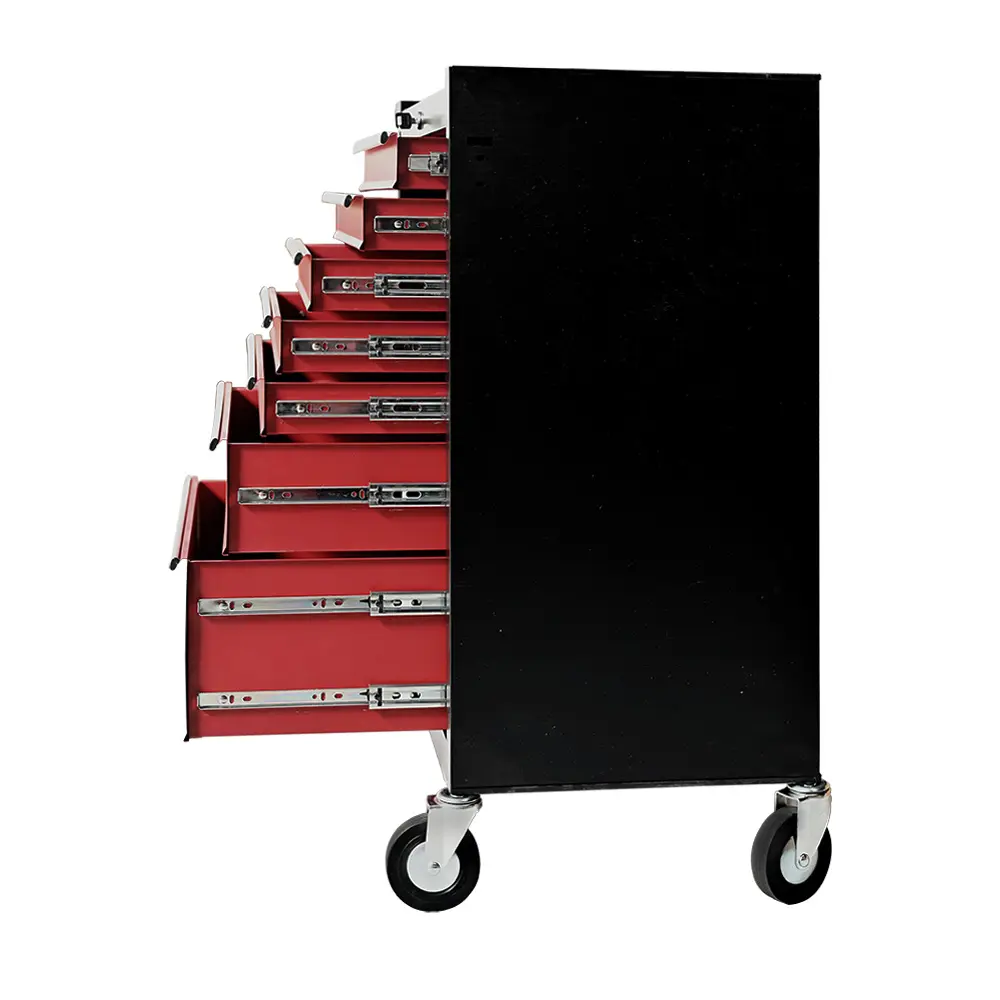
Drawers are the most frequently used parts. Repeated friction wears down the protective layers of drawer slides, locks and handles, making these components high-risk areas for rust. Prioritize three-section ball-bearing slides with full galvanized or stainless steel treatment for smooth operation and anti-rust performance.
All small metal fittings, including lock cylinders, fixing screws and handle connectors, must undergo unified anti-rust treatment to avoid the common issue where small accessories fail while the main cabinet remains intact. Anti-slip and moisture-proof liners inside drawers prevent tool collision and absorb condensed water, keeping tool bottoms away from standing water.
3.4 IP Protection Rating for Water & Dust Resistance
Refer to industry-standard IP ratings to intuitively judge the dustproof and waterproof capability of tool cabinets. For retail humid environments, the minimum requirement is IP54, which provides effective protection against dust and splashing water and meets the demands of most stores and warehouses. For areas with direct water spray or high-pressure cleaning, select products with IP56 or higher for enhanced waterproof performance. Request official rating test reports from suppliers to verify authentic specifications.
3.5 Bottom Moisture-Proof Design
Cabinet bottoms are in direct contact with the ground, and ground moisture creeps upward easily, which is a commonly ignored rust hazard. Qualified moisture-proof cabinets feature raised bases to separate the cabinet body from the floor, with a ground clearance of no less than 8 cm to reduce moisture absorption. The bottom plates are fully wrapped with no exposed base material. Some models are fitted with drainage structures to prevent standing water around the cabinet base.
3.6 Special Requirements for Mobile Cabinets
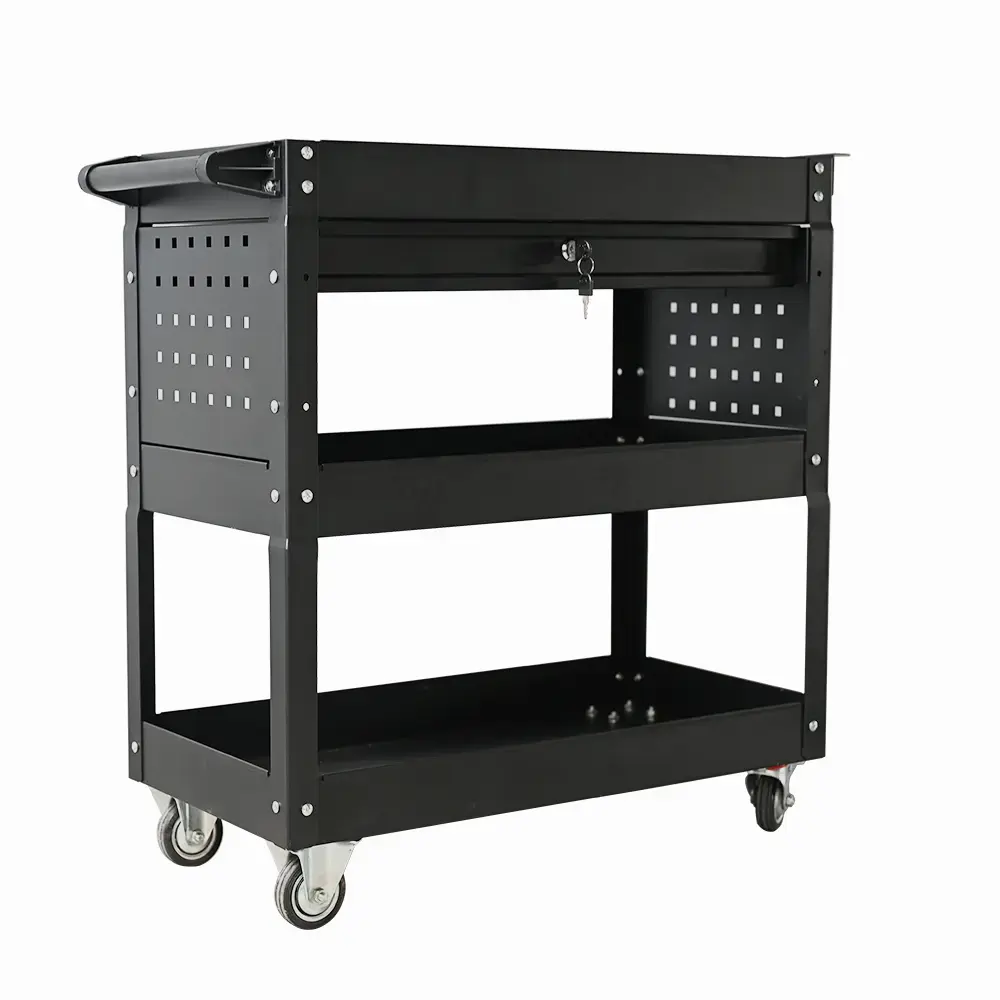
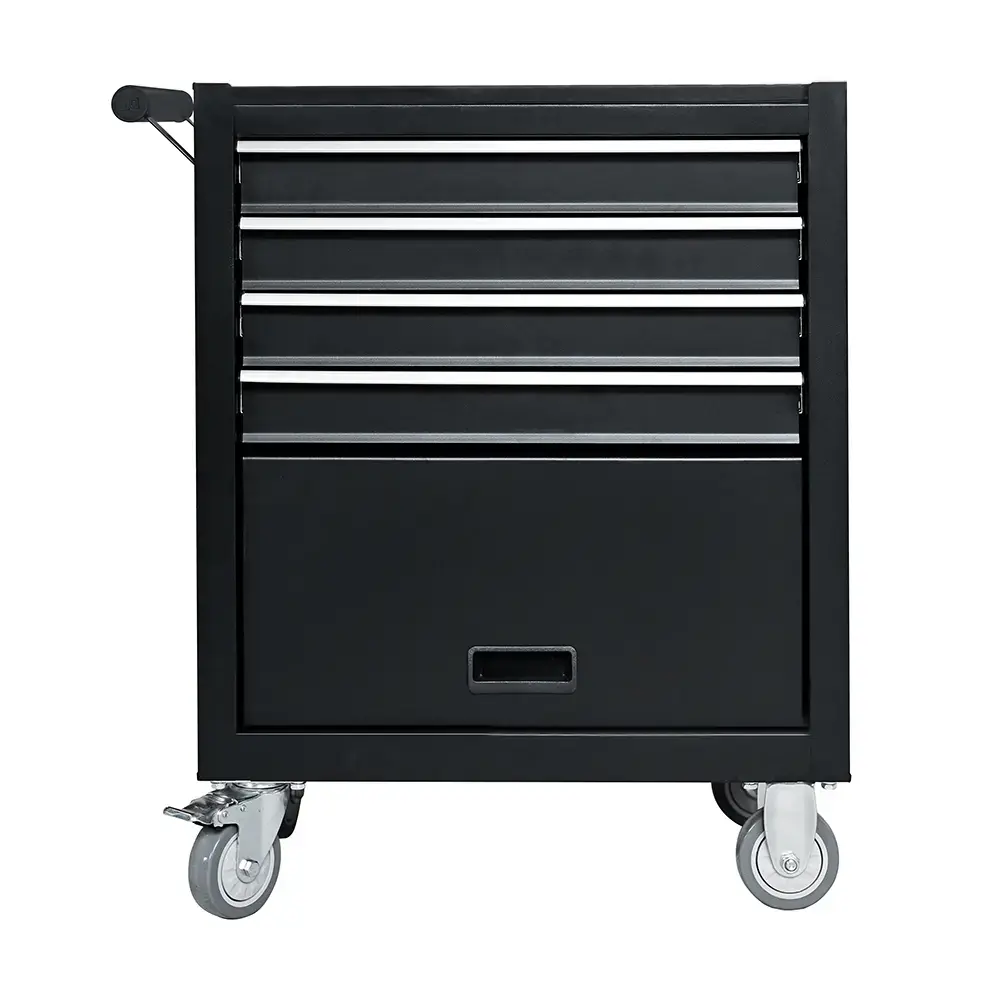
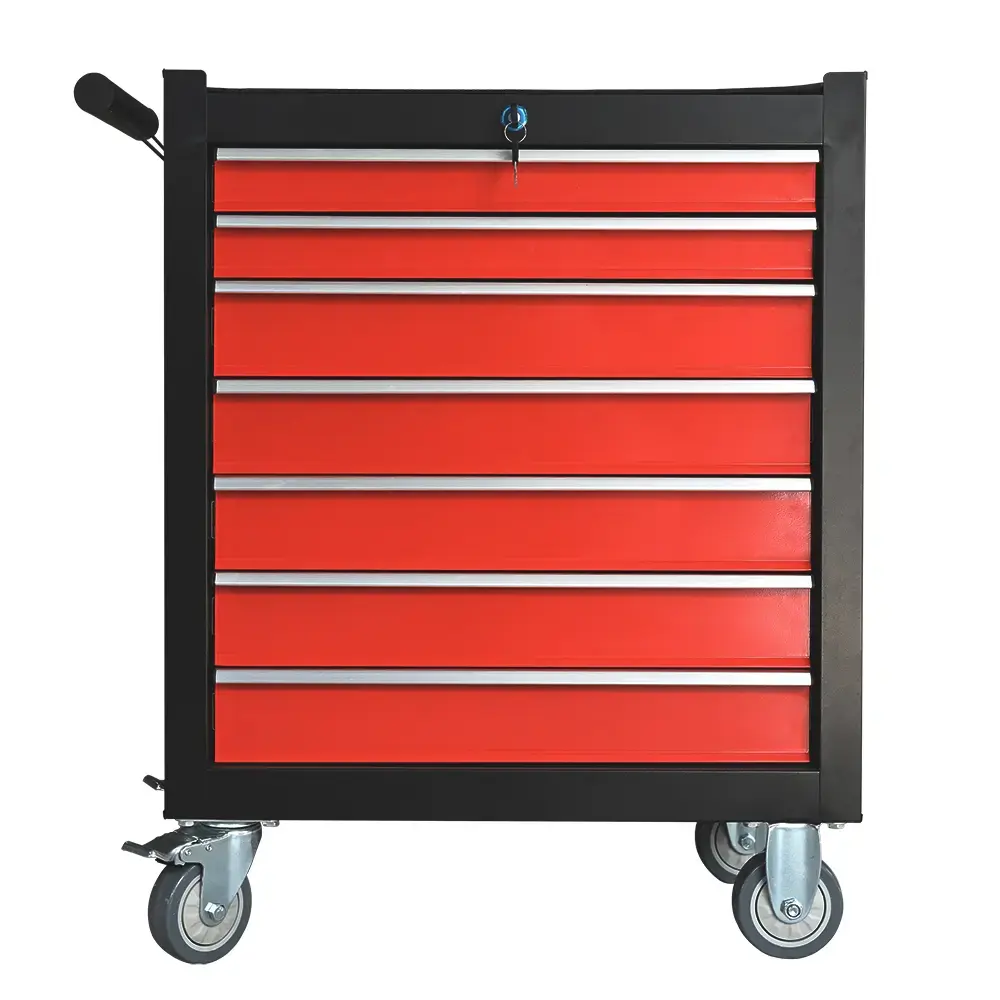
For mobile tool cabinets used in retail spaces, caster selection is critical. Choose polyurethane casters with galvanized or stainless steel brackets. They feature high load capacity, quiet movement and resist rust and jamming when exposed to ground water for a long time. Push handles on mobile cabinets also require full wrapped anti-rust treatment for safe use and reliable moisture resistance.
4. Scenario-Based Selection Solutions for Retail Applications
Combined with different retail environments, tool types and budget ranges, we have sorted out targeted selection plans for quick reference.
Back-of-House of Ordinary Inland Retail Stores (Mild Humidity, for Small Hand Tools)
Recommendation: Electro-galvanized steel cabinets or standard electrostatic powder-coated steel cabinets. Plate thickness ≥ 1.0 mm, fitted with standard rubber gaskets. Mainly stationary type with simple layout and reasonable compartment design. Advantages: Cost-effective, suitable for daily storage and seasonal damp conditions with basic anti-rust performance.
Street-Facing Repair Workstations & Ground-Floor Warehouses (Moderate Humidity, Frequent Tool Access)
Recommendation: Hot-dip galvanized steel cabinets or thickened electrostatic powder-coated cabinets. Adopt full welding process + EPDM sealing gaskets, anti-rust three-section ball-bearing slides and raised bases. Choose stationary or light-duty mobile type as needed. Advantages: Excellent wear and moisture resistance, capable of coping with daily water stains and condensation, balancing durability and operability.
Underground Warehouses & Storage Areas in Rainy Regions (Moderate to Severe Humidity, Long-Term Enclosed Storage)
Recommendation: 304 stainless steel cabinets or high-grade thickened powder-coated cabinets. Equipped with dedicated desiccant slots, fully sealed doors and finely polished anti-rust welds. Robust plates resist deformation. Advantages: High tightness to trap persistent moisture and protect tools and fittings from rust.
Coastal Retail Stores & Storage Areas Near Water (Severe Humidity + Salt Mist Corrosion)
Recommendation: Standard 304 stainless steel cabinets with fully sealed structure, all-stainless steel fittings and IP56 or higher protection rating. Advantages: Inherent anti-rust material withstands salt mist and high humidity, delivering long service life and reducing later replacement and maintenance costs. The optimal choice for highly corrosive environments.
Storage for Small Precision Tools & Measuring Instruments (Suitable for All Humidity Levels)
Recommendation: Compact 304 stainless steel rust-proof tool cabinets, built-in storage dividers and desiccant slots with maximum sealing performance. Advantages: Rust on precision tools directly affects measurement accuracy. These cabinets provide all-round moisture protection from materials to details and keep precision tools intact long-term.
5. Daily Use & Maintenance Tips for Tool Cabinets in Humid Environments
Proper daily operation and simple maintenance can further enhance anti-rust effects and extend the service life of cabinets and tools, ideal for routine retail facility management.
- Clean standing water and stains on cabinet surfaces and bottoms every day to keep exteriors dry. Open doors regularly for ventilation to disperse internal moisture; ventilate enclosed cabinets 1 to 2 times per week.
- Wipe dry all tools before storage. Never place wet tools or tools with cleaning agents directly inside cabinets to cut down internal moisture at the source.
- For cabinets using desiccants, inspect and replace desiccants regularly to ensure normal dehumidification.
- Avoid heavy impact from sharp objects to prevent deep scratches on coatings and stainless steel surfaces. Use dry cloths to remove minor stains and water marks; do not apply highly corrosive cleaners.
- Inspect casters and slides of mobile tool cabinets periodically. Clear water and debris in gaps to ensure flexible operation and prevent rust and jamming.
6. Conclusion
The core selection logic for rust-proof tool cabinets in humid retail environments follows four steps: assess humidity levels → confirm cabinet materials → inspect production details → match styles with application scenarios. For mild humidity, prioritize cost-effective galvanized steel or standard powder-coated cabinets. For moderate humidity, select hot-dip galvanized steel or thickened electrostatic powder-coated cabinets with enhanced sealing and welding workmanship. For severe humidity and coastal salt mist environments, 304 stainless steel cabinets are the best option. Never overlook details including sealing gaskets, slides, bases and IP ratings, as details determine long-term anti-rust performance.
For the retail industry, rust-proof tool cabinets are more than simple storage equipment. They are essential facilities to protect tool assets and reduce operational losses. Select products based on actual humidity conditions, tool types and usage demands to obtain well-fitted, durable and cost-effective cabinets for stable long-term operation in humid working environments.