Leave Your Message

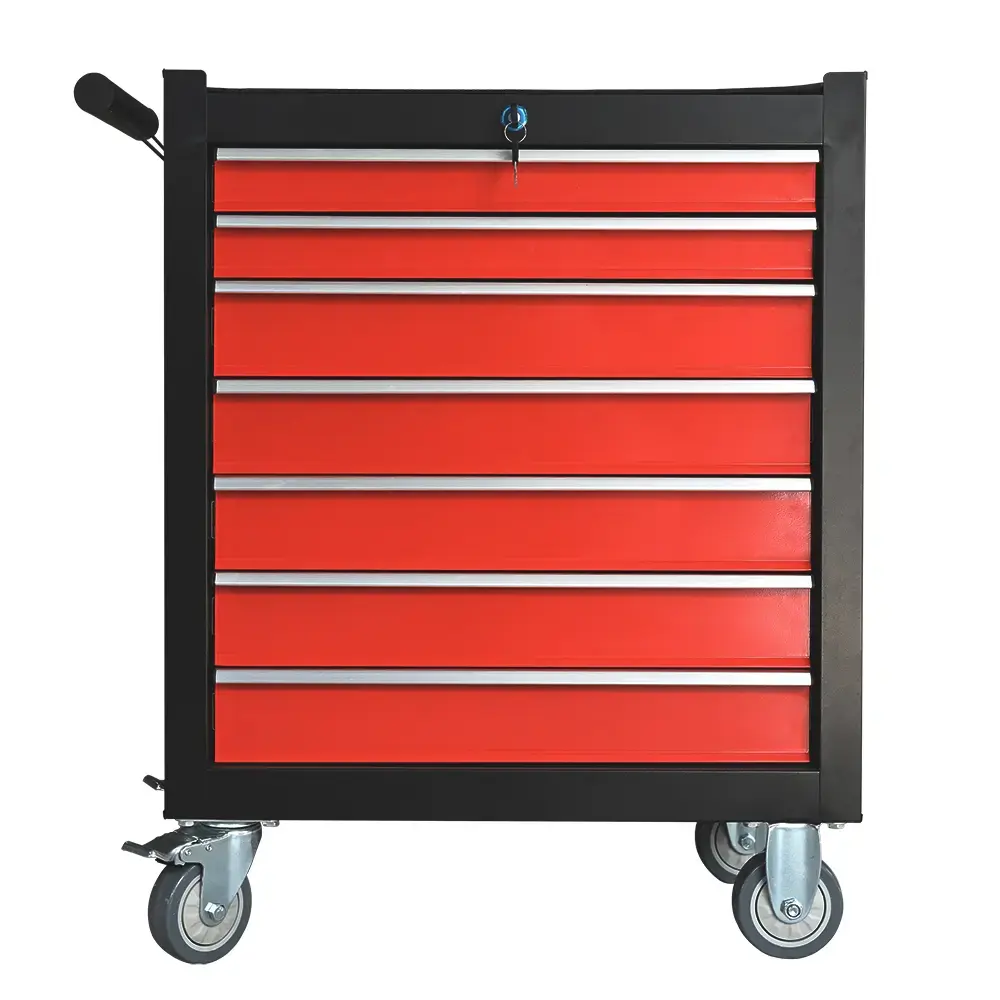


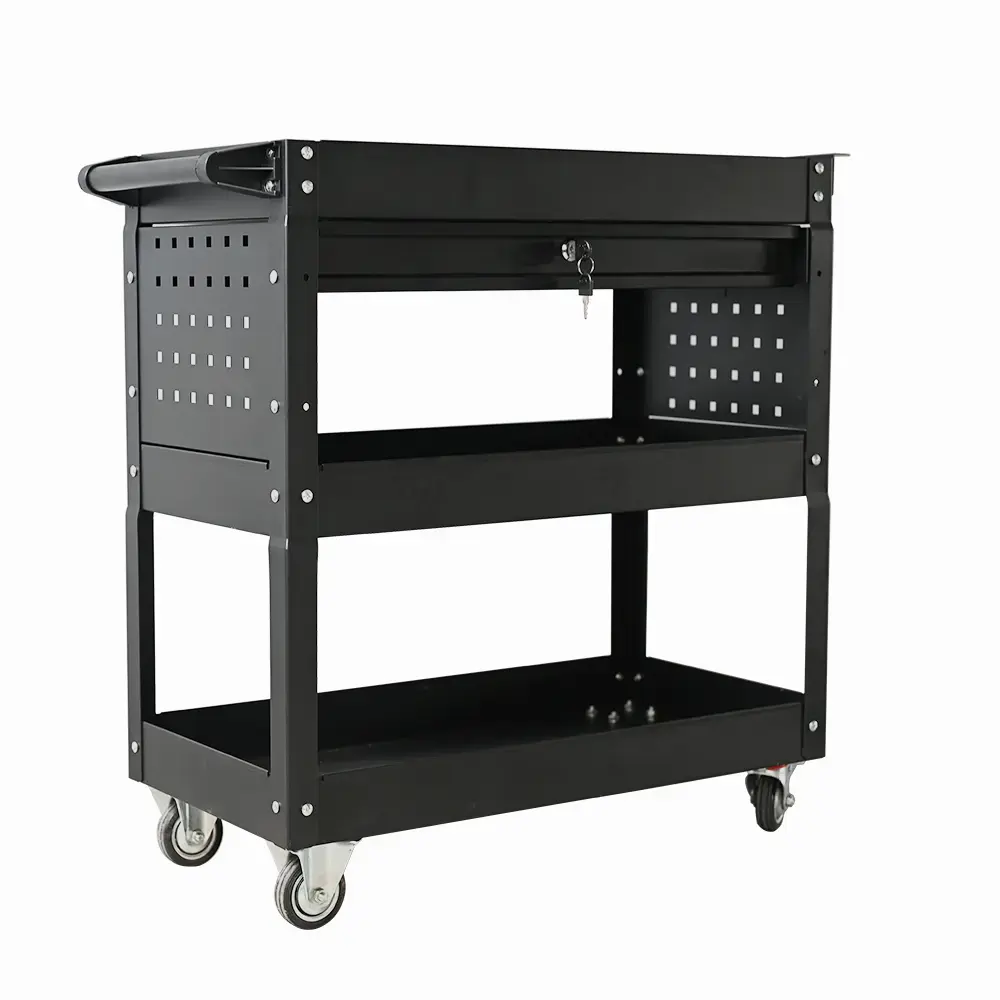
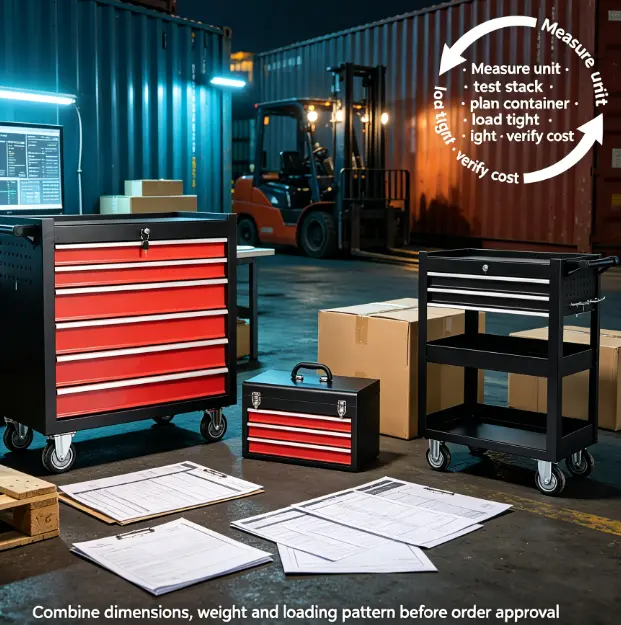

Unleashing Vertical Potential: How does the stacking Design of tool Cabinets Revolutionize Warehouse Efficiency
In today's highly competitive industrial environment, optimizing every inch of space is directly related to an enterprise's operating costs and core competitiveness. Warehouse space, as a continuous cost center, the improvement of its management efficiency has become an urgent need for global manufacturers, distributors and large factory owners. The traditional single-layer storage mode is rapidly being replaced by a smarter and more efficient solution: stackable Tool Cabinets. This article will delve into how stackable tool cabinets, through their outstanding vertical storage design, have become a revolutionary tool for modern warehouse space management.
Part One: Understanding the Spatial Dilemma - Limitations of Traditional Storage and Opportunities in Vertical Dimensions
Any efficient warehousing solution begins with a profound understanding of the core issues. Traditional Tool Storage methods, such as independent cabinets or open shelves, are facing space challenges that cannot be ignored.
The shackles of planar storage: Traditional storage methods mainly rely on horizontal expansion. Each newly added tool cabinet or shelf means that more floor area needs to be occupied. This "spreading out" model will soon lead to tight floor space in the warehouse and narrow passageways. It not only affects the space utilization rate but also hinders the flow of personnel and equipment, reducing the overall operational efficiency.
Unused cubic space: The value of a warehouse or workshop lies in its cubic capacity, not merely in the ground area. The space below the ceiling is often wasted in the traditional mode, forming a huge "air tax". This neglect of vertical space is tantamount to leaving precious real estate resources idle for nothing.
The efficiency bottleneck of fragmented management: Multiple independent and scattered tool cabinets make inventory management and item search complex and time-consuming. Staff members need to move between different cabinets, which increases non-productive walking time and raises the probability of tools being misplaced or lost.
The design philosophy of the stacked tool cabinet is precisely to break this predicament. It no longer regards storage as a planar problem, but rather as a three-dimensional cube challenge, and looks its solution upwards.
Part Two: The Engineering Core of Stacking Design - The Unity of Stability, Safety and Flexibility
Stacking is not simply piling up. An outstanding stacking tool cabinet system is a manifestation of the precise engineering design behind it, ensuring that while pursuing space efficiency, safety and stability are never compromised.
Interlock structure mechanism: Professional stacking tool cabinets are usually equipped with precise interlock designs. This is not merely a physical stacking, but rather a rigid connection between the upper and lower cabinets achieved through special slots or locating pins at the top and bottom of the cabinets. This design can integrate multiple cabinets into a unified and stable whole, effectively distributing the load and preventing the risk of sliding or overturning caused by external forces or vibrations.
Material mechanics and structural integrity: To withstand the additional loads caused by stacking, these cabinets are typically made of high-strength cold-rolled steel plates and the key load-bearing parts are strengthened through advanced bending and welding techniques. For instance, the corners of the cabinet and the base will be reinforced additionally to ensure that even when fully loaded with tools, the lower cabinet can stably support the total weight of the upper cabinet and the items inside.
Modularization and scalability: One of the core advantages of the stacking system lies in its modular design. Purchasers can start from a basic unit and, based on business growth and space requirements, add cabinets upwards like building blocks. This flexibility enables enterprises to make progressive investments and select modules of different depths and heights for combination based on the types of tools, such as precision instruments, heavy equipment, and small accessories, to achieve highly customized storage solutions.

Part Three: Quantifying Spatial Benefits - Direct and Indirect Economic Benefits Brought by Stacking Design
Putting stacking design into practice, the space savings it brings and the subsequent economic benefits are clear and quantifiable.
Land area reduction rate: This is the most intuitive benefit. By extending storage upwards, stacking systems can easily increase storage density by 50% to 200% or even more. For instance, the floor space that originally required four independent cabinets can now be met by stacking four layers, with only the floor area occupied by one cabinet. This is directly equivalent to freeing up valuable warehouse floor space, which can be used for other revenue-generating activities or avoid the cost of renting a larger site.
Optimize Cube Utilization: This professional metric measures the efficiency of using the total volume of the warehouse. The stacking system significantly increases this ratio by filling the available height from the floor to the ceiling. Suppose the clear height of a warehouse is 5 meters. The traditional 1.5-meter-high cabinet only uses 30% of the vertical space. Through stacking design, the utilization rate can be increased to over 70%, achieving the maximization of the value of spatial assets.
Logistics and workflow optimization: The centralization of space has led to the simplification of work processes. The tools are integrated into a compact vertical area, reducing the movement distance and search time for the staff. Research shows that an optimized workplace layout can reduce tool retrieval and placement time by up to 30%. This not only enhances work efficiency, but also indirectly reduces labor costs and creates a more orderly and safer working environment.
Part Four: Beyond Space - How Stacking Systems Empower Intelligent Warehousing and Security Management
The advantages of stacking tool cabinets go far beyond the saving of physical space. It is also the foundation for building a modern and intelligent warehouse management system.
The cornerstone of systematic inventory management: A vertically integrated stacking system provides an ideal physical carrier for implementing 5S (Sort, Set in order, Sweep, Standardize, Discipline) or lean production concepts. Administrators can assign specific tool categories to each stack layer or each drawer, achieving clear and intuitive visual management. This systematic classification greatly simplifies the inventory counting process and can quickly identify shortage items, ensuring the continuity of production or maintenance tasks.
Enhanced security and asset protection: Compared with open shelves, stacked tool cabinets are usually equipped with advanced lock systems. It is possible to achieve unified locking of the entire stack column or independent locking of individual key cabinets. This provides a double guarantee for high-value, high-precision or controlled tools, effectively preventing unauthorized access and theft, and protecting the enterprise's important assets.
Agility to adapt to future changes: Market demands are constantly evolving, and enterprises' warehouse layouts may also need to be adjusted. The modular feature of the stacked tool cabinet endows it with extremely high flexibility. When it is necessary to reorganize the work area or relocate facilities, these cabinets can be easily disassembled, moved and reassembled into new configurations without causing resource waste or functional interruption. This adaptability reduces long-term ownership costs and ensures the enterprise's rapid response capability to future development.
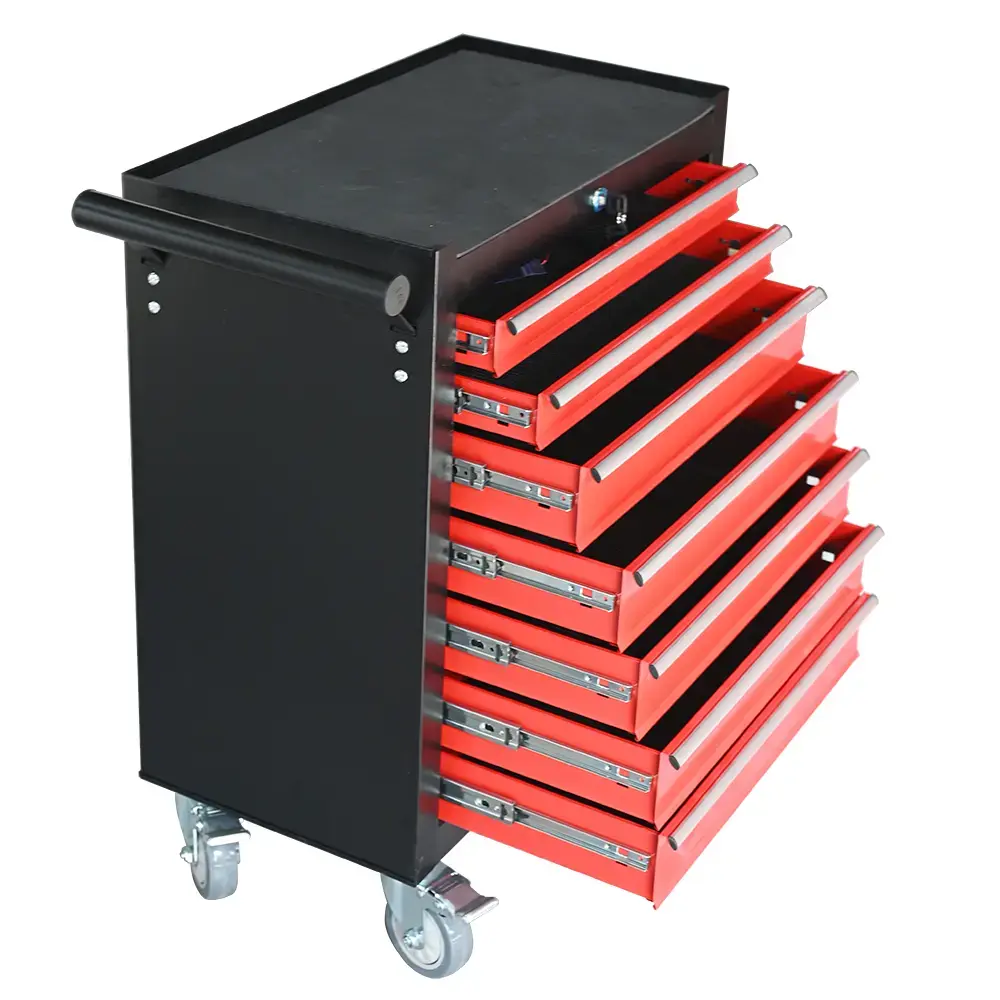
Investing in vertical dimensions - an inevitable choice for moving towards future warehousing
Against the global backdrop of continuously rising land and operational costs, seeking space and efficiency in the vertical dimension is no longer an option but an inevitable strategic choice. The stackable tool cabinet, through its ingenious engineering design, perfectly integrates stability, safety and modularization, achieving a qualitative leap in the utilization rate of warehouse space.
It is not merely a container for storage tools, but also a powerful space optimization engine, a catalyst for efficient workflows, and a physical platform for intelligent management. For enterprises committed to enhancing core competitiveness, reducing operating costs and building future-oriented infrastructure, investing in a high-quality stacked tool cabinet system is a wise decision that can bring long-term and sustainable returns. It's time to re-examine your warehouse space, unleash its vertical potential and take storage efficiency to a new level.