Leave Your Message




0102030405
Building Materials Wholesaler Selection Guide: Design Advantages of Lockable Cantilever Metal Toolboxes & Tool Safety Protection Solutions
2026-03-25
Building Materials Wholesaler Selection Guide: Design Advantages of Lockable Cantilever Metal Toolboxes & Tool Safety Protection Solutions
In the building materials wholesale and retail industry, tools are not only operational assets but also the core of value creation. However, loss, damage, misplacement, and even theft caused by poor tool management bring huge direct economic losses and operational efficiency losses to distributors every year. For building materials wholesalers, providing efficient and safe Tool Storage solutions for professional customers (such as contractors, construction teams, and maintenance technicians) has become a key link to enhance service value and customer stickiness. Among them, lockable cantilever metal Toolboxes are becoming the first choice for tool management and on-site operations due to their unique safety and organizational advantages. This article will deeply analyze their design advantages and provide professional guidance for wholesalers' procurement and selection.
Part 1: Core Pain Points: Challenges in Tool Management in the Building Materials Industry
Building materials wholesalers and their professional customers face common tool management challenges in daily operations:
- Asset Safety Risks: Tools, especially high-value power tools, precision measuring instruments, and professional Hand Tools, are the main targets of thieves. Whether in warehouses, retail stores, or customers' construction sites, toolboxes without physical protection are prone to asset loss—makingconstruction site tool anti-theft boxes a critical need.
- Tool Damage and Performance Degradation: Random stacking and collision of tools not only easily cause physical damage (such as breakage, deformation, and inaccuracy) but also the intrusion of dust, moisture, and chemicals accelerates the rust of metal parts and the failure of electronic components, shortening tool service life and increasing warranty and replacement costs.
- Low Operational Efficiency: During emergency maintenance or tight construction schedules, "search time" caused by disorganized tools is a major efficiency killer. The inability to quickly locate required tools will delay project progress and affect customer satisfaction and professional reputation—solved by efficient tool organization and management systems.
- Difficult Inventory Management: For wholesalers themselves, the lack of systematic tool storage makes regular inventory checks cumbersome and inaccurate, affecting replenishment decisions and asset tracking.
- Professional Image and Customer Trust: Providing or recommending messy and unsafe storage solutions to professional customers will damage the wholesaler's own professional image. A reliable and safe tool storage solution is an important carrier to establish end-user trust and reflect the wholesaler's professional value.

Part 2: Solution: Core Advantages of Lockable Cantilever Metal Toolboxes
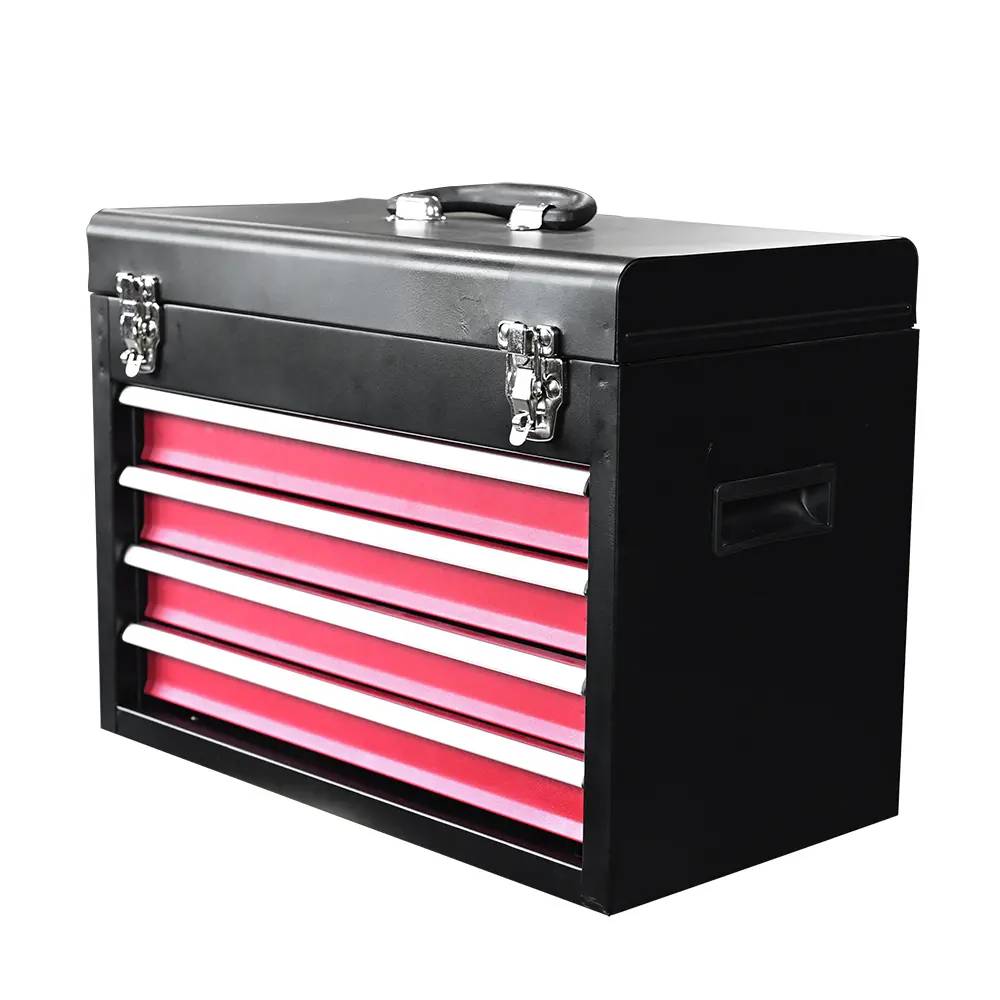
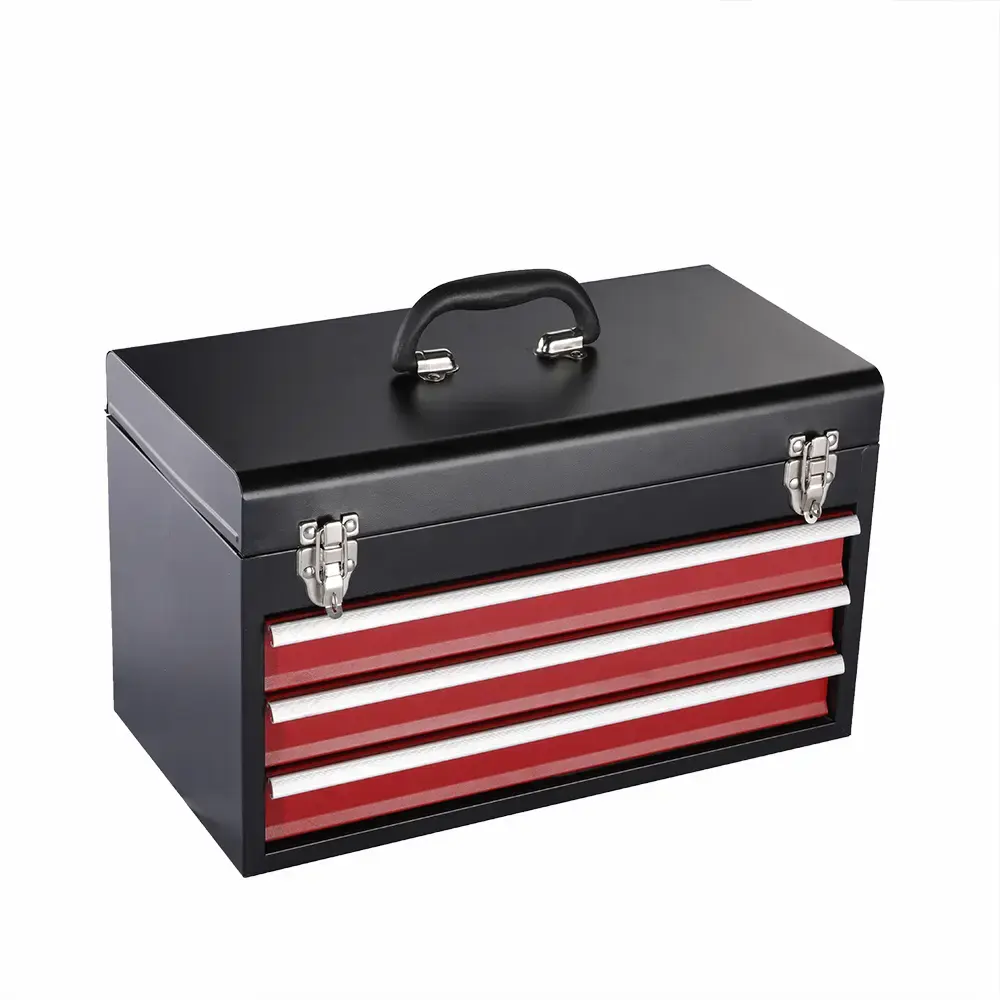
Addressing the above pain points, lockable cantilever metal toolboxes provide a comprehensive solution integrating safety, organization, and durability. Their core value is reflected in the following design features:
1. Multi-Level Physical Safety Protection
- High-Strength Lock System: High-quality lockable toolboxes are usually equipped with drill-proof and pry-proof solid steel latches and multi-point linked bolts. The main lock can adopt a heavy-duty padlock or an integrated combination/key lock, ensuring the box cannot be easily opened during transportation and storage. This is the first line of defense against petty theft and malicious theft—complying with tool cart safety certification standards.
- Sturdy Box Structure: Made of high-strength steel or rust-proof alloy, the box itself has impact resistance and step resistance. The sturdy structure not only prevents theft but also protects internal tools from external extrusion and falling objects in harsh construction site environments—key for industrial-grade tool storage cabinets.
- Sealing and Intrusion Prevention Design: High-quality boxes are equipped with waterproof and dustproof sealing strips, which not only prevent moisture and dust from entering and causing tool rust but also increase the difficulty of technical unlocking (such as using wire hooks), improving the overall safety level.
2. Excellent Tool Organization and Protection Capabilities
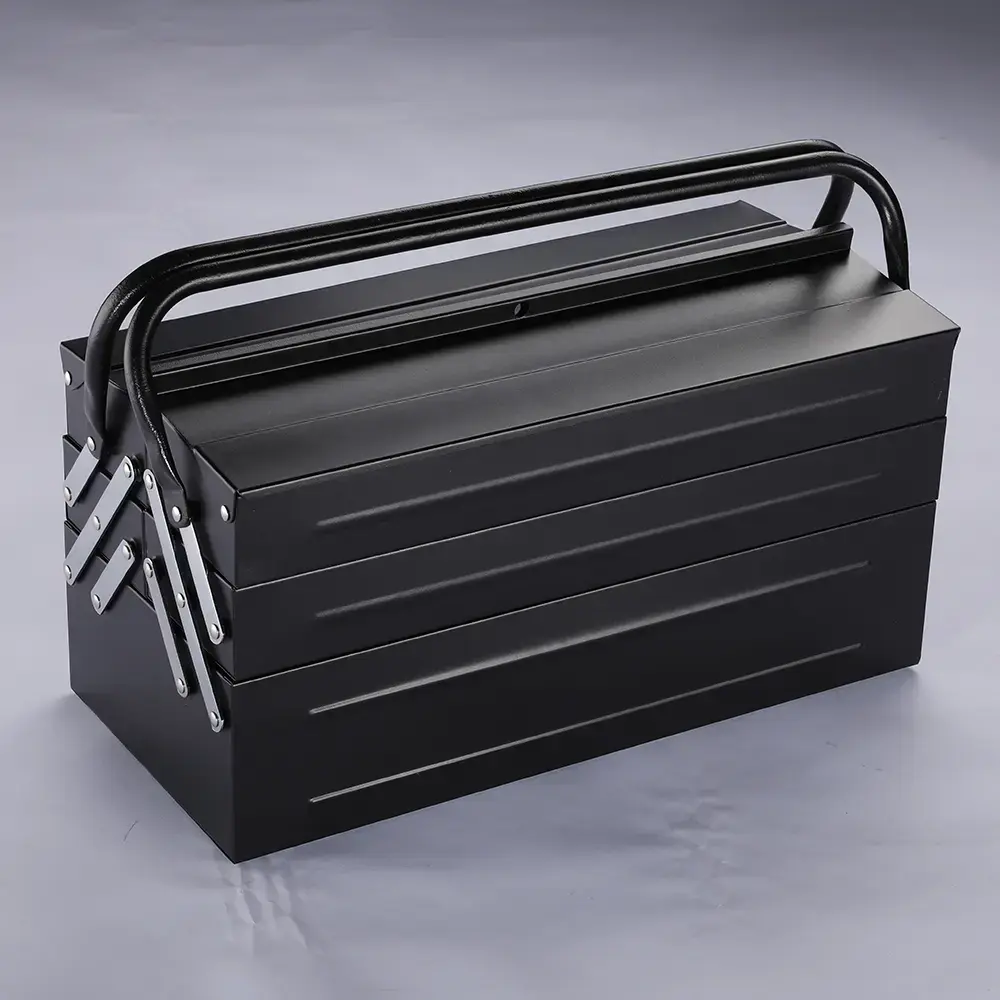
- Cantilever Tray Design: This is the soul of such toolboxes. Elevatable or pull-out cantilever trays place the most commonly used, most precise, or most easily lost small tools (such as bits, drills, wrenches, measuring tools) in layers and partitions for easy viewing. This solves the problem of "tool burial" and achieves quick access—core of tool organization and management systems.
- Customizable Liner and Partitions: The box is equipped with cuttable shockproof sponge liners or modular plastic dividers, which can "customize" a dedicated position for each tool. This not only prevents tools from colliding and wearing each other during movement but also allows immediate detection of missing tools through "empty spaces", realizing visual inventory management.
- Professional Space Planning: For large-size tools commonly used in the building materials and construction industry, such as electric hammers, angle grinders, and jigsaws, the box is designed with special reinforced card slots and strap fixing points to ensure that large tools are stable and do not shift during transportation, avoiding damage caused by jolting—ideal for contractor toolboxes.
3. Balanced Mobility and Durability
- Heavy-Duty Casters and Telescopic Pull Rod: Large-size polyurethane solid wheels or rubber tires designed specifically for rough construction site roads have good shock resistance and off-road performance. Combined with an adjustable telescopic pull rod, the box loaded with hundreds of kilograms of tools can be easily moved by a single person, adapting to operation scenarios from warehouses to trucks to different floors—key for heavy-duty tool cart procurement.
- Industrial-Grade Surface Treatment: The box is usually subjected to phosphate pretreatment and electrostatic powder coating to form a strong and durable coating, which can resist scratches, chemical (such as paint, solvent) splashes, and sun exposure, ensuring that the appearance and functionality are maintained after long-term use.
4. Enhance Professional Efficiency and Brand Image
- On-Site Work Efficiency Center: An organized lockable toolbox is itself a mobile work station. Technicians can respond to tasks quickly, with all tools within reach, reducing the time spent traveling between vehicles or tool rooms and devoting more time to value-creating work.
- Wholesaler Value Empowerment: By purchasing and recommending such professional toolboxes, building materials wholesalers are essentially escorting their customers' business efficiency and safety. This goes beyond simple commodity transactions, establishing a partnership based on solutions and significantly enhancing customer loyalty—key for wholesalers using the toolbox selection guide for wholesalers.
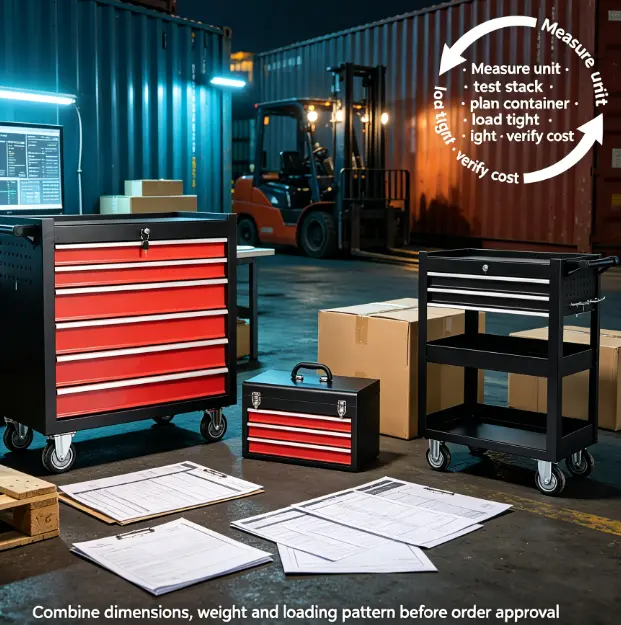
Part 3: Wholesaler Selection Points: How to Evaluate and Purchase
When selecting lockable cantilever metal toolboxes for your inventory, conduct a systematic evaluation from the following key dimensions:
- Safety Level Certification: Ask whether the product has passed relevant safety certifications (such as independent lock safety tests). Check the material thickness of the latch, the anti-pry level of the lock core, and the anti-disassembly design of the hinge—complying with tool cart safety certification standards.
- Structural Materials and Craftsmanship: Focus on the steel thickness (usually marked by grade or millimeters), welding process (continuous welding is better than spot welding), and the reinforcement of the internal frame. The quality of high-quality roller bearings and the smoothness of the pull rod telescoping also need on-site testing—critical for industrial-grade tool storage cabinets.
- Flexibility of the Organization System: Evaluate the number of cantilever trays, load-bearing capacity, and whether they can be adjusted in height or disassembled. The density and durability of the liner material, as well as the degree of customization of the partition system, determine its long-term organizational effectiveness—core of tool organization and management systems.
- Load and Mobility Performance: Verify the product's static load-bearing and dynamic load-bearing (when pulled) parameters. Test the flexibility of the universal casters, braking performance, and pulling experience on different road surfaces (such as concrete, gravel)—key for heavy-duty tool cart procurement.
- Supplier Reliability and Service:
- Manufacturer Qualifications: Prioritize factories with quality management system certifications such as ISO 9001 to ensure production consistency.
- Warranty Policy: Clarify the duration and scope of structural warranty and component warranty (for example, lifetime structural warranty, 5-year warranty for wheel sets and locks).
- Accessory Supply: Confirm whether replacement wheel sets, lock cores, trays, and other vulnerable and key accessories are available to support the full life cycle use of the product.
- Customization Capabilities: Can the supplier provide brand logo spraying, specific colors, or minor adjustments to the internal layout to meet the branding needs of wholesalers or their major customers—supporting shockproof toolbox customization.
-
Part 4: Decision Checklist: Select the Best Solution for Your Customers
Before introducing a certain lockable cantilever toolbox into your product line, evaluate it using this checklist:
- Safety Core: Is the lock system sturdy and reliable, and can it pass basic anti-pry tests? Does the box have a sealing design? (Key for construction site tool anti-theft boxes)
- Tool Compatibility: Can the internal layout well accommodate the typical tool combinations of your target customer groups (such as electricians, plumbers, carpenters)? Can it provide a dedicated protection position for high-value precision tools? (Relevant to contractor toolboxes)
- Durability Verification: Do the box steel thickness, surface coating process, and welding point quality meet industrial-grade standards? Are the load test data of the rollers and pull rods credible? (Critical forindustrial-grade tool storage cabinets)
- Mobility Efficiency: Is the box easy and stable to move under simulated full load? Are the wheels suitable for various surfaces? (Key for heavy-duty tool cart procurement)
- Total Ownership Value: Considering the purchase cost, expected service life, maintenance cost (accessory price), as well as the efficiency improvement and loss reduction it can bring to your customers, is its long-term value prominent? (Core for B2B procurement)
- Supply Chain Support: Can the manufacturer/supplier provide stable inventory, timely logistics, comprehensive after-sales service, and flexible customization services? (Key for wholesalers using the toolbox selection guide for wholesalers)
Conclusion
Selecting lockable cantilever metal toolboxes for building materials wholesale business is a strategic decision about investing in tool asset safety and operational efficiency. It is not just a container, but a productivity tool and safety management system. By introducing and promoting such high-quality, highly organized solutions, building materials wholesalers can significantly enhance their value positioning in the minds of professional customers, transforming from product suppliers to efficiency and safety partners, thereby establishing a solid differentiated advantage in the highly competitive market.