
Leave Your Message




0102030405
Durable Cantilever Tool Boxes: Corrosion Resistance for Coastal Plants
2026-05-25
For machinery manufacturing enterprises located in coastal areas, the challenges of tool management go far beyond simple storage. The high-salt, high-humidity marine climate acts as a hidden killerfor Metal Tool Boxes. Ordinary painted steel cabinets in coastal plant environments often suffer from rust, stuck hinges, and even base perforation within a few months. This not only shortens the service life of tool storage equipment but also risks moisture damage to expensive precision tools.
With its unique open-access design, the cantilever metal tool boxfaces more severe corrosion challenges in coastal environments than enclosed Tool Cabinets. From the perspective of factory procurement and equipment management, this article deeply analyzes how triple protection in materials, processes, and structure ensures long-term performance of cantilever tool boxes in harsh working conditions.
Why Coastal Plants Are a Severe Test for Cantilever Tool Boxes
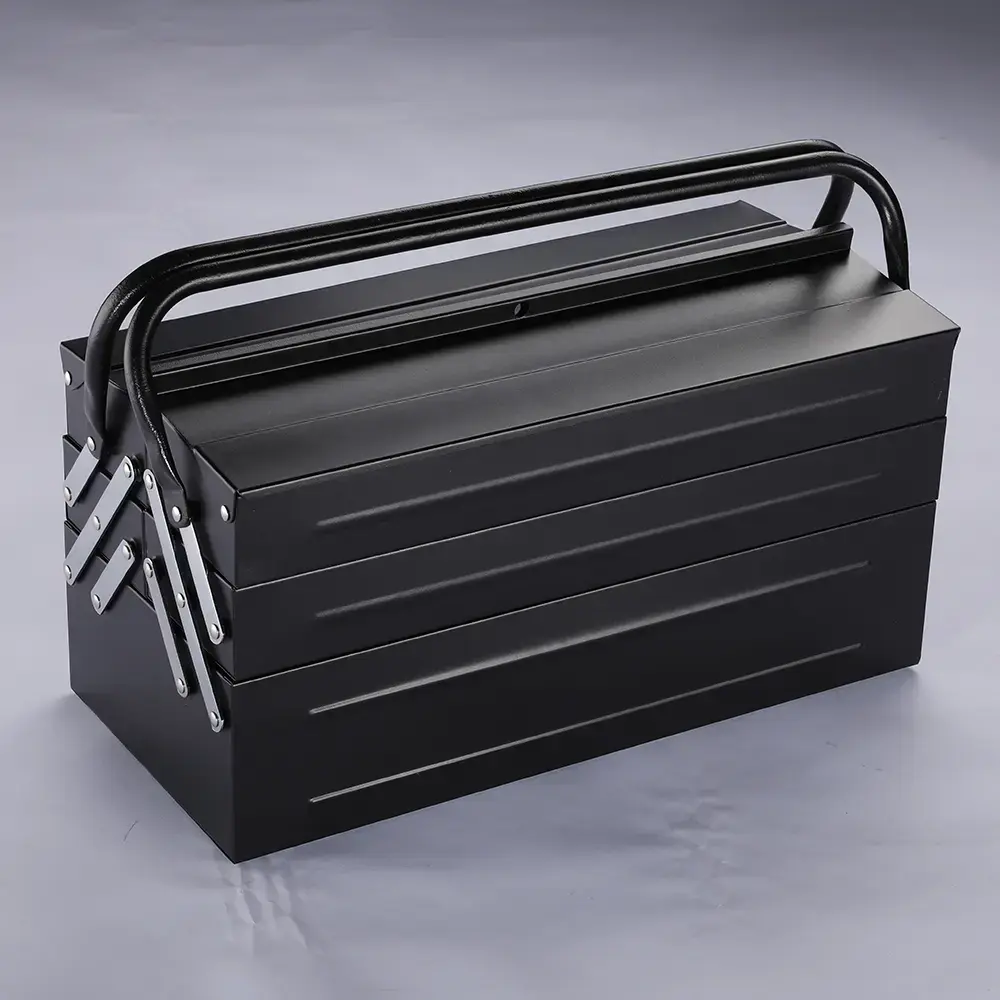
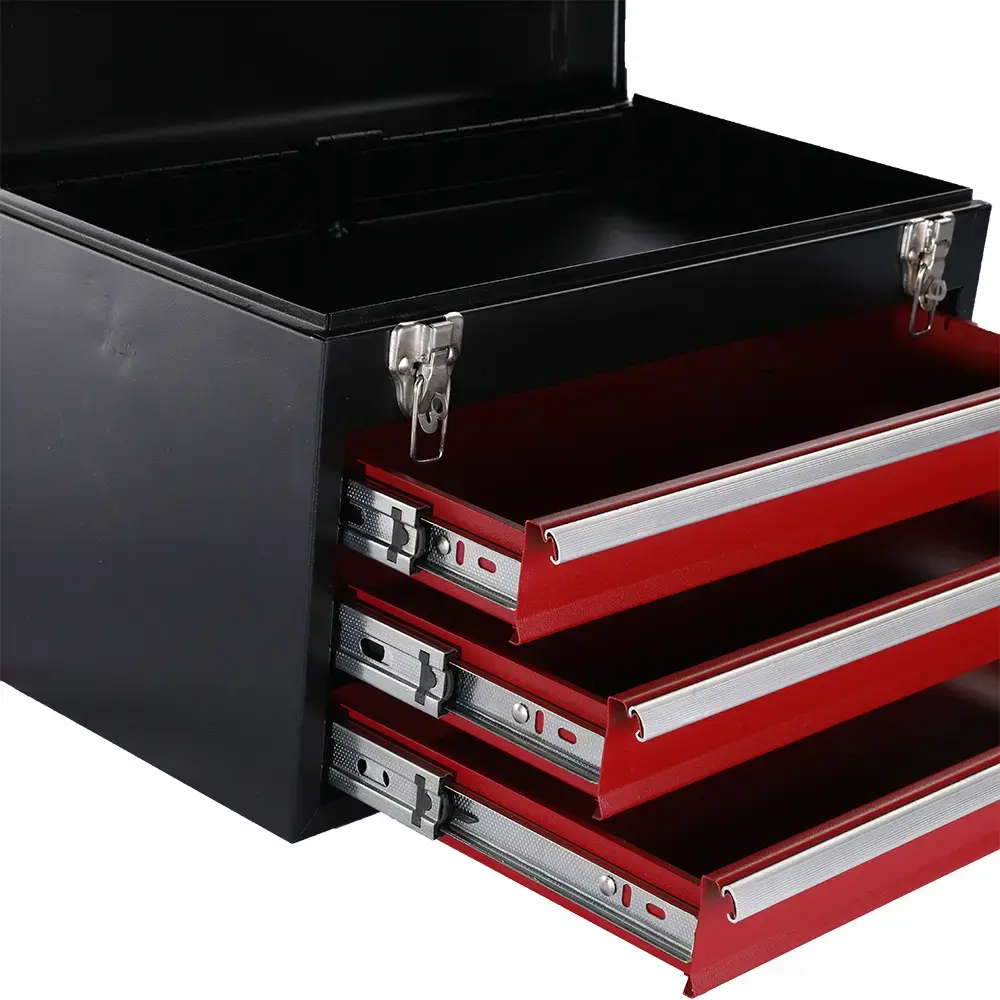
Cantilever tool boxes feature a fan-shaped, multi-layer folding arm design that improves tool access efficiency—but also creates unique corrosion vulnerabilities:
- Numerous structural dead corners: Hinges, shafts, and gaps between layers easily trap salt spray particles and moisture, which are hard to clean by simple wiping and become starting points for corrosion.
- Vulnerable surface coatings: Frequent opening/closing and tool impacts damage surface coatings. In normal environments this is just wear; in coastal areas, it creates a fast channel for salt to penetrate the metal substrate.
- Secondary tool contamination: Internal rust produces rust chips that contaminate precision measuring tools and power tools, causing additional economic losses.
Industrial anti-corrosion data shows that the corrosion rate of untreated carbon steel in coastal high-salt environments is 3–5 times higher than in inland areas. Ordinary electroplating or painting processes may only maintain appearance integrity for several months.
Adaptation to Coastal Working Conditions: Three Core Technical Indicators for Procuring Cantilever Tool Boxes
When evaluating suppliers, procurement managers should prioritize the following technical specifications over price and layer count:
1. Substrate & Coating System: From Basic Rust Prevention to Salt Spray Resistance
- Substrate upgrade: Prefer SPCC cold-rolled steel with full hot-dip galvanized substrate or 5052/6061 aluminum alloy boxes. Aluminum alloy is lightweight and corrosion-resistant but requires structural strength verification, making it suitable for light-duty tools.
- Coating protection: A dual-layer system of epoxy primer + polyester/epoxy powder coating is mandatory. Single-layer plastic spraying or spray paint cannot support long-term coastal use.
- Hard performance requirement: Require suppliers to provide an ASTM B117 Salt Spray Test report. For coastal C4/C5 corrosive environments, coatings must achieve ≥600 hours without red rust (ideal target: 800–1000 hours), a key distinction between standard and industrial-grade tool boxes.
2. Salt & Water Drainage Logic in Structural Design
- Drainage holes: Anti-backflow drainage holes must be installed at the bottom to prevent rainwater or condensed water accumulation.
- Gap sealing: Nylon or rubber gaskets at cantilever shafts are required to block salt entry. Unsealed direct metal contact accelerates electrochemical corrosion.
- Internal impact protection: Internal trays should undergo E-coating or be fitted with impact pads to avoid coating scratches from tools.
3. Corrosion Resistance Consistency of Hardware Accessories
- Hinges & locks: Must be made of stainless steel (grade 304 or 316L recommended). Iron lock bolts and springs are typically the first components to fail.
- Fasteners: All screws and nuts should be Dacromet-coated or stainless steel. Ordinary galvanized screws quickly rust and seize in salt spray, making disassembly impossible during maintenance.
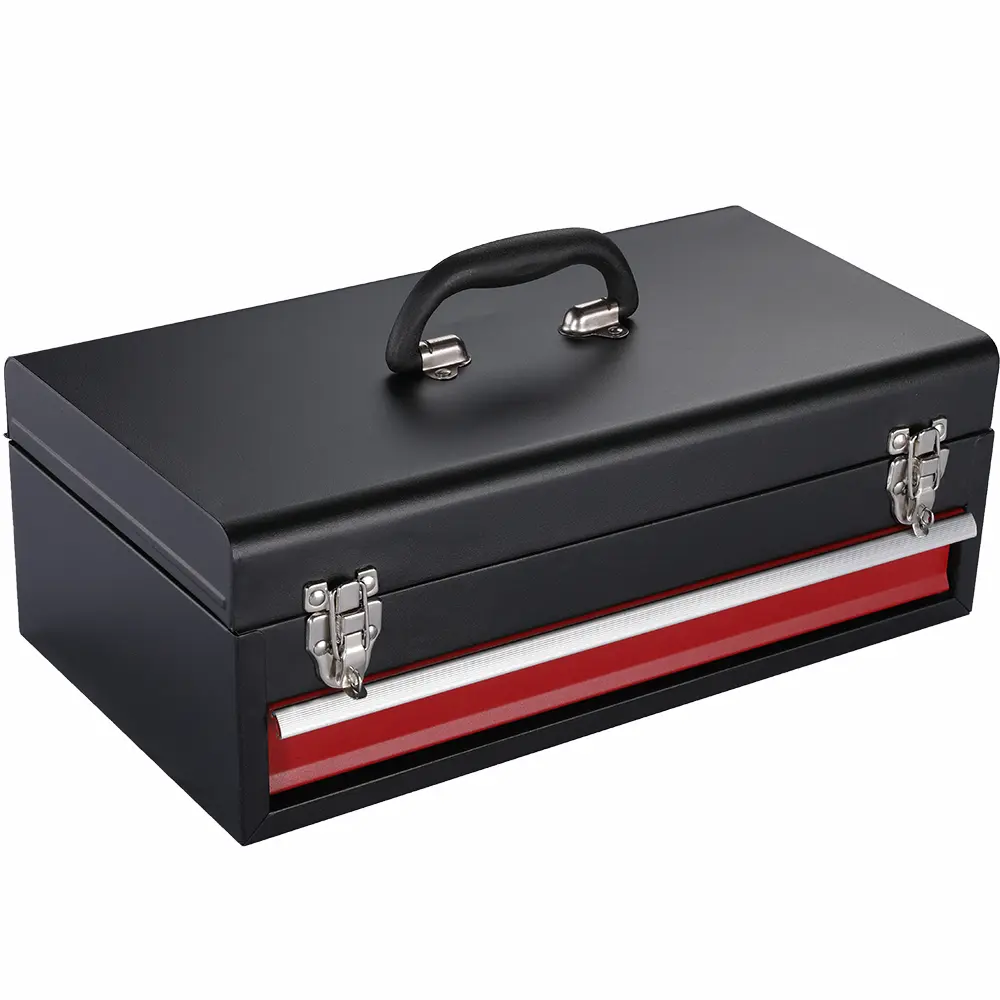
Cantilever Tool Box Selection Decision Table: Inland vs. Coastal Environments
| Key Evaluation Dimensions | Inland General Plants (Recommended) | Coastal / Offshore Plants (Mandatory) | Procurement Decision Logic |
|---|---|---|---|
| Box Material | SPCC cold-rolled steel + ordinary painting | SPCC + hot-dip galvanized substrate + thick-film powder coating OR aluminum alloy | Substrate corrosion resistance is the final defense; galvanized layers still provide cathodic protection if coatings are damaged. |
| Salt Spray Test | 96–240 hours (commercial grade) | ≥600 hours (industrial grade) | Core hard indicator for verifying process reliability; test reports are mandatory. |
| Internal Structure | Ordinary painted trays | E-coated trays + impact liners | Frequent tool handling causes severe internal wear, requiring higher protection levels. |
| Hardware Accessories | Galvanized iron parts | 304/316 stainless steel parts | Prevents entire box scrappage due to rusted small components. |
| Maintenance Cycle | 3–5 years | 1-year inspection + regular fresh water rinsing | Preventive maintenance of rinsing and lubrication is required even for corrosion-resistant materials. |
Buyer’s Action Guide: How to Verify Supplier Salt Spray Resistance Claims
- Demand documented proof: Reject verbal “rustproof” promises. Directly request ASTM B117 test reports covering complete assemblies including boxes, hinges, and locks.
- Inspect coating details: During sample evaluation, carefully check welds, edges, and inner walls—areas difficult to coat uniformly. Consistent coverage indicates reliable pretreatment processes.
- Clarify after-sales guidance: Reliable suppliers recommend regular silicone-based grease (not dust-prone engine oil) application on hinges to remove salt deposits.
Conclusion
For coastal machinery manufacturing plants, procuring a cantilever tool box is not merely purchasing a storage container but investing in corrosion-resistant fixed assets. Procurement decisions should shift from lowest upfront price to lowest total life cycle cost.
Although a cantilever tool box with ASTM B117 ≥600-hour performance, hot-dip galvanized substrate, and stainless steel hardware requires higher initial investment, it effectively avoids hidden costs from frequent replacements and tool rust damage, truly adapting to the harsh challenges of marine climates.