
Leave Your Message




0102030405
Maximizing Flexibility with Modular Stackable Tool Cabinets: Customization for Multi-Scene Needs
2026-03-17
Maximizing Flexibility with Modular Stackable Tool Cabinets: Customization for Multi-Scene Needs
Last month, I visited a mechanical processing plant in Ningbo. The owner pointed to a stack of dusty Tool Cabinets in the corner of the workshop and said, “We bought these three years ago and thought they were enough. Now our workshop layout has changed, and they’re either too tall blocking the light or have too few drawers for our new measuring tools. Throwing them away is a waste, but keeping them is a hassle.”
I’ve heard this story too many times. A tool cabinet feels like just another storage piece when you buy it, but flexibility becomes everything once you start using it.
As someone with over a decade of experience in the tool cabinet industry, I’d like to share insights with buyers on what makes a modular stackable tool cabinet system effective—helping you adapt to workshops, auto repair shops, and even home garages with one unified solution.
Modular Design Logic: Why “Being Able to Disassemble” Is More Valuable Than “One-Piece Construction”
Many buyers first ask: Isn’t a one-piece welded cabinet sturdier? Why do we need separate modules?
There’s a common misconception here. Let’s be clear:
- Will your workshop layout change? Yes.
- Will your business scale grow? Yes.
- Do workers have the same operating habits? Probably not.
A one-piece welded cabinet is like furniture glued down with cement—perfect today, but a burden tomorrow.
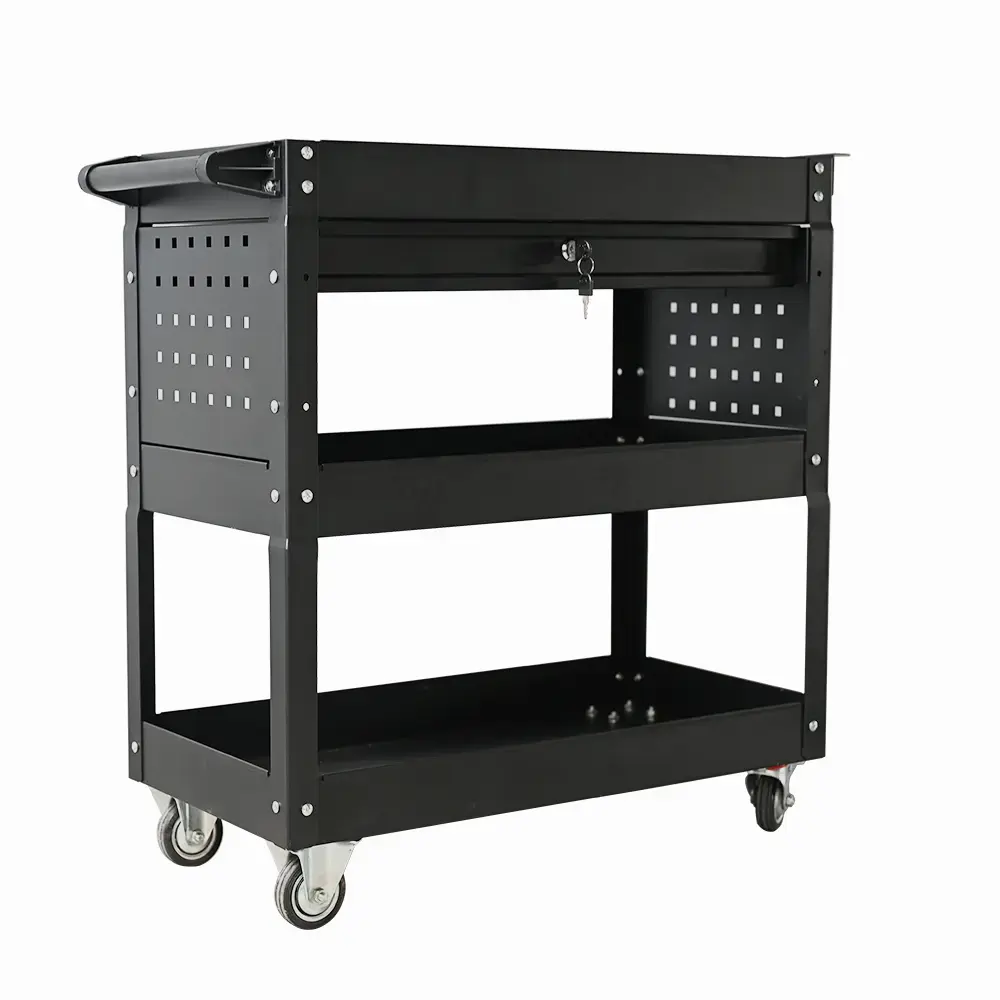
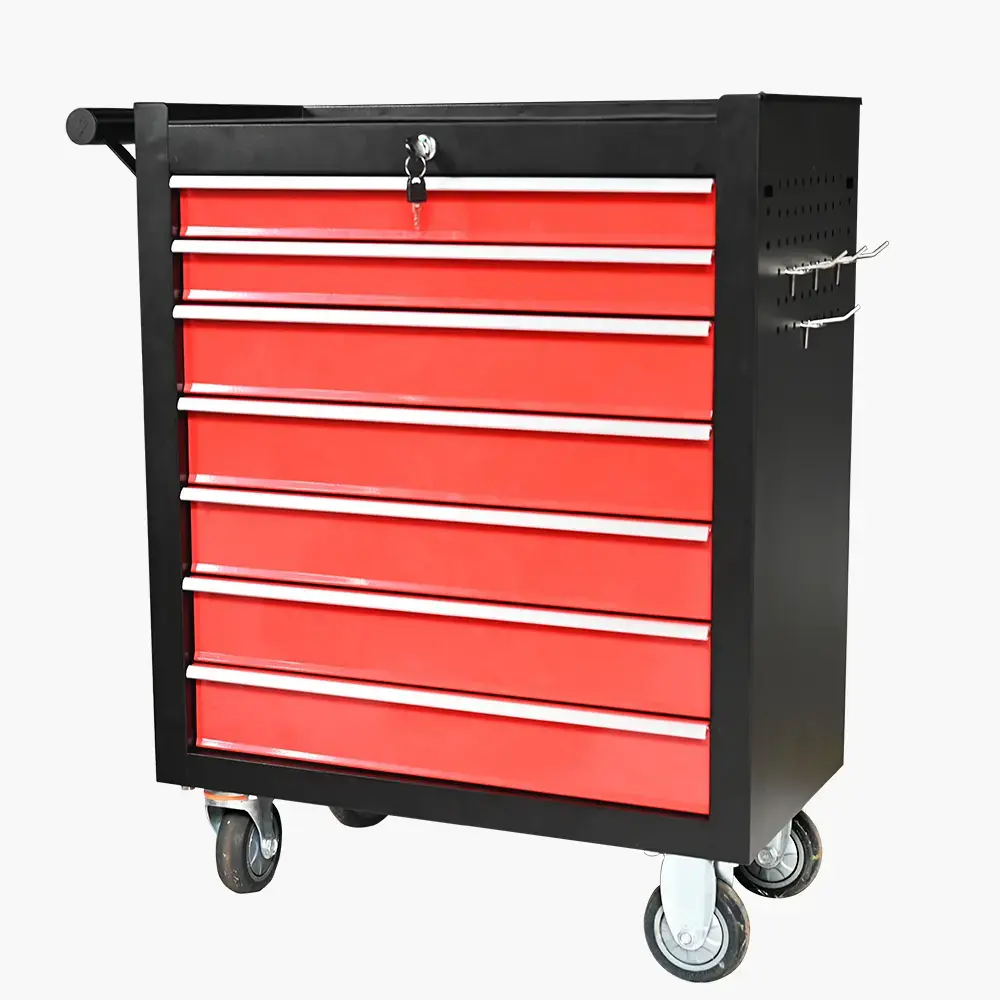
The true value of a modular stackable tool cabinet lies in its system approach, not just a single box. The base, cabinet body, drawers, hanging boards, and tabletop are all independent modules.
- Need to move the cabinet? Disassemble it; two people can carry it easily without a forklift or demolition.
- Adjust the height of a workstation? Add adjustable feet or spacers to the base.
- Need extra space? Stack additional modules on top.
I once saw a real Case: a chain of auto repair shops in Suzhou originally assigned fixed-height tool carts to each station. After introducing new energy vehicle repair stations, they needed higher countertops for diagnostic computers. Replacing the cabinets was too expensive. Instead, they disassembled their modular cabinets and inserted a middle riser module, raising the countertop by 15 centimeters. The cabinets lasted five years and were reconfigured three times as the stores expanded—still in use today.
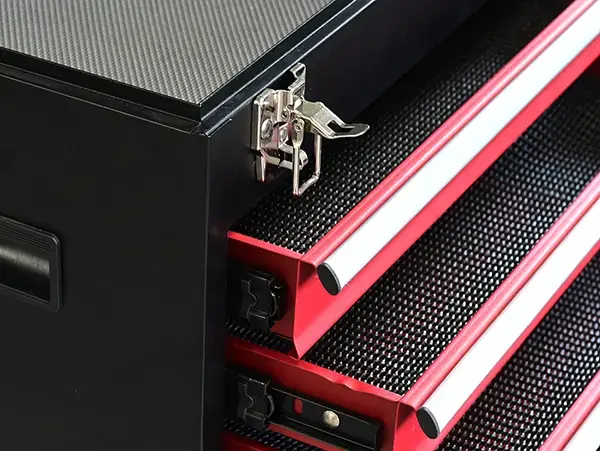
Buyers often ask: Will screws loosen after repeated assembly and disassembly? It depends on the craftsmanship. High-quality modular cabinets use high-strength metal rivet-nuts that maintain tight threads even after dozens of assemblies. The frame structure includes precision pins for alignment, ensuring a perfect fit after reassembly. Cheaper models using self-tapping screws may loosen, but that’s a design issue—not a problem with modularity itself.
Scene Adaptability: From One Auto Repair Shop to Three Unique Workstations
Let’s zoom into real-world scenarios. Suppose you’re a procurement manager at an auto repair shop with machine repair, electrical, and tire stations. Each has different Tool Storage needs. Identical cabinets will lead to inefficiencies.
This is where modular stackable cabinets shine.
Machine Repair Station
Wrenches, sockets, and screwdrivers are heavy and used daily.
- Lower level: Heavy-duty drawers with slides supporting over 80kg.
- Upper level: Shallow drawers for small parts.
- Countertop: Thick, edge-banded to resist oil spills.
Electrical Station
Meters, oscilloscopes, and diagnostic computers are precision instruments, vulnerable to vibration and grease.
- Upper level: Lockable cabinets with adjustable shelves for hosts.
- Countertop: For monitors.
- Lower level: Shallow drawers for wiring and probes.
Tire Station
Tire changers and balancers are nearby, requiring quick access to sockets and pneumatic tools.
- Simplified setup: No upper cabinet—use a low cabinet as a workstation with tool hanging boards above. Tools are visible at a glance.
Last year, we supplied a vocational school with seven training labs, each requiring a different tool configuration. Using the same modular system, we designed seven unique layouts—reducing inventory pressure while meeting student needs.
Can you adjust the configuration later? Absolutely. Converting an electrical station to a machine repair station only requires swapping shallow drawers for deep ones and replacing a door with a drawer module. The standardized interfaces let buyers reconfigure on-site with an Allen wrench—no factory return needed.

Space Utilization & Scalability: Store 30% More Tools in the Same Footprint
For procurement professionals, workshop floor space is one of your highest costs. Every square meter counts.
Modular stackable cabinets have a natural advantage: they utilize vertical space.
- A 1-square-meter footprint with integrated cabinets hits a ceiling limit.
- With modular systems, you can add bases, upper cabinets, hanging boards, and overhead shelves.
A European tool storage brand found that workshops using modular cabinets store 27% more tools per square meter than those with fixed cabinets. Our own tests confirm this: a standard 6-meter-long workstation can hold three fixed cabinets but can be arranged with three bases, double-decked cabinets, and wall-hanging boards—nearly 30% more storage volume.
Height adaptability is another key.
- European and American workers are taller: adjust base height.
- Japanese customers prefer low centers: lower bases or even floor-mount.
One set of molds can serve multiple markets, thanks to modularity.
At a trade show in Germany, I saw distributors displaying only basic modules. Customers designed their ideal setup on a tablet, and orders were confirmed on-site. This “build-your-own” approach resonates far more than pushing fixed models.
Structural Strength & Load Capacity: Withstand 100 Disassemblies and Hold Heavy Tools
Critics ask: Can modular cabinets be sturdy? Workshops deal with heavy tools, after all.
The answer is simple: strength comes from design, not construction.
The core of a modular cabinet is its four-pillar frame, acting like a building’s load-bearing wall.
- Columns: 1.5mm or thicker cold-rolled steel, double-reinforced at key stress points.
- Connections: High-strength bolts that form a unified frame after tightening.
- Drawer slides: Directly attached to the frame for a continuous load path.
We conducted a destructive test: A three-tier cabinet loaded with over 200kg in the bottom drawer was tilted 15 degrees by a forklift—not a single movement. The drawers still slid smoothly. After 100 disassemblies, the diagonal deviation remained within 1mm.
What about uneven floors? Adjustable feet adapt to a ±20mm height difference, evening out stress and ensuring doors close properly for a decade.
Beware of low-cost modules using thin steel and plastic connectors—drawers will warp. Stick to two criteria:
- Sheet thickness: ≥1.2mm for main structures.
- Connection method: Metal components + mechanical locking.

Logistics & Inventory Costs: Flat-Pack Shipping Save 30% on Freight
Let’s talk about costs—every buyer’s priority.
Modular cabinets deliver hidden savings in logistics and storage.
- One-piece cabinets: Bulky, high shipping costs, limited warehouse stacking.
- Flat-pack modular cabinets: Knock down components, stack tightly.
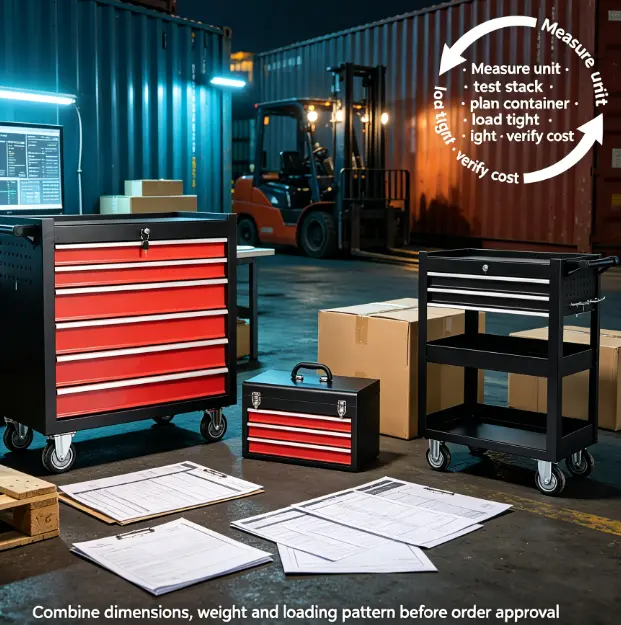
For a 40-foot container to the U.S. West Coast, a one-piece cabinet might fit 60 units. A flat-pack modular cabinet can fit 85+ units. That’s $15–$20 saved per unit in ocean freight alone. Warehousing is also more efficient, as flat packs can stack up to 2 meters high.
For overseas distributors, modularity turns inventory into a competitive advantage. Store modules, not finished cabinets. Customize colors on-site by repainting panels.
One Australian client ran a tool cabinet rental business. With one-piece cabinets, damage and repairs were costly. With modular cabinets, they replaced only damaged parts—cutting maintenance costs by over half.
As one distributor told me: “Selling one-piece cabinets is selling a product. Selling modular cabinets is selling a solution. The solution brings recurring revenue from add-ons, replacements, and layout changes.”
Final Thoughts: It’s Not Just a Cabinet—It’s a Scalable Storage System
At the end of the day, a modular stackable tool cabinet is not a “piece of furniture.” It’s a space system that grows with your customer’s business.
- Workshop expands? Add layers.
- Worktype changes? Swap drawers.
- Export shipping? Ship flat to save costs.
- Custom color? Swap panels.
This “flexibility” is the value you can pass to your end customers. When selecting tool cabinets, don’t just look at the steel—look at the long-term peace of mind it provides.
Meta Description
How do modular stackable tool cabinets adapt to workshops, auto repair shops, and multi-scene needs? From an industry veteran’s perspective, this article breaks down the core advantages of modular design in space utilization, load capacity, and logistics costs—helping B2B buyers choose storage solutions that scale with their business.
Core Keywords
modular stackable tool cabinet, modular tool cabinet design, workshop storage solution, removable tool cabinet, flat-pack tool cabinet