Leave Your Message




Ultraviolet protection treatment for outdoor toolboxes: Methods to prevent material aging
In outdoor working environments, toolboxes are exposed to sunlight for a long time. Ultraviolet radiation will gradually erode the molecular structure of the material, causing the box to become brittle, fade and lose strength, ultimately affecting the safety of Tool Storage and service life. Understanding the intrinsic mechanism of ultraviolet aging and taking systematic protective measures are the keys to ensuring the long-lasting durability of outdoor toolboxes.
The microscopic damage mechanism of ultraviolet rays on materials
The wavelength of ultraviolet radiation is 280 to 400 nanometers, and its energy is sufficient to break the molecular chains of polymers and the oxide layer on the surface of metals. For plastic boxes, photo-oxidation reactions generate free radicals within the material, triggering chain degradation, which is manifested as a decrease in impact strength and surface powdering and cracking. Although metal materials are not easily penetrated by ultraviolet rays directly, long-term exposure to light will accelerate the aging and peeling of the surface coating, weaken the effectiveness of the anti-corrosion layer, and indirectly lead to the corrosion of the substrate. What is more complicated is that the fluctuations in humidity and temperature in the outdoor environment will work in concert with ultraviolet rays to produce a damp heat aging effect. After water molecules penetrate the micro-cracks in the material, they expand and contract in the temperature changes between day and night, accelerating the destruction of the physical structure. This multi-factor coupling effect makes it often difficult for a single protective measure to be effective.
Intrinsic modification of materials: Building an anti-aging barrier from the source
Introducing ultraviolet stabilizers into the polymer matrix is a fundamental protective strategy. Modern modified plastics can form a continuous protective network at the material molecular level by adding high-molecular-weight ultraviolet absorbers. This type of additive selectively absorbs high-energy ultraviolet rays through a π-π conjugated structure and converts them into heat energy for dissipation, while remaining stable in the photochemical cycle itself. For commonly used toolbox materials such as polypropylene (PP), the combined use of ultraviolet shielding agents and light stabilizers can simultaneously block ultraviolet penetration and eliminate free radicals that have already been produced, achieving a synergistic effect. Technical practice shows that integrating 20-29 weight parts of the composite UV absorber into the PP substrate and combining it with the extrusion process controlled by the particle swarm optimization algorithm can ensure the uniform dispersion of the additive without disrupting the molecular chain arrangement, thereby enhancing the material's anti-aging performance by more than three times.
For transparent window components, multi-layer composite structures demonstrate unique advantages. The composite cover plate, which adopts TPU film on the surface, polyester fabric in the middle and PVC anti-slip coating at the bottom, maintains a light transmittance of over 85% while the ultraviolet absorber built into the TPU layer can filter out over 90% of harmful rays. This design not only protects the window material itself but also prevents the surface of the precision tools inside the box from deteriorating due to light exposure. It is worth noting that the modified materials need to maintain stability within the temperature range of -30°C to +80°C to ensure that their protective performance does not decline in extremely cold or high-temperature environments.
Surface treatment technology: Strengthening external protective armor
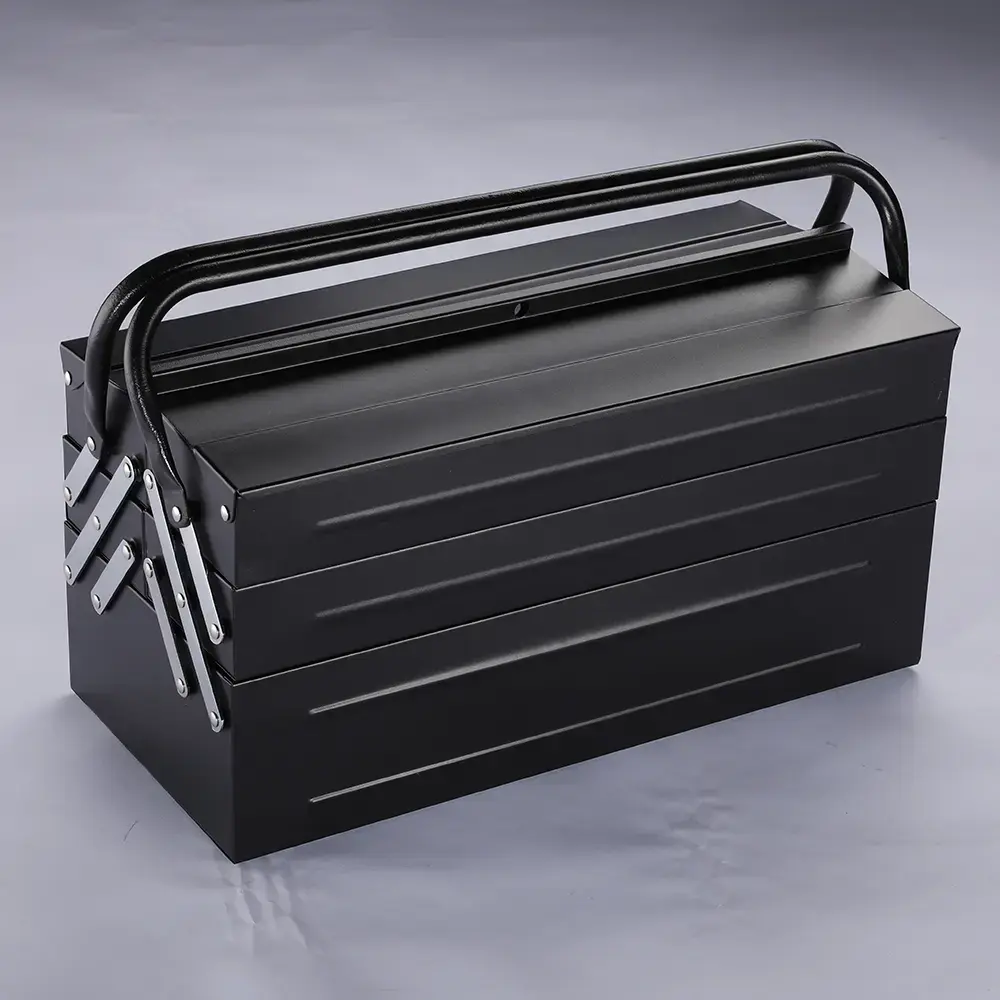
The core of ultraviolet protection for metal toolboxes lies in the surface treatment process. Uv-resistant anodizing generates a dense oxide film layer on the surface of aluminum through electrochemical methods. This oxide layer forms a permanent metallurgical bond with the substrate rather than physical adhesion. This structure can not only reflect ultraviolet rays but also prevent the penetration of oxygen and moisture. Even if there are minor scratches on the surface, the oxide layer can still continuously provide protection. Compared with traditional coating, the anodic oxide layer will not peel off or crack, making it particularly suitable for coastal or plateau areas with high salt spray and strong sunlight.
Coating technology can also effectively enhance the protection level. High-quality powder coatings form polymer films with extremely high crosslinking density after curing, and the ultraviolet stabilizing groups in their molecular structure can effectively shield radiation. For steel box bodies, a double-layer coating system is adopted - the bottom layer of epoxy zinc-rich coating provides cathodic protection, and the top layer of polyurethane powder coating serves the function of UV shielding, ensuring an outdoor service life of more than 15 years. The uniformity control of coating thickness is of vital importance. It is necessary to precisely monitor the spraying parameters to avoid local premature aging caused by uneven thickness.
Structural optimization design: Reduce ultraviolet exposure intensity
Apart from materials and processes, the details of structural design determine the integrity of the protective system. The shape of the box should avoid a flat structure. Adopting a slightly arched or ribbed design can reduce the area directly exposed to sunlight and lower the peak surface temperature. The sealing system should be made of silicone material that is resistant to compression deformation. While blocking the intrusion of water vapor, it also needs to have ultraviolet stability itself. It is recommended that the installation location utilize natural shadows, such as the side of a vehicle or the shady area of a building, which can reduce the intensity of ultraviolet exposure by 60% to 80%.
The design of the drainage groove not only prevents water but also avoids water accumulation and enhances the intensity of ultraviolet rays through reflection. The box color is selected with a dark matte surface. Although it will absorb more heat, it can more effectively absorb ultraviolet energy. Combined with the material's own heat aging resistance, it is actually more resistant to long-term exposure than a light high-gloss surface. This counter-intuitive design consideration requires a balance to be struck between thermal management and UV protection.
Testing verification and quality control
The protective effect needs to be verified through standardized tests. The fluorescent ultraviolet aging test chamber can simulate the harsh outdoor conditions. It uses UVA-340 lamps to precisely reproduce the solar spectrum of 295-365 nanometers and, in combination with condensation cycles, simulates the changes in humidity between day and night. The test cycle is usually set at 1,000 hours, which is equivalent to three years of outdoor exposure in temperate regions. In quality control, the blackboard temperature sensor needs to be precisely calibrated to ensure that the surface temperature of the sample is controlled at 60±3°C to standardize the aging rate. The spray function not only simulates the scouring of rainwater, but more importantly, it reproduces the thermal shock effect caused by sudden temperature changes, which is particularly crucial for evaluating the weather resistance of the box sealing parts.
The material performance degradation standards should follow industry norms: the tensile strength retention rate should not be less than 85%, the impact strength should not be less than 70%, and the surface color difference ΔE should be less than 3.0. Products certified by ASTM G154 or ISO 4892 standards have test data that are internationally comparable, providing a reliable basis for purchasing decisions.
Daily maintenance and life extension strategies
Even with top-level protection technology, regular maintenance can still significantly extend the service life. Clean the surface of the box every quarter to remove the salt spray, oil stains and biological contaminants adhering to it, and prevent the formation of local corrosion micro-batteries after absorbing ultraviolet rays. For the coated surface, transparent maintenance wax can be sprayed once every 18 months to fill the surface micro-pores and replenish ultraviolet absorbers. Check the elasticity of the sealing strip. When the permanent deformation exceeds 30%, it should be replaced in time to prevent water vapor from entering and causing internal corrosion. Metal hinges and locks need to be lubricated regularly to prevent mechanical failures caused by dust accumulation and moisture erosion.
When storing, it is recommended to keep the toolbox under a well-ventilated sunshade to avoid direct contact with the ground. If it must be stored outdoors, a breathable protective cover should be used, which can provide shade and prevent moisture accumulation. The combination of this proactive protection awareness and passive technical measures can extend the effective service life of the toolbox to 1.5 times its designed lifespan.
Ultraviolet protection is not a breakthrough in a single technical point, but a systematic project involving materials science, surface treatment, structural design and usage and maintenance. Through internal modification to build molecular-level barriers, external coatings to provide physical armor, structural optimization to reduce exposure doses, and supplemented by scientific testing verification and regular maintenance, outdoor toolboxes can maintain structural integrity and functional reliability under any lighting conditions. This all-round protection concept is precisely a sustainable solution to the challenges of extreme outdoor environments.